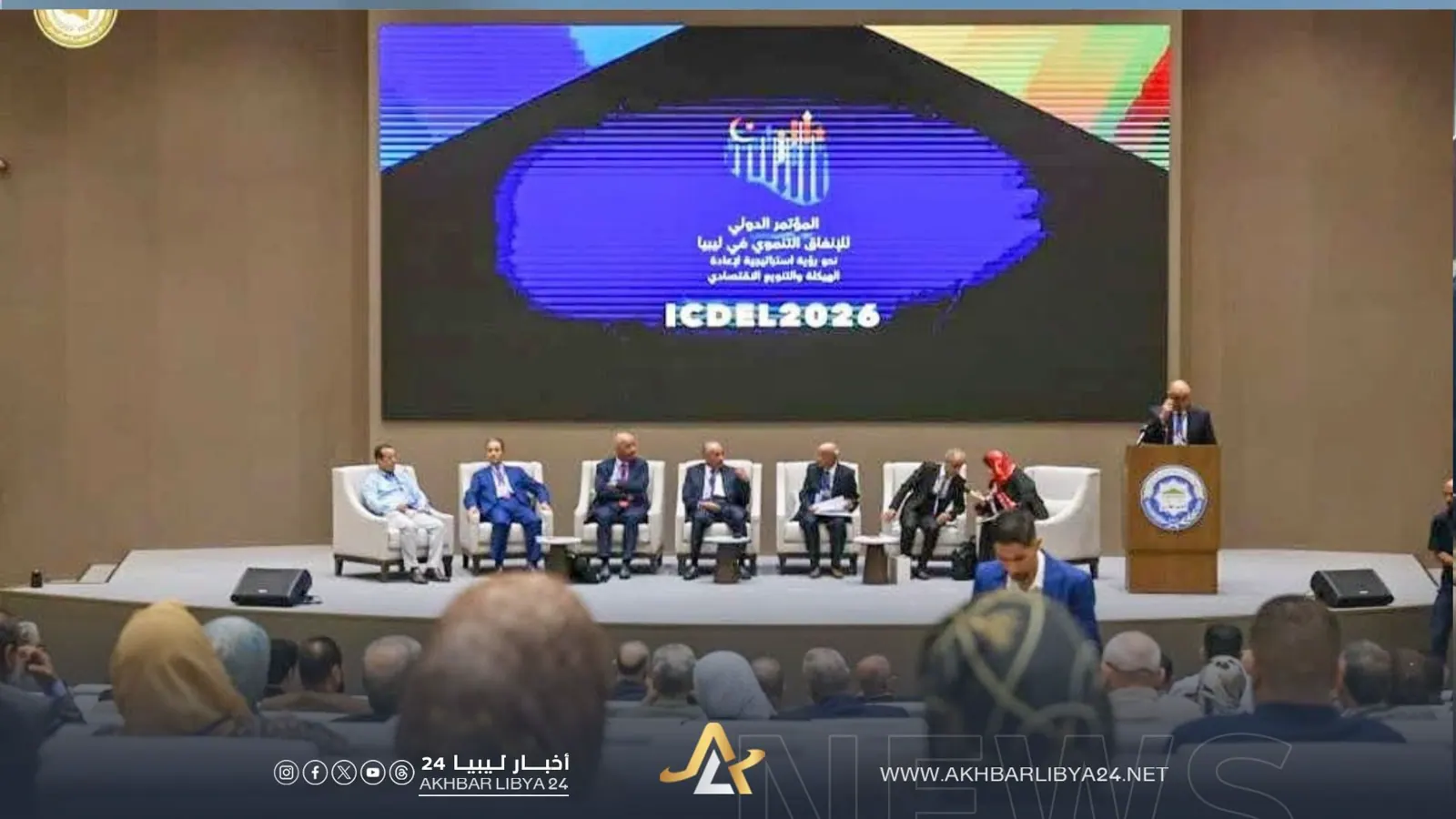
The Development and Reconstruction Fund of Libya recently hosted an international conference in Benghazi, gathering experts and academics from Libya and several Arab countries. The event aimed to discuss the future of national resource management and link development spending to reconstruction and development priorities. The conference, held at the University of Benghazi, focused on transforming public spending from merely financing projects to achieving measurable economic and developmental goals.
The conference emphasized the need for a national strategy that sets clear, measurable objectives for development spending. Participants highlighted the importance of prioritizing productive sectors and human capital as fundamental pillars for building a more resilient economy. The University of Benghazi's involvement in organizing the conference reflects its commitment to connecting scientific research with public policy-making.
The conference comes as part of the activities of the Libya's Development and Reconstruction Fund, which aims to rebuild and develop infrastructure and services. The fund seeks to ensure that executive projects are accompanied by an economic vision capable of supporting long-term development. Reconstruction is not limited to building roads, facilities, and institutions but also involves creating an economic environment that helps operate these assets and turn them into engines of activity, investment, and production.
The conference discussed mechanisms to improve development spending management, enhance planning, and increase monitoring and evaluation. Participants also explored ways to diversify the economy, support productive sectors, and improve the investment environment. The event featured experts, academics, and researchers from Libya and several Arab countries, providing a platform for exchanging experiences related to resource management, development financing, and economic restructuring.
Good governance and transparency were highlighted as essential elements in enhancing spending efficiency and promoting trust in public resource management. The conference emphasized the need for clear criteria for project selection, precise implementation monitoring mechanisms, and performance indicators. This allows for evaluating spending based on the added value it creates, rather than just the amount of money spent.
The conference also touched on the importance of digital transformation in managing resources and projects. Participants discussed the potential of digital tools to improve monitoring, enhance efficiency, and measure performance. The event also explored opportunities for partnerships between the public and private sectors to finance development and implement projects.
The conference concluded with a set of recommendations related to developing development spending policies and enhancing their connection to Libya's reconstruction and development priorities. These recommendations aim to combine academic vision with executive experience, potentially contributing to the development of more effective approaches to Libya's economic needs. The success of development spending is measured not only by the amount spent but also by its impact on infrastructure, the economy, job opportunities, and citizens' lives.
Key points
- Libya hosts an international conference to discuss development spending and economic diversification.
- The conference aims to transform public spending into a tool for achieving measurable economic and developmental goals.
- Good governance, transparency, and digital transformation are highlighted as essential elements in enhancing spending efficiency.