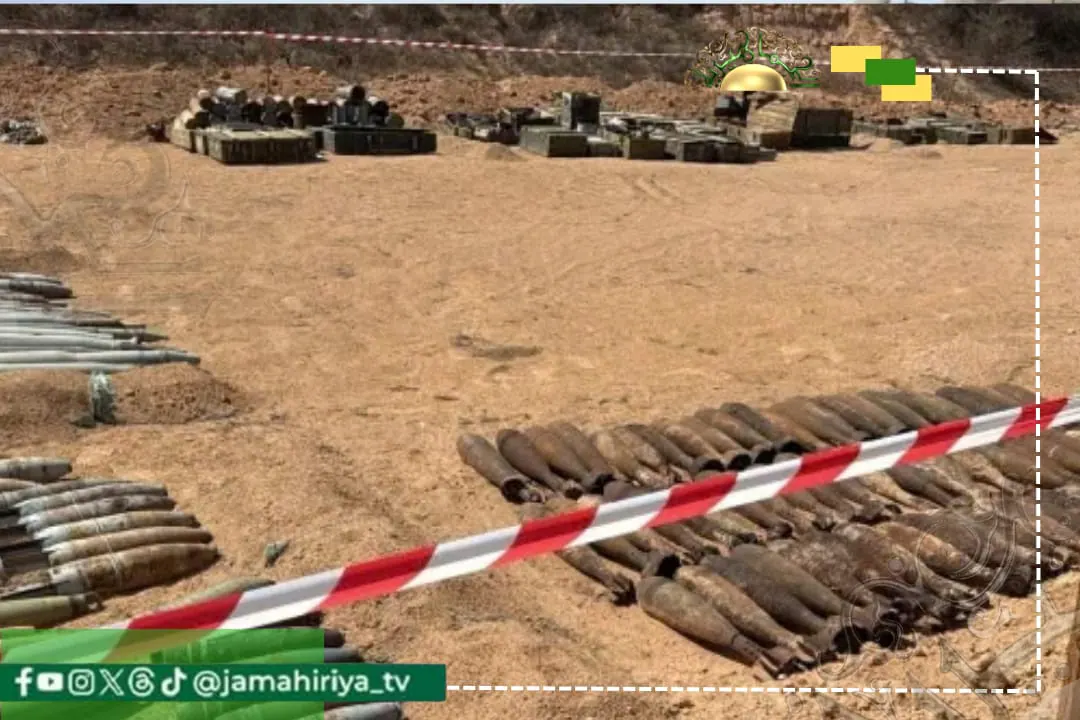
A recent report by Al-Sharq Al-Awsat revealed that 14,066 explosive items were removed from a farm in Misrata, Libya, during a nine-month demining operation supported by the United Nations Mine Action Service. The operation, which took place from January to September, aimed to reduce the risks associated with unexploded ordnance and protect civilians. The effort was part of a broader initiative to address the legacy of conflict in Libya.
The demining operation in Misrata's Al-Suwayhli farm was conducted in collaboration with the Libyan Peace Organization and the Halo Trust, with funding from the Italian government. The project also involved the Libyan Center for Mine Action and the UN's Libya Support Mission. According to the report, presented to a visiting UN team, the operation highlighted the need for continued cooperation to eliminate explosive remnants and promote safe practices in ammunition management.
Misrata Mayor Mahmoud Al-Saqutri has requested UN support for demining operations in several areas, including Zamzam, Al-Washka, and Abu Qrein. These areas remain contaminated with explosive remnants of war, posing a threat to civilian safety. The request follows a recent ammunition depot explosion in the Sakat area south of Misrata, which, although not resulting in casualties, raised concerns about the storage of explosives near populated areas.
The UN mission noted that the Sakat explosion was preceded by five similar incidents in different parts of Libya over the past four years, resulting in contaminated areas and increased risks to residents. Technical assessments during demining operations often reveal that improper ammunition storage, contrary to international guidelines, is a primary factor contributing to unplanned explosions.
Libya has faced challenges related to the proliferation of weapons and ammunition, as well as the presence of military depots near populated areas, since 2011. Despite previous decisions to relocate these depots from inhabited areas, the issue persists. According to official numbers, 487 people have been affected by mines and explosive remnants since May 2020, including 175 killed, 312 injured, and 87 children.
The Libyan Peace Organization and the Halo Trust are working together to eliminate explosive remnants and raise awareness about the risks they pose, as part of a project funded by the Italian government. The effort aims to support the UN's goal of reducing the threat of unexploded ordnance and promoting safe practices in Libya.
The issue of explosive remnants of war in Libya remains a pressing concern, with continued efforts needed to address the risks they pose to civilians. The recent demining operation in Misrata and the requests for further support highlight the ongoing challenges faced by the country in dealing with the legacy of conflict.
Key points
- 14,066 explosive items were removed from a farm in Misrata during a nine-month demining operation.
- The Libyan government has requested UN support for demining operations in several areas.
- 487 people have been affected by mines and explosive remnants in Libya since May 2020.