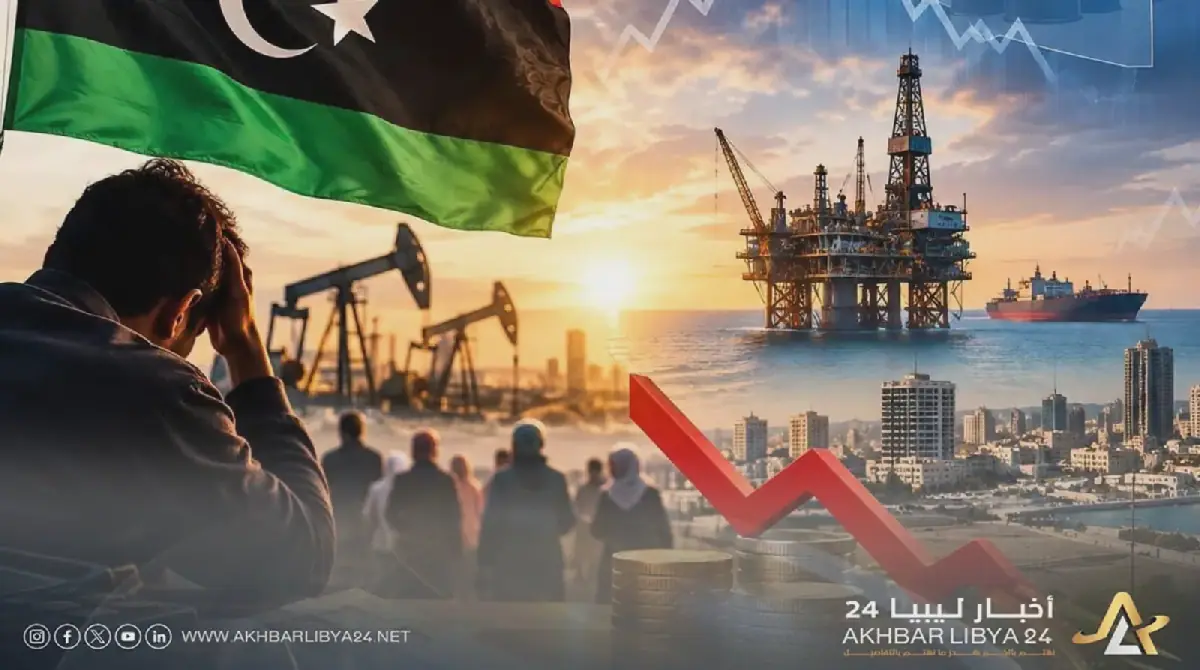
Libya is facing significant economic and geopolitical challenges as it navigates fluctuations in oil prices and ongoing division within the country. Despite having large oil reserves and a strategic location connecting North Africa to its southern regions, Libya has struggled to convert these advantages into sustainable development or regional economic influence. The country's economy remains heavily dependent on oil exports, making it vulnerable to external shocks.
The Libyan economy is at a critical juncture, with warnings about the risks of declining oil prices on the country's economy. The former diplomat and ambassador, Adil Issa, has raised concerns about the potential impact of a decline in oil prices on the Libyan economy. He notes that even with oil prices exceeding $90 per barrel, the Libyan dinar has not stabilized, highlighting the inefficiency in managing public revenues and spending.
Issa emphasizes the need for a unified budget to address the country's financial challenges. He notes that the Central Bank of Libya's monetary policy committee has stressed the importance of a unified budget. However, there is a distinction between a single budget and a unified budget, which requires a single financial reference, announced spending priorities, and effective oversight mechanisms.
The proposed African road project, which would connect Tripoli to Cape Town, presents an opportunity for Libya to play a significant role in continental trade and transportation. The project, which was first proposed in 2003, would span over 9,610 kilometers and provide Libya with a gateway to new markets in Central and Southern Africa. However, the project's implementation has been delayed due to Libya's ongoing instability.
Another proposed project, a Libya-Sudan economic corridor, aims to create a new trade route between the Red Sea and the Mediterranean. The project would involve the construction of pipelines, railways, and ports, and could provide Libya with a new source of revenue and reduce its dependence on oil exports. However, the project's success would require a stable political and security environment.
The economic challenges facing Libya are closely tied to the country's ongoing political division and regional instability. The international community has a role to play in supporting Libya's economic development and stability. However, the country's experience highlights the need for effective institutions and good governance in achieving sustainable development.
The African and Arab regions are characterized by complex and interconnected conflicts, with many institutions seemingly absent or ineffective. Libya's experience serves as a reminder of the importance of strong institutions and good governance in achieving economic stability and sustainable development.
Key points
- Libya's economy is heavily dependent on oil exports, making it vulnerable to external shocks.
- A unified budget is necessary to address the country's financial challenges.
- The proposed African road project and Libya-Sudan economic corridor offer opportunities for Libya to play a significant role in continental trade and transportation.