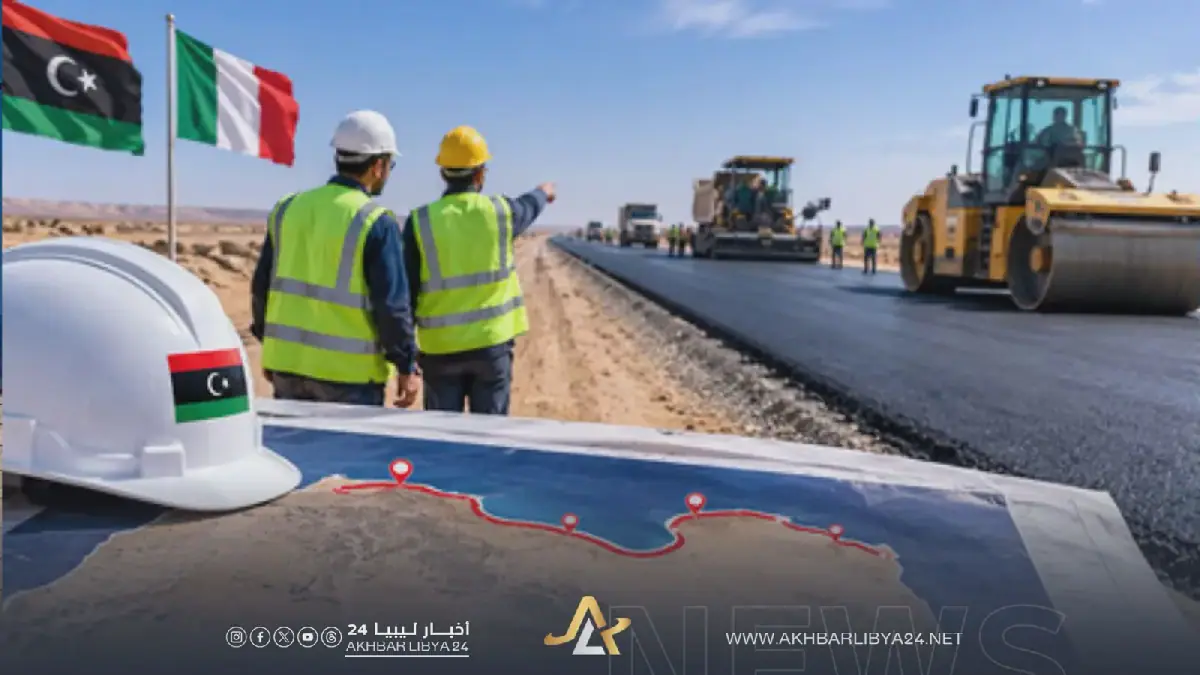
The Coastal Peace Road project, a major infrastructure development between Libya and Italy, is set to resume after facing significant delays. The project, which aims to connect the Egyptian border to the Tunisian border, stalled due to disagreements over funding and implementation. Libya is preparing to reissue tenders for parts of the project, following the termination of a contract with Italian company Webuild. The new approach involves dividing the project into smaller sections and awarding separate contracts.
A Libyan delegation is expected to visit Rome in November to discuss the project's future and the re-tendering of its sections. The talks will focus on determining which sections will be re-tendered, priorities for implementation, and suitable contractual and financial arrangements. There is a possibility that only Italian companies will be allowed to participate in the new tenders, as part of the cooperation agreements between the two countries.
The project's revival involves revising its original route to avoid conflicts with ongoing road expansion projects in eastern Libya. The changes aim to improve traffic flow and connectivity between cities. The proposed revisions include creating links and subsidiary roads to connect the cities of Marj, Suluq, and Benghazi. These adjustments are intended to enhance the road network and support economic and commercial activities.
The original contract with Webuild, valued at €940 million, was disputed when the company requested an increase to €2.4 billion, citing rising implementation costs. The disagreement led to the contract's termination and a legal dispute. The project's revival will require resolving the outstanding legal issues related to the previous contract and securing new funding and guarantees.
In western Libya, some sections of the project are awaiting financial and banking requirements to commence implementation. The Italian company Todini is waiting for the necessary funding and guarantees to start work on Section 4.3. Meanwhile, preparations are underway to issue a new tender for the section linking the cities of Misrata and Khoms.
The Coastal Peace Road project, which spans 1750km, is a key component of the 2008 Libya-Italy Friendship and Cooperation Treaty. The project aims to improve transportation, trade, and connectivity between eastern and western Libya. Its completion is expected to boost economic and commercial activities, as well as enhance the road network.
The project's implementation has faced numerous challenges, including contractual disputes, funding issues, and changes in construction costs. Despite these challenges, the Libyan and Italian governments are committed to reviving the project and ensuring its completion. The project's success will depend on the ability of the two countries to work together to overcome the existing obstacles and secure the necessary funding.
Key points
- The Coastal Peace Road project aims to connect the Egyptian border to the Tunisian border, spanning 1750km.
- The project's revival involves revising its original route to avoid conflicts with ongoing road expansion projects in eastern Libya.
- The project's implementation has faced numerous challenges, including contractual disputes, funding issues, and changes in construction costs.