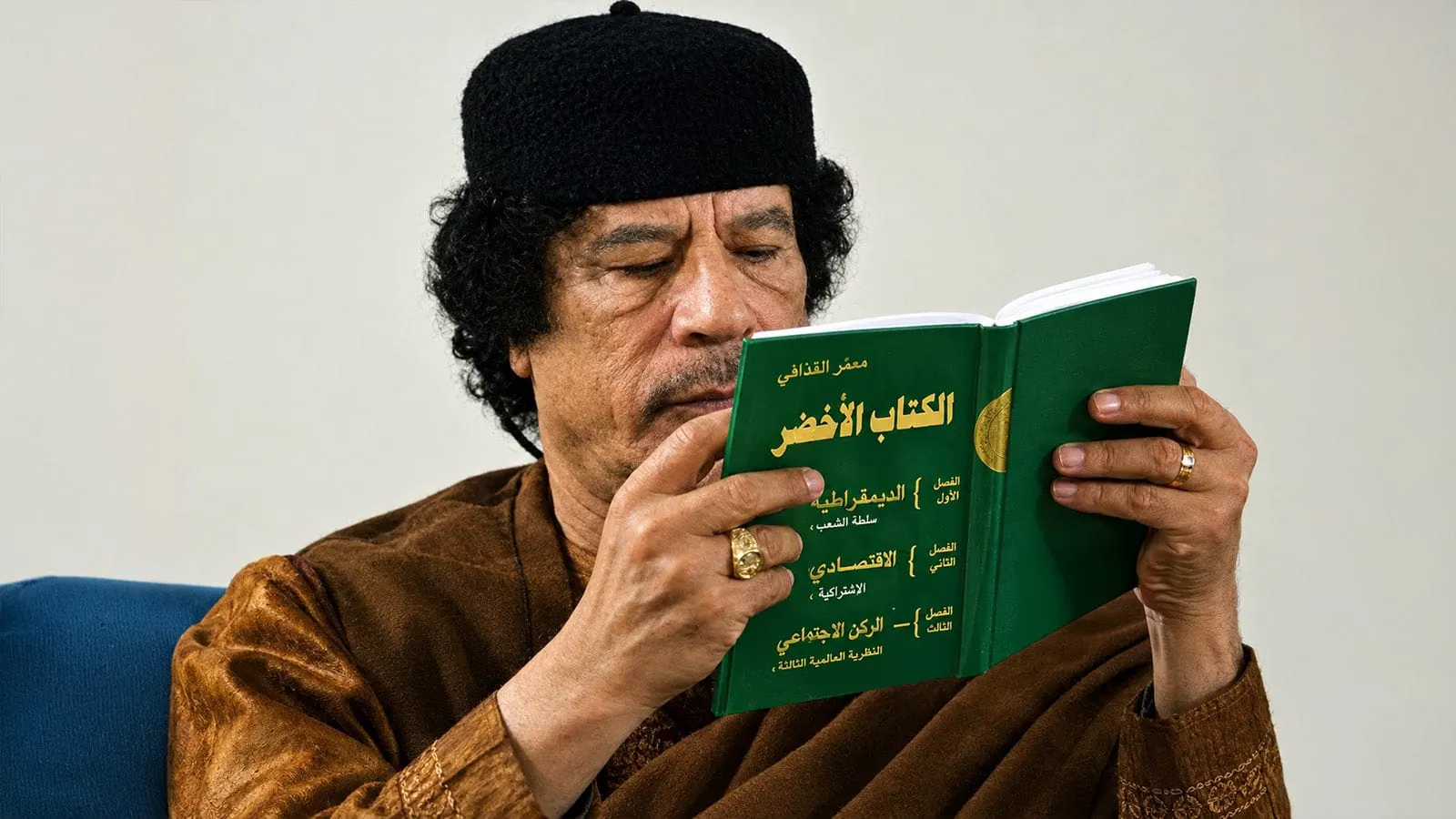
A recent article published on October 9, 2026, by Libyan news outlet Libya Al Ahrar TV has revived the debate over the authorship of Muammar Gaddafi's Green Book. The article, written by Sudanese writer and journalist Sadek Al-Razeki, presents a new theory on the book's origins. According to Al-Razeki, the Green Book was not solely the work of Gaddafi, but rather a collaborative effort involving several key figures, including Sudanese thinker Abdullah Zakaria Idris.
Abdullah Zakaria Idris, a prominent figure in the Sudanese Islamic Socialist movement, traveled to Libya in the early 1970s and engaged in intellectual discussions with Gaddafi and other Libyan and Arab thinkers. Al-Razeki claims that Zakaria played a crucial role in shaping the Green Book's ideas and slogans. The article cites Zakaria's own account of the book's creation, describing the sessions as chaotic and idea-filled, with participants jumping from one concept to another.
Al-Razeki's article also mentions another key figure, Sadek Al-Nayhoum, a Libyan thinker who has long been associated with Gaddafi's regime. While Al-Nayhoum has previously denied allegations of writing the Green Book on Gaddafi's behalf, Al-Razeki's account suggests that Al-Nayhoum was indeed involved in the book's creation. However, not everyone agrees with Al-Razeki's theory, and some have disputed the claims made about Al-Nayhoum's role in the book's authorship.
The debate over the Green Book's authorship is not new, with various theories and allegations having been made over the years. Some have questioned the book's originality, suggesting that its ideas were not entirely new or innovative. The Green Book, which presents Gaddafi's "Third International Theory," was published in the 1970s and served as the foundation for Libya's governance under Gaddafi's rule.
The article by Al-Razeki has sparked renewed interest in the Green Book and its origins, with many questioning the official narrative surrounding its creation. While some have praised Al-Razeki's investigation, others have criticized his methodology and conclusions. The debate is likely to continue, with many seeking to uncover the truth behind the Green Book's authorship.
The Green Book's impact on Libyan politics and society cannot be overstated. Its ideas and principles shaped the country's governance and economy for over three decades, with far-reaching consequences for the Libyan people. As Libya continues to navigate its post-Gaddafi era, understanding the origins and evolution of the Green Book remains an important aspect of the country's ongoing transition.
The controversy surrounding the Green Book's authorship serves as a reminder of the complex and often contentious nature of Libya's recent history. As the country continues to grapple with the legacies of Gaddafi's rule, debates over the Green Book and its origins are likely to remain a contentious issue for years to come.
Key points
- The article by Sadek Al-Razeki presents a new theory on the authorship of Muammar Gaddafi's Green Book, suggesting that Sudanese thinker Abdullah Zakaria Idris played a crucial role in shaping the book's ideas and slogans.