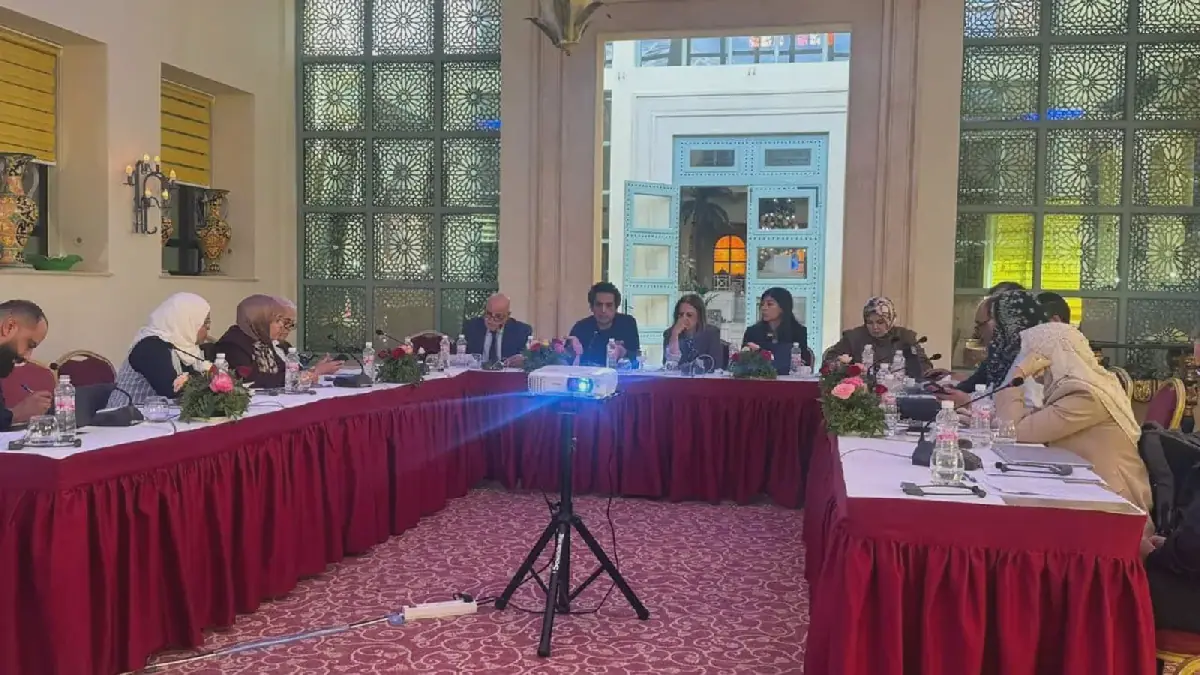
The United Nations Support Mission in Libya (UNSMIL) announced that Libyan parliament members, legal experts, and civil society representatives have agreed on the final draft of a new law regulating civil society organizations. The law aims to enhance their legal protection and ensure their ability to work independently and effectively. The agreement was reached during a two-day roundtable discussion in Tunisia, organized by UNSMIL's Human Rights Department.
The roundtable discussion, which concluded on October 30, 2026, brought together various stakeholders, including former Libyan Justice Minister Salah al-Marghani, the National Council for Public Freedoms and Human Rights, civil society organizations, UN officials, and UN Special Rapporteur on the Right to Freedom of Peaceful Assembly and Association, Gina Romero. The meeting built on previous dialogues facilitated by the UN in Geneva and Tunisia.
According to UNSMIL, the discussions focused on reviewing the draft law article by article, ultimately leading to an agreement on its final version. A practical plan was also outlined to submit the draft to the Libyan parliament for adoption. The new law aims to replace existing legal frameworks, including Law No. 19 of 2001 and Decision No. 286 of 2019, with a unified, rights-based legal framework.
During the meeting's opening session, UNSMIL's Deputy Special Representative for Political Affairs, Stephanie Khouri, emphasized that the mission's role is limited to facilitating dialogue and providing technical expertise when requested. She encouraged participants to share experiences and focus on practical outcomes. Meanwhile, Special Rapporteur Gina Romero pledged to continue monitoring and providing technical support to ensure the adoption of legislation that aligns with international standards for freedom of association.
Human Rights Officer at UNSMIL, Khaloud Najm, highlighted the significance of agreeing on the draft law, stating that it represents a crucial step towards ensuring that Libyan civil society organizations can operate safely, independently, and effectively. She noted that protecting freedom of association is essential for promoting public participation and an inclusive political process, including credible elections.
The discussions also centered on establishing transparent, streamlined, and proportionate procedures for civil society organizations, including registration requirements, and ensuring their protection from arbitrary or unjustified state interference. Participants reviewed existing legal frameworks, focusing on the need for a unified, rights-based approach to regulate civil society work in Libya.
The agreement on the draft law marks a significant milestone in Libya's efforts to strengthen its civil society sector. The new law is expected to provide a more enabling environment for civil society organizations to operate, contributing to a more inclusive and participatory political process in the country. Key stakeholders will continue to engage in the coming weeks to finalize the adoption of the law.
Key points
- The new law aims to enhance the legal protection and independence of civil society organizations in Libya.
- The agreement was reached during a two-day roundtable discussion in Tunisia, organized by UNSMIL's Human Rights Department.
- The draft law is expected to replace existing legal frameworks with a unified, rights-based approach to regulate civil society work in Libya.