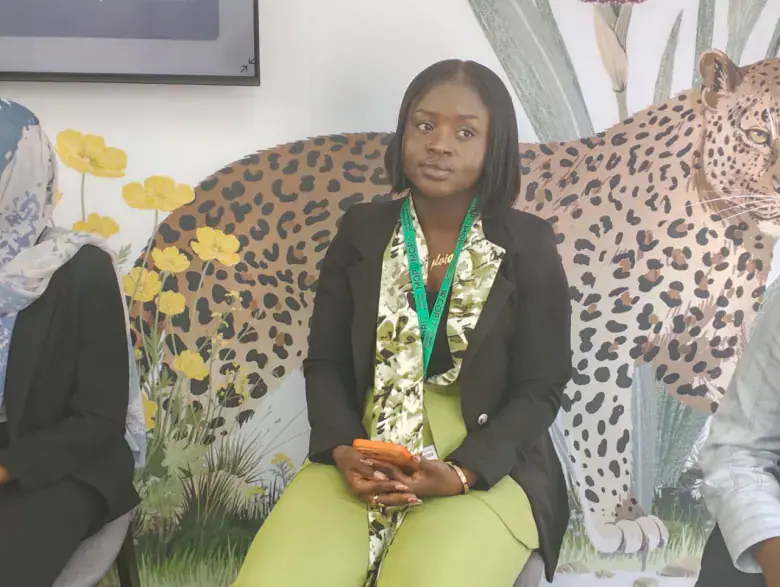
Liberian environmental expert Sylvia Diamond Dorbor has received praise from participants at the ongoing United Nations Biodiversity Conference in Yerevan, Armenia, for highlighting Liberia's longstanding forest conservation commitments and national legal framework. Dorbor, Technical Lead of the Guinean Forests Integrated Program Liberia Project and Sustainable Finance Coordinator at the Society for the Conservation of Nature of Liberia (SCNL), presented during a panel discussion on Africa's progress toward achieving the global 30×30 biodiversity target by 2030.
Dorbor's presentation emphasized Liberia's extensive forest resources, conservation legislation adopted before the international community agreed on the current global biodiversity framework, and efforts to develop a national action plan. She also raised a fundamental question confronting countries seeking to protect their forests: how can governments ensure that communities receive predictable and equitable benefits from conservation? Participants praised her explanation of Liberia's conservation history and the importance of building on existing national laws to advance international environmental commitments.
The conference brings together government representatives, environmental experts, conservation organizations, researchers, and development partners under the United Nations Convention on Biological Diversity. Dorbor challenged the perception that Liberia's commitment to biodiversity conservation began with the adoption of the Kunming–Montreal Global Biodiversity Framework in December 2022. She explained that Liberia had already established policies and legal instruments intended to protect its forests long before the international community adopted the current 30×30 target.
According to Dorbor, Liberia's National Forest Inventory, conducted between 2018 and 2019 and officially launched in 2021, estimated that the country possesses approximately 6.6 million hectares of forest, representing about 69 percent of its total land area. This makes Liberia a significant player in West Africa's conservation landscape, particularly because it contains a substantial portion of the remaining Upper Guinean forest ecosystem.
Liberia's forests provide habitats for numerous wildlife species, support the livelihoods of forest-dependent communities, and contribute to climate regulation, carbon storage, watershed protection, and ecological balance. However, agricultural expansion, logging, mining, infrastructure development, and other land-use pressures present continuing challenges for conservation authorities and communities seeking to maintain forest cover while pursuing economic opportunities.
Dorbor argued that addressing these competing demands requires more than the designation of protected areas; it also requires effective institutions, sustainable financing, and mechanisms that demonstrate to communities that protecting their natural resources can generate tangible and lasting benefits. She pointed to legislation adopted over two decades ago, including the Act for the Establishment of a Protected Forest Areas Network in 2003 and the National Forestry Reform Law of 2006.
Dorbor's presentation also highlighted the need to distinguish between Liberia's longstanding legal commitment to protecting a proportion of its forested areas and the broader international 30×30 target. Liberia began developing its national 30×30 Action Plan in 2024 as part of efforts to translate the international commitment into a practical framework suited to the country's environmental circumstances.
Key points
- Liberian environmental expert Sylvia Diamond Dorbor praised at UN Biodiversity Conference in Armenia for outlining Liberia's 30×30 conservation efforts.
- Liberia has a longstanding national policy and legal foundation for forest conservation, with approximately 6.6 million hectares of forest representing about 69 percent of its total land area.
- Liberia began developing its national 30×30 Action Plan in 2024 to translate the international commitment into a practical framework suited to the country's environmental circumstances.