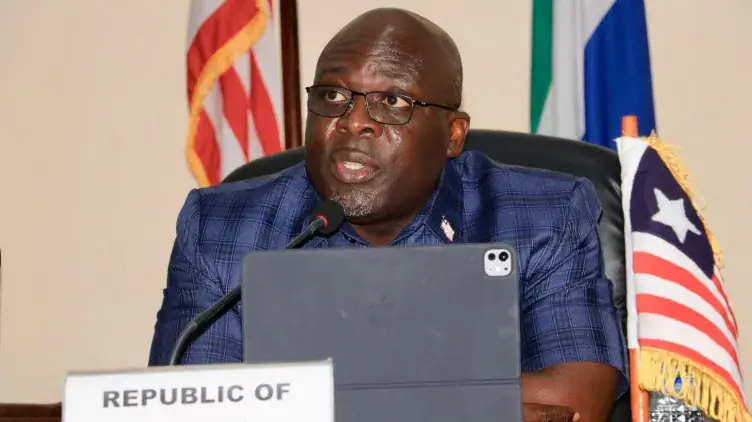
Liberia has called for a fair and equitable approach to decarbonizing international shipping, warning that the transition to net-zero emissions must not impose disproportionate economic costs on developing countries. This call was made during a high-level engagement with United Nations Member States in New York, where Liberia presented its proposed alternative approach to the International Maritime Organization's (IMO) Net-Zero Framework. Liberia's proposal seeks to advance the objectives of the IMO's 2023 Strategy on Reduction of Greenhouse Gas Emissions from Ships.
Liberia, a major global flag State and a climate-vulnerable developing country, emphasized that ambitious climate action must go hand in hand with protecting developing economies. The country maintains that maritime decarbonization should be pragmatic, affordable, scalable, performance-based, and legally coherent within the IMO's mandate. Liberia's position emphasizes that "net zero must not become a new burden on developing countries." The country is pushing for an equitable maritime decarbonization framework, citing risks to trade, food, and energy security.
Liberia cautioned that significantly higher maritime transportation costs could have far-reaching consequences, potentially driving up the prices of essential commodities and undermining food security, energy security, trade competitiveness, and sustainable development. International shipping is central to the movement of essential goods, making the cost of maritime transport a critical concern for developing economies. The economic implications of maritime decarbonization must be considered alongside environmental objectives, particularly for countries heavily dependent on maritime trade.
Liberia argued that economic impact assessments should be tailored to individual developing countries, as nations differ in their economic structures, trade profiles, technological capabilities, infrastructure, and access to finance. A comprehensive global assessment should be complemented by country-specific evaluations that capture the vulnerabilities and circumstances of individual states. This approach will ensure that the transition to net-zero emissions does not unfairly disadvantage developing countries.
Liberia's proposed alternative approach emphasizes commercially viable alternative fuels, operational and technological efficiencies, infrastructure development, and capacity-building as practical pathways to reducing emissions from international shipping. The country advocates for predictable, transparent, and equitable support mechanisms that respond to the needs of developing countries. Liberia maintains that developing economies should not be required to absorb significant economic and trade costs upfront.
Despite concerns, Liberia reaffirmed its support for climate action, seeking a framework that allows environmental protection and sustainable development to advance together. A fair transition could create opportunities for investment, innovation, technology transfer, infrastructure development, and capacity-building, while protecting trade and economic security. Liberia pledged to continue working with IMO Member States and stakeholders toward a maritime decarbonization framework that balances climate objectives with economic realities.
The IMO and its Member States are expected to continue deliberations on the Net-Zero Framework at the next session of the Marine Environment Protection Committee (MEPC), scheduled for November 2026. Liberia will remain actively engaged in consultations, seeking an outcome that is environmentally ambitious, economically responsible, and equitable for all Member States. The country's proposal aims to ensure that the transition to net-zero emissions is fair, sustainable, and considers the unique needs and circumstances of developing countries.
Key points
- Liberia urges a fair and equitable approach to maritime decarbonization to avoid burdening developing economies.