The United Methodist University (UMU) has emerged victorious in an inter-university debate organized by the Liberia Extractive Industries Transparency Initiative (LEITI). The debate, held recently, focused on whether extractive companies should work with affected communities and counties to implement Social Development Funds or whether the Central Government should take full responsibility for managing and implementing the funds. UMU argued in favor of community involvement, while African Methodist Episcopal University (AMEU) argued against the motion.
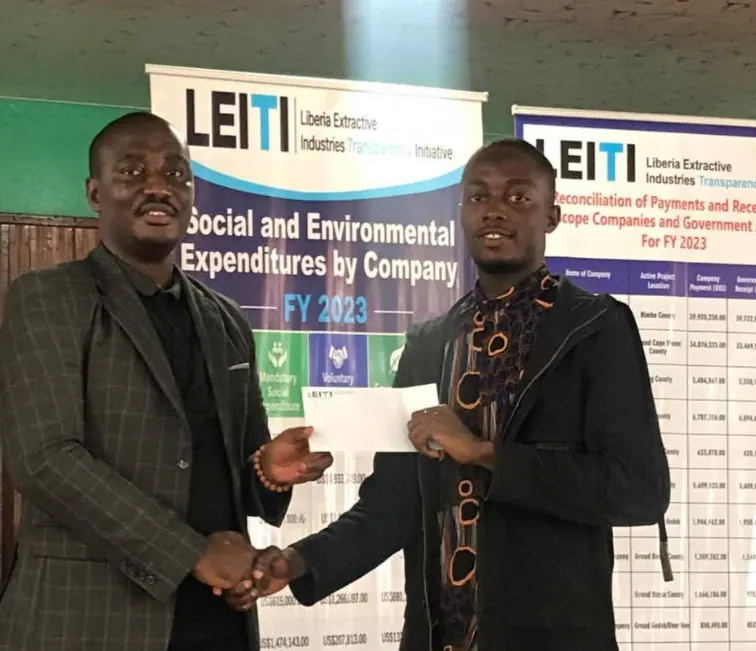
The debate generated intense intellectual exchanges, with students from both universities presenting arguments on transparency, accountability, community participation, and government responsibility in managing resources generated from the extractive sector. The competition was fierce, with both teams presenting well-reasoned arguments. In the end, UMU emerged victorious by a narrow margin of two points. The winning team received US$250 in cash and gold-like medals, while AMEU, as runner-up, received US$150 and silver-like medals.
The debate was part of LEITI's public engagement activities designed to sample citizens' views and encourage constructive discussions on issues affecting Liberia's extractive industry. LEITI Head of Secretariat, Jeffrey N. Yates, said engaging young people in conversations about natural-resource governance is crucial to strengthening public understanding and promoting greater accountability in the sector. LEITI is Liberia's implementing body of the global Extractive Industries Transparency Initiative.
The question of Social Development Funds remains a pressing issue in Liberia, particularly for communities affected by mining and other extractive activities. The funds are intended to support development in communities connected to extractive operations, but concerns have periodically been raised about their management, transparency, allocation, and implementation. LEITI's 15th EITI Report revealed that companies in Liberia's extractive sector spent approximately US$34 million in social and environmental expenditures.
The report also highlighted concerns raised by citizens during LEITI's community engagements over the transparency and accountability surrounding Social Development Funds. Residents in some communities have called for greater participation in determining how funds are used and stronger oversight of projects financed through extractive-sector contributions. Civil society organizations have also raised concerns about the implementation of County Social Development Funds.
The LEITI debate provided a platform for students to examine competing approaches to managing development funds while encouraging young Liberians to participate in national discussions on transparency, accountability, and responsible management of the country's natural resources. The debate also underscored the importance of engaging young people in conversations about natural-resource governance.
The event demonstrated the value of promoting transparency and accountability in the management of Liberia's natural resources. By engaging students in debates and discussions, LEITI aims to strengthen public understanding and promote greater accountability in the extractive sector. The outcome of the debate is expected to contribute to ongoing discussions on the management of Social Development Funds in Liberia.
Key points
- UMU won the debate by a narrow margin of two points.
- The debate focused on the management of Social Development Funds in Liberia's extractive sector.
- LEITI's debate aimed to promote transparency and accountability in the management of Liberia's natural resources.