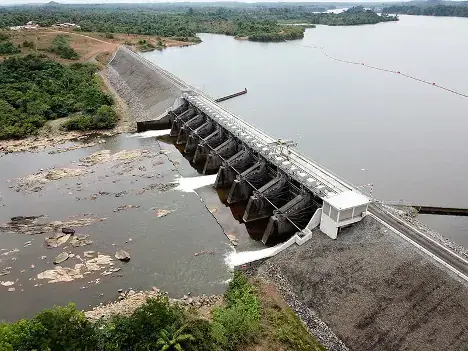
Liberia is increasing its reliance on solar power to mitigate the effects of declining hydropower generation during the dry season. The country's main hydropower plant, Mount Coffee, experiences a significant reduction in electricity generation between January and May, resulting in a greater dependence on expensive fuel and electricity imports from neighboring Côte d'Ivoire. To address this issue, the government has dedicated a 20-megawatt solar plant at Mount Coffee and plans to expand the facility with battery storage.
The Mount Coffee solar plant was developed under the World Bank-supported Regional Emergency Solar Power Intervention Project and licensed in August. The plant does not yet have battery storage, but plans are underway to add batteries and increase the plant's capacity from 20 to 30 megawatts. This will enable the storage of electricity generated during the day for use in the evening. The World Bank's project documents also outline plans to support additional solar capacity, battery storage, and improvements to the electricity network.
The Liberian government aims to reach 90 megawatts of utility-scale solar generation by 2029. Solar power offers a viable alternative to hydropower during the dry season, and the government is working to strengthen the transmission lines, reinforce overloaded substations, and replace ageing equipment. The Liberia Electricity Corporation is building a system to monitor parts of the electricity network and identify faults from a central control center, known as a supervisory control and data acquisition system.
The effects of unreliable electricity have been significant, particularly in essential services. In 2020, a fuel shortage at Phebe Hospital in Bong County left generators unable to provide electricity for emergency services, affecting patients requiring emergency surgery and life-support equipment. The hospital's situation highlights the need for a reliable electricity supply. The government is working to address these challenges and ensure a stable electricity supply.
Liberia is also pursuing solar projects to extend access to rural communities. The Rural Renewable Energy Agency is developing a four-megawatt solar system with 15 megawatt-hours of battery storage for Lofa County. The system is expected to benefit communities including Voinjama, Foya, and Kolahun. The agency is also seeking private-sector participation to help implement the country's Rural Energy Strategy and Master Plan.
The International Solar Alliance has been working with Liberian institutions to develop policies and regulations that could help attract investment in the solar sector. In April 2025, the alliance held consultations on solar tariff calculations, mini-grid regulations, and feed-in tariffs. The discussions focused on creating an enabling environment for solar energy development. Ashish Khanna, Director General of the International Solar Alliance, noted that solar and hydropower could complement each other.
As Liberia continues to develop its solar power capacity, the country faces challenges related to financing, reliable supply, and the disposal of used solar equipment. The government and international organizations are working together to address these challenges and ensure a stable and reliable electricity supply. The development of solar power is critical to Liberia's energy security and economic growth.
Key points
- Liberia aims to reach 90 megawatts of utility-scale solar generation by 2029.
- The Mount Coffee solar plant has a capacity of 20 megawatts and plans are underway to increase it to 30 megawatts with battery storage.
- The Liberian government is working to strengthen the transmission lines, reinforce overloaded substations, and replace ageing equipment to improve the electricity network.
Reporting sources
- Liberia Turns to Solar as Dry-Season Hydropower Falls · FrontPage Africa