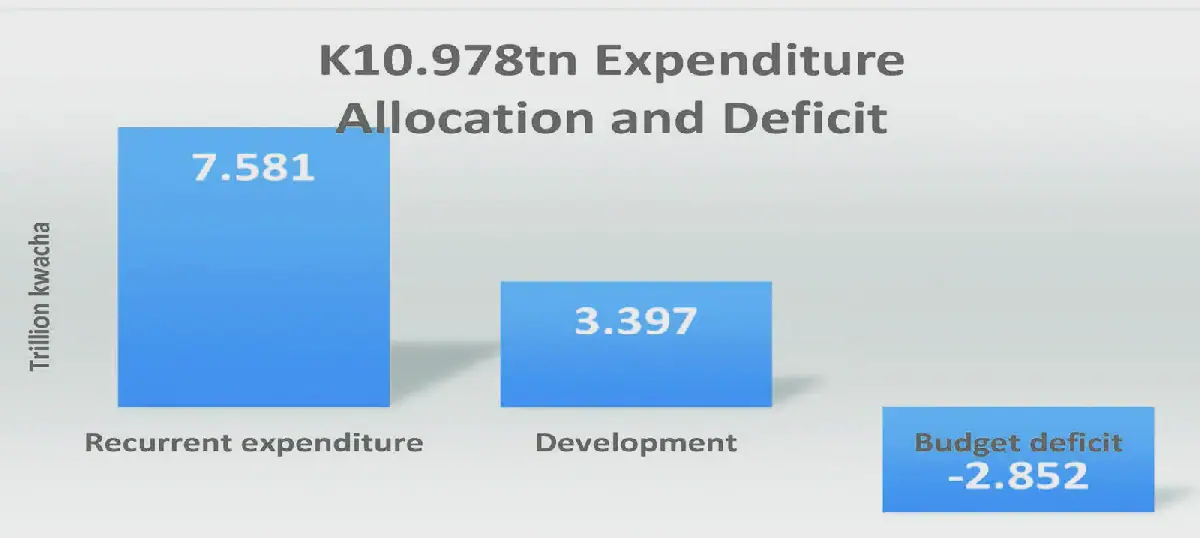
The Malawian government's austerity measures face a new challenge as the latest fiscal figures reveal a relatively modest cumulative deficit during the first five months of the 2026/27 financial year. According to Reserve Bank of Malawi (RBM) figures, the government recorded a cumulative deficit of K352.8 billion, representing 12.4 percent of the K2.85 trillion deficit projected for the financial year. This development has sparked debate among economists on the effectiveness of the government's austerity measures.
The Treasury recorded deficits in four of the five months, but a K349.9 billion surplus in June helped contain the cumulative shortfall. Scotland-based Malawian economist Velli Nyirongo noted that the fiscal position suggests that consolidation efforts remain challenging despite the relatively modest cumulative deficit. He expressed concerns that the surplus in June may reflect temporary revenue gains or delayed payments rather than lasting improvements in expenditure management.
Nyirongo argued that austerity measures have not yet delivered sufficient results, warning that spending cuts without addressing debt costs, revenue weaknesses, and inefficient expenditure will not produce sustainable fiscal consolidation. The government introduced expenditure containment measures in the K10.978 trillion National Budget, including restrictions on travel, vehicle purchases, and recruitment, alongside a 30 percent reduction in fuel entitlements.
The measures aimed to contain spending pressures amid mounting public debt, persistent fiscal deficits, and limited resources for development. Economics Association of Malawi president Bertha Bangara-Chikadza emphasized the need for sustained fiscal consolidation through improved expenditure management. She also stressed the importance of structural reforms to improve public resource efficiency and support economic growth.
Bangara-Chikadza's sentiments echo concerns that the government's austerity measures may not be effective in achieving fiscal stability. The modest deficit has raised questions about the sustainability of the government's fiscal consolidation efforts. Economists argue that the government needs to address underlying structural issues to achieve lasting fiscal stability.
The government's austerity measures have been implemented to address the country's fiscal challenges, but their effectiveness remains a topic of debate. The modest deficit has sparked a renewed discussion on the need for sustained fiscal consolidation and structural reforms. The government's ability to implement effective measures will be crucial in achieving fiscal stability and supporting economic growth.
The outcome of the government's austerity measures will have a significant impact on Malawi's economic prospects. The country's fiscal challenges are well-documented, and the government's response will be closely watched by economists and stakeholders. As the government continues to implement its austerity measures, the effectiveness of these measures will be closely monitored.
Key points
- The Malawian government's modest deficit has sparked debate on the effectiveness of its austerity measures.
- Economists argue that the government needs to address underlying structural issues to achieve lasting fiscal stability.
- The government's ability to implement effective measures will be crucial in achieving fiscal stability and supporting economic growth.
Reporting sources
- Low deficit puts austerity gains to test · The Nation