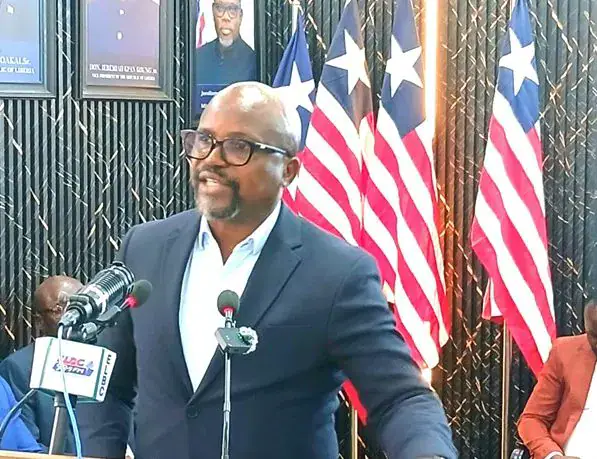
Liberia's Public Works Minister Layfette Giddings has announced an ambitious target to pave approximately 700 kilometers of primary roads by 2029. This goal surpasses the 485-kilometer target under President Joseph Nyuma Boakai's ARREST Agenda for Inclusive Development. Giddings reported that between January 2024 and August 2026, 164 kilometers of roads were added to Liberia's paved-road network, comprising 150 kilometers of primary roads and 14 kilometers of urban and community roads.
Giddings outlined ongoing infrastructure projects and reforms intended to strengthen accountability in Liberia's construction sector. He said the ministry expects to exceed the road-construction targets established under the government's development agenda, citing ongoing projects and additional works scheduled to begin during the current dry season. The government is targeting another 100 kilometers of primary roads and 91 kilometers of urban and community roads in 2027.
The minister emphasized that the government's infrastructure program is not limited to major highways but also includes community roads, city streets, bridges, and other public infrastructure intended to improve mobility across the country. He described roads and bridges as essential to Liberia's economic development, arguing that they connect farmers to markets, enable children to attend school, facilitate access to hospitals, and allow investors to reach communities where businesses can create employment.
Giddings highlighted several road projects, including the Ganta-to-Saclepea corridor, the Saclepea-to-Tapita corridor, the Fish Town-to-Kalaboke corridor, and works extending toward southeastern Liberia. He said construction activities were progressing on several of these routes, with additional pavement layers expected on sections that have already received earlier stages of asphalt construction.
The minister also pointed to ongoing works in and around Monrovia, including community roads, city streets, and bypasses designed to reduce congestion and improve access to residential areas. One such intervention is the road connecting the SKD Boulevard area to Peace Island and Paco Island. Giddings said the bypass has created additional access routes for residents who previously depended on limited connections to reach the main boulevard.
Giddings criticized the previous administration's handling of the Roberts International Airport (RIA) project, alleging that substantial payments had been made directly to contractors before corresponding physical work had been completed. He said the government inherited the project when it was only about five to six percent complete, with significant funds already disbursed to the contractor. The minister contrasted that arrangement with the current administration's approach, under which project funds are processed through government financial-management mechanisms and released against verified milestones.
The minister said the government had engaged the contractor to reorganize the project and was working to ensure that financial disbursements correspond with actual physical progress. Although acknowledging the difficulties surrounding the project, Giddings said the government had decided against abandoning it because of its importance to a major transportation corridor used by people entering and leaving the country. He expressed hope that the project could be finished in 2027, while acknowledging that completion could extend into 2028.
Key points
- The Liberian government aims to pave approximately 700 kilometers of primary roads by 2029.
- The government has introduced reforms to strengthen accountability in the construction sector, including milestone payments and certified progress.
- The RIA road project, inherited from the previous administration, is facing challenges but is expected to be completed by 2027 or 2028.