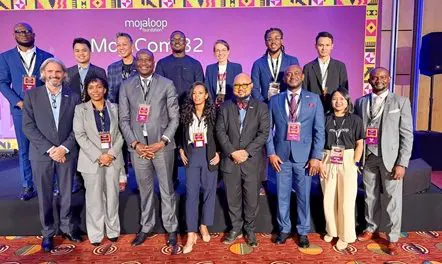
The Central Bank of Liberia (CBL) has made significant strides in transforming the country's payment landscape, shifting from a fragmented system to one driven by real-time, interoperable digital financial services. Executive Governor Henry F. Saamoi presented Liberia's progress at the MojaCom 32 forum in Accra, Ghana, a premier gathering on interoperable and inclusive payment systems in Africa. Saamoi's keynote address highlighted Liberia's journey and lessons for Africa in accelerating financial inclusion through instant and interoperable payments.
According to Saamoi, access to financial services is no longer the primary barrier to financial inclusion; connectivity among financial institutions and payment platforms is. He emphasized that the future of financial inclusion depends on how effectively financial institutions connect and enable the seamless movement of funds across networks. This connectivity constraint is a significant challenge that Liberia and other African countries must address to deepen financial inclusion.
The CBL has achieved notable milestones in its payment system modernization agenda, including the launch of the Pan-African Payment and Settlement System (PAPSS) and the deployment of the Inclusive Instant Payment System (IIPS). The IIPS facilitates real-time interoperability between Liberia's leading mobile money providers, Lonestar MTN Mobile Money and Orange Money Liberia. This has enabled customers of both networks to move money between them in real-time.
Liberia's digital payments ecosystem has delivered measurable results, with mobile money transactions reaching approximately L$585.88 billion and US$6.92 billion in value in 2025. The country's systemically important payment systems processed around 230,367 transactions valued at US$8.5 billion. Since its launch in December 2025, the IIPS has processed over 5.3 million interoperable transactions, including 4.2 million Liberian dollar transactions and 1.1 million United States dollar transactions.
Saamoi attributed the success of Liberia's payment system transformation to strong leadership, collaboration among stakeholders, and recognition of interoperable payment systems as critical national infrastructure. He called for greater collaboration among African central banks to strengthen regional payment connectivity and support the goals of the African Continental Free Trade Area (AfCFTA). This, he stressed, is crucial for Africa's economic integration and ability to move money quickly, securely, and affordably across the continent.
The MojaCom 32 forum brought together central banks, regulators, financial institutions, development partners, and technology providers from around the world to discuss emerging trends and innovations in digital payments, interoperability, and financial inclusion. Saamoi reaffirmed Liberia's commitment to building a modern, inclusive, and interconnected financial system while contributing to Africa's broader digital transformation agenda.
Saamoi concluded that Africa can build its future of payments and that the continent's economic integration will depend on the ability to move money quickly, securely, and affordably across borders. The next test for Liberia is whether its progress in digital payments and financial inclusion can reach rural households and small traders, who often face significant barriers to accessing financial services.
Key points
- Liberia's Central Bank Governor Henry F. Saamoi presents country's progress in digital payments and financial inclusion at MojaCom 32 forum in Accra, Ghana.
- The Inclusive Instant Payment System (IIPS) has processed over 5.3 million interoperable transactions since its launch in December 2025.
- Saamoi calls for greater collaboration among African central banks to strengthen regional payment connectivity and support the goals of the African Continental Free Trade Area (AfCFTA).