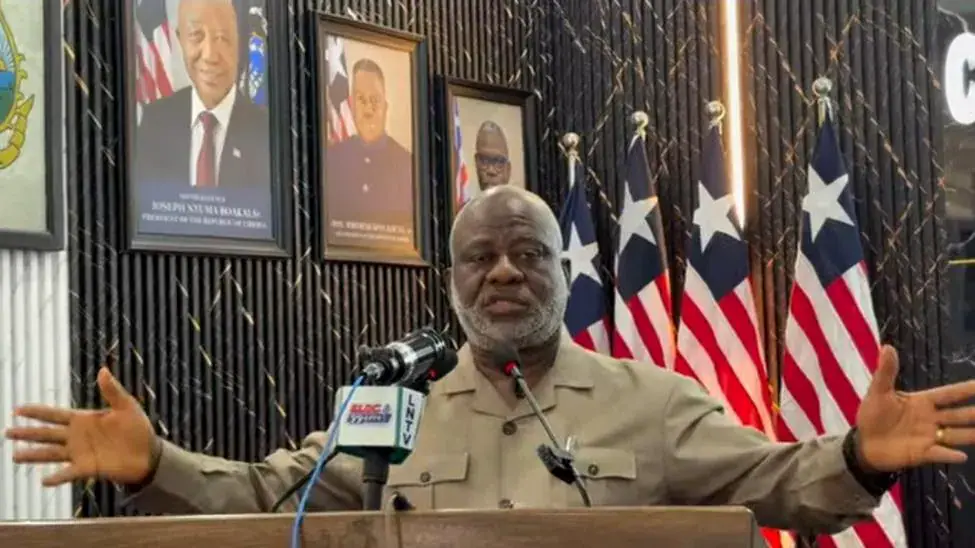
The Liberian government's Yellow Machine Project is moving forward with the deployment of 285 pieces of heavy-duty road construction equipment, expected to generate over 1,000 employment opportunities for Liberians. Special Presidential Project Coordinating Committee (SPPCC) head Brownie J. Samukai announced that more than 400 Liberians have already been recruited and are undergoing orientation ahead of the commencement of full operations. The project aims to improve road connectivity and support infrastructure development across Liberia's 15 political subdivisions.
Samukai disclosed that the employment initiative is intended to provide income opportunities for Liberians while stimulating economic activities in communities where the equipment will be stationed and deployed. The categories of workers recruited include truck drivers, excavator operators, heavy-duty equipment operators, fuel tanker operators, and personnel responsible for operating other specialized machinery. All recruited personnel are Liberians who underwent competency assessments administered and managed by the Ministry of Public Works (MPW).
The deployment of the 285 pieces of equipment was approximately 95 percent complete, with the final deployment scheduled for Grand Kru County on November 14. President Joseph Nyuma Boakai is expected to officially launch the project on November 16, through a nationwide broadcast. Following the launch, the equipment is expected to commence its initial operations, with the project team anticipating approximately six weeks of work through the end of December.
Samukai rejected reports of missing equipment during the deployment exercise, insisting that all machines and supporting equipment had been accounted for. He explained that low-bed trailers and fuel tankers were used to transport heavy machinery to designated counties and were required to return to Monrovia to facilitate subsequent deployments. A total of 19 fuel tankers and 19 low-bed trailers were in Monrovia at the time of the briefing and were expected to return to their assigned counties by the end of the week.
To coordinate activities across the country, the SPPCC has established 19 operational hubs and recruited county coordinators, assistant coordinators, data collectors, and regional monitors to supervise implementation. Samukai identified the effective monitoring and utilization of the equipment as a major challenge that the project management team would be confronting in the coming months. A geospatial tracking system would be installed on each machine to monitor operating hours and movements.
Samukai defended the financial requirements of the project, arguing that the initial cost of road construction and rehabilitation should be understood within the context of the project's scope and objectives. The project aims to provide income opportunities for Liberians while stimulating economic activities in communities where the equipment will be stationed and deployed.
The SPPCC head emphasized that decisions on the selection of roads to be rehabilitated would be made through consultations involving county political leaders, elected officials, county engineers from the MPW, and SPPCC county coordinators. The process would not be determined solely by the central project management team, but would involve local leadership to identify priority roads requiring intervention.
Key points
- The Yellow Machine Project is expected to generate over 1,000 employment opportunities for Liberians.
- The deployment of 285 pieces of equipment is approximately 95 percent complete.
- A geospatial tracking system will be installed on each machine to monitor operating hours and movements.