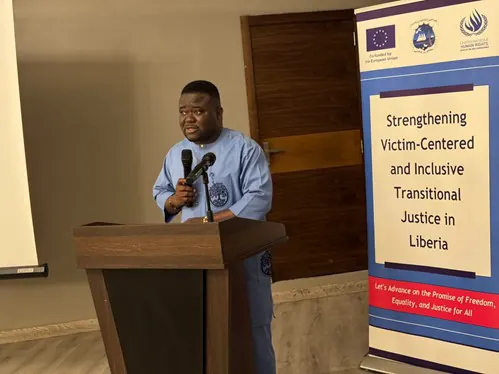
Liberia's Witness Protection Agency (WPA) is making strides in its mission to safeguard witnesses and whistleblowers, with the support of the Office of the United Nations High Commissioner for Human Rights (OHCHR) and the European Union (EU). At a recent workshop in Monrovia, WPA Director Maxwell Grigsby outlined the agency's progress and emphasized the need for reforms to two laws passed in 2021. The agency's work is crucial for the establishment of a War and Economic Crimes Court, which will rely on witnesses willing to testify.
The WPA was established in 2021 with the enactment of the Witness Protection Act and the Whistleblower Act. The agency operates under the Executive Branch and administers the Liberia Witness Protection Program across three stages: investigation and pre-hearing, hearing, and post-trial. The program aims to protect the safety, confidentiality, and welfare of witnesses and whistleblowers throughout judicial proceedings. Grigsby stressed that the agency's existence is centered on ensuring that no Liberian has to choose between telling the truth and staying safe.
Since its launch, the WPA has made significant progress, including the recruitment of staff, establishment of key units, and securing offices. In May 2026, the agency initiated national consultations to amend the Witness Protection Act and the Whistleblower Act. These amendments aim to close gaps in the current laws, clarify roles and procedures, and align both Acts with international human rights standards. The review process has involved justice institutions, oversight bodies, and civil society.
The WPA's progress is attributed in part to its partnership with OHCHR, which has provided technical and financial support, including a dedicated consultant. This collaboration has resulted in a draft five-year strategic plan to guide the growth and direction of the WPA. Stakeholders will review and validate the plan on September 24 and 25. The agency's work is critical for building public trust in justice, as officials warned that trust depends on keeping witnesses safe.
The workshop organized by OHCHR, EU, and WPA aimed to take stock of Liberia's implementation of its framework for the judicial protection of victims, witnesses, and whistleblowers. An international expert on witness protection presented essential features of protection frameworks developed by national and international courts, sharing lessons learned and best practices. Participants discussed strategies to deliver holistic services, including mental health and psychosocial support.
Grigsby emphasized that protection is a shared responsibility that requires collaboration across police, courts, and civil society. He encouraged participants to actively engage, ask questions, and share their experiences. The workshop's objectives included discussing strategies for delivering comprehensive services and promoting a culture of protection. The WPA's work is essential for strengthening justice and accountability in Liberia.
The establishment of a strong and modern legal framework for witness protection is crucial for Liberia's transitional-justice agenda. The War and Economic Crimes Court and the National Anti-Corruption Court will depend on witnesses who feel safe enough to testify. Grigsby's appeal for reforms to the two laws underscores the urgency of this matter. The WPA's progress and partnerships demonstrate its commitment to protecting witnesses and whistleblowers.
Key points
- The Witness Protection Agency's progress is crucial for the establishment of a War and Economic Crimes Court in Liberia.
- The agency's work is centered on ensuring that no Liberian has to choose between telling the truth and staying safe.
- The WPA's partnership with OHCHR and EU has been instrumental in its progress and development.