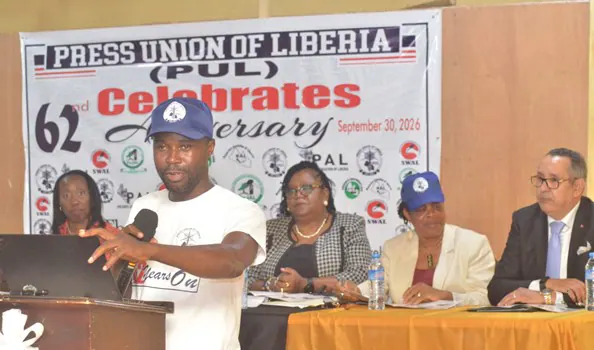
The Press Union of Liberia (PUL) marked its 62nd anniversary on September 30, 2026, with a stern warning about the state of press freedom in the country. PUL President Julius Kanubah listed a year of arrests, summonses, threats, and prison sentences against journalists, naming influential figures such as House Speaker Richard Koon, Police Inspector General Gregory Coleman, and the Ministry of Information.
Kanubah cited several instances of threats and intimidation against journalists, including the arrest and detention of journalists Eric Opa Doue and Methesulah Gaye in Rivercess County for contempt of court and publishing false information. The journalists were sentenced to 30 days in prison but were later set free after sustained advocacy and interventions by the PUL.
The PUL president also pointed to attempts to amend the Kamara Abdullah Kamara (KAK) Act of Press Freedom to create a “Gender-Based Online Abuse and Harassment Act,” which he said represents a grave threat to freedom of speech and expression in Liberia. Additionally, he mentioned a writ of summons issued by the Guthrie Magisterial Court in Bomi County against two Trust FM broadcast journalists, Varney Williams and William Kromah.
Kanubah reserved some of his sharpest words for the Inspector General of the Liberia National Police (LNP), Col. Gregory Coleman, who accused the media of receiving money from the drug cartel. The PUL considers the allegation a "reckless, risky, and blanket indictment of journalism and media in Liberia," and has concluded consultations with legal counsel on the way forward.
Turning to legislation, Kanubah cautioned journalists to be wary of the new Cybercrime Act, which he argued is seemingly a threat to the exercise of press freedom and freedom of speech and expression. The PUL is deeply concerned about the circumstances and manner in which the legislation was enacted, with little public consultation.
Kanubah also announced that the National Media Council has been reactivated to look into grievances and alleged ethical breaches. The council has conducted several investigations and submitted reports to the PUL leadership for action, finding several media outlets and journalists in violation of the ethical code of journalism.
The PUL is resisting pressure from power while trying to police its own house, and how it handles both fights will shape press freedom in the months ahead. The union's efforts to protect press freedom and freedom of speech and expression are crucial in maintaining a healthy democracy in Liberia.
Key points
- The Press Union of Liberia has documented several instances of threats, intimidation, and harassment against journalists over the past year.
- The new Cybercrime Act in Liberia has raised concerns about its potential impact on press freedom and freedom of speech and expression.
- The National Media Council has been reactivated to investigate grievances and alleged ethical breaches in the media industry.