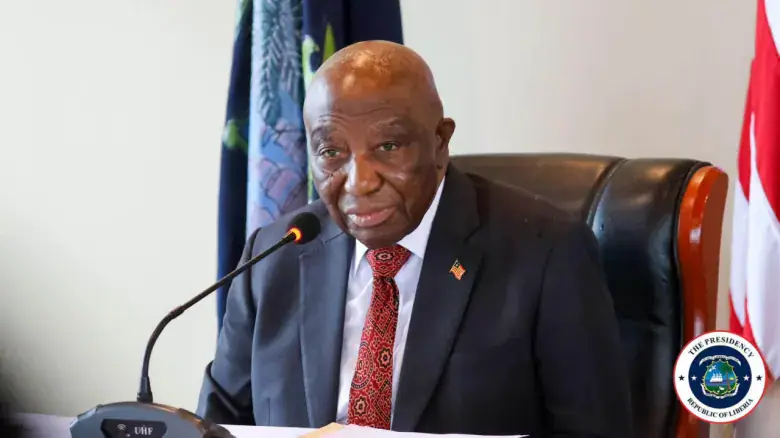
President Joseph Nyuma Boakai of Liberia has formally submitted a $5.7 billion Master Infrastructure Development Agreement between the Government of Liberia and Bea Mountain Mining Corporation to the House of Representatives. The agreement provides for Bea Mountain to finance a series of national infrastructure projects through payments of approved project costs that would be offset against the company's eligible entitlements under the arrangement. The submission sets the stage for a major legislative debate over the country's proposed infrastructure financing arrangement.
The proposed deal outlines an ambitious package of electricity generation, transmission infrastructure, road construction, and national grid improvements. The energy expansion program involves four power plants with a combined installed capacity of 270 megawatts. These include the VIA River Hydropower Plant, SP-4 Hydropower Plant, SP-3 Hydropower Plant, and a Biomass Power Plant near the VIA Dam. The agreement also provides for approximately 305 kilometers of high-voltage transmission infrastructure.
The agreement includes upgrades to substations, transformers, and the existing 66-kilovolt electricity distribution network. These projects aim to expand electricity generation and improve the distribution of power beyond the existing supply network. Additionally, the arrangement proposes an extensive road construction program covering several counties. This includes the construction of a 146-kilometer Liberia Development Road and other proposed road projects.
President Boakai expressed confidence that the agreement would help address Liberia's longstanding infrastructure deficit. He stated that the Legislature will ratify this Agreement, which is poised to unlock Liberia's infrastructure deficit, creating pathways for inclusive growth and national development. However, the President's request for ratification comes amid growing public debate over the financial implications of the agreement and its potential impact on Liberia's mineral resources.
Alternative National Congress' political leader Alexander Cummings has questioned the arrangement, warning that the country must not sacrifice transparency and prudent management of its natural resources in pursuit of infrastructure development. Cummings described the decision as grave, arguing that the proposed agreement raises fundamental questions about the management, ownership, and future utilization of Liberia's mineral wealth.
Former President Ellen Johnson Sirleaf has also called for an independent assessment of the proposed agreement before the country proceeds with its implementation. Sirleaf wants an independent panel of professionals and technical experts to examine the agreement. The agreement has been referred to the Committees on Concessions and Investment and Public Works, with instructions to report to the Plenary within two weeks for further legislative action.
The committees will review the agreement and report back to the Plenary. The proposed financing structure, the value of the company's entitlements, and the extent of Liberia's future revenue commitments have raised questions among political leaders and experts. The Legislature's decision will determine the fate of the agreement and its potential impact on Liberia's infrastructure and mineral resources.
Key points
- President Boakai's administration is seeking to address Liberia's longstanding infrastructure deficit through a $5.7 billion agreement with Bea Mountain Mining Corporation.
- The proposed agreement has sparked debate over its financial implications and potential impact on Liberia's mineral resources.
- An independent review of the agreement has been called for by former President Ellen Johnson Sirleaf and other stakeholders.