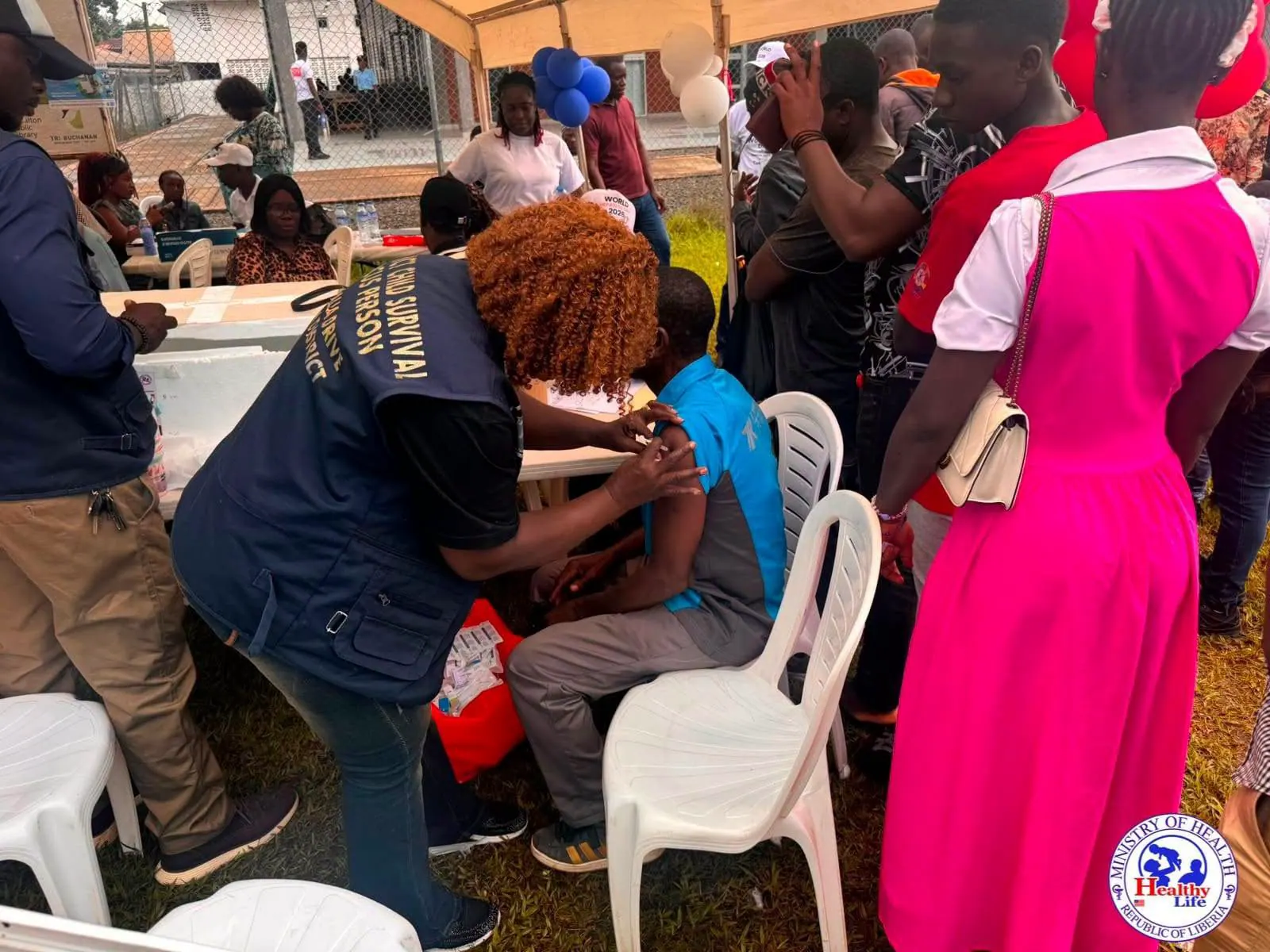
In observance of World Hepatitis Day on August 12, Liberia's Ministry of Health announced the continuation of its Hepatitis B vaccination campaign through the National AIDS and STIs Control Program (NACP). The campaign targets healthcare workers and other vulnerable populations as part of its first phase. The Ministry emphasized that the Hepatitis B vaccine is safe and effective, encouraging eligible individuals, particularly healthcare workers, to get vaccinated.
Hepatitis B is a liver infection caused by the Hepatitis B virus (HBV), which can be short-term or develop into a long-term infection known as chronic Hepatitis B. According to the World Health Organization (WHO), chronic hepatitis B can lead to serious liver problems, including liver cancer. In 2024, WHO estimated that 240 million people were living with chronic hepatitis B infection, resulting in approximately 1.1 million deaths.
The Hepatitis B vaccine protects people against infection with the Hepatitis B virus and is identified by WHO as the main method of preventing Hepatitis B infection. The vaccine works by energizing the body's immune system to develop protection against the virus, without causing a person to contract Hepatitis B. WHO classifies Hepatitis B vaccines into two types: plasma-derived vaccines and recombinant vaccines, which show no difference in effectiveness or duration of protection.
The safety of the Hepatitis B vaccine has been extensively evaluated, with evidence from decades of use showing a strong safety record. WHO explains that vaccines in general are very safe, with minor and short-lived side effects being common. More serious reactions can occur but are extremely rare. The U.S Centers for Disease Control and Prevention (CDC) also states that Hepatitis B vaccination is safe, with most people not experiencing side effects.
According to the CDC's Hepatitis B vaccine safety information, common side effects of Hepatitis B vaccination include pain, soreness, redness, headache, fever, fatigue, irritability, and diarrhea. These reactions are generally mild and usually last about one to two days, but serious reactions are rare. Many people experience no side effects at all.
Liberia's Ministry of Health is encouraging eligible individuals, particularly healthcare workers, to get vaccinated to protect themselves from the virus and help prevent its spread. Healthcare workers can be exposed to Hepatitis B through work-related injuries, such as needle injuries. The virus can also be transmitted through contact with infected blood and other bodily fluids.
As Liberia continues its Hepatitis B vaccination campaign, the Ministry of Health urges the public to take advantage of the vaccine, which is a critical tool in preventing Hepatitis B infection. With the vaccine's safety and effectiveness established, eligible individuals are encouraged to get vaccinated to protect themselves and help prevent the spread of the virus.
Key points
- The Hepatitis B vaccine is safe and effective in preventing Hepatitis B infection.
- The vaccine has a strong safety record, with minor and short-lived side effects being common.
- Eligible individuals, particularly healthcare workers, are encouraged to get vaccinated to protect themselves from the virus and help prevent its spread.