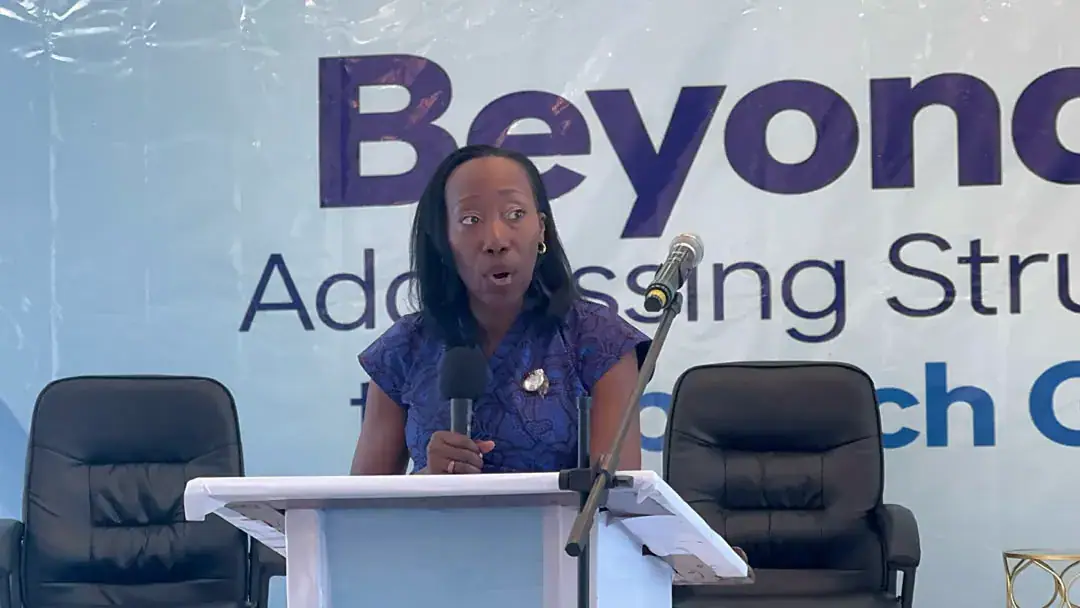
Liberia's economy has shown resilience amid global fuel shocks, with real gross domestic product (GDP) growth reaching 5.1% in 2025, up from 4.0% the previous year. The World Bank Group Country Manager for Liberia, Georgia Wallen, attributed this growth to disciplined macroeconomic management by the Government and the Central Bank of Liberia. Inflation was contained in 2025, and the fiscal deficit narrowed to 2.1% of GDP.
Despite the economic growth, extreme poverty in Liberia has increased from 34.6% to 36.1% over the past two years. Wallen stated that this paradox is due to the nature of Liberia's recent growth, driven largely by mining, a capital-intensive sector with limited job creation and local business spillovers. Meanwhile, agriculture, manufacturing, and small services, where most Liberians earn their living, have lagged behind.
The World Bank's Liberia Economic Update report highlights the need for more jobs and better employment opportunities. About 78% of Liberian workers are in vulnerable, informal employment, and nearly nine in 10 firms are single-person enterprises. Wallen emphasized that more needs to be done to allow most Liberians to feel the benefits of the rising GDP.
State-owned enterprises (SOEs) play a crucial role in Liberia's economy, providing essential services such as electricity, water, ports, and fuel. However, the report finds that policymakers cannot fully see the SOE portfolio, as many entities do not submit financial reports, and existing audits have mostly adverse opinions. The recent establishment of the State-Owned Enterprises Authority of Liberia is seen as a positive step towards strengthening oversight.
The World Bank report proposes a sequenced and realistic approach to making SOEs work better for Liberians. Recommendations include building a verified register of SOE entities, classifying them by mandate, requiring minimum financial reporting, and focusing audits on high-risk areas. The goal is to improve accountability and transparency in SOEs.
Wallen highlighted two trade-offs mentioned in the report: fiscal consolidation was achieved partly by cutting capital spending, which has limits, and Liberia remains exposed due to its reliance on commodity exports. She emphasized that macroeconomic stability is an essential foundation for translating growth into development through jobs and rising incomes for all Liberians.
The World Bank Group remains committed to supporting Liberia as a partner. Wallen stressed that none of the development goals can be achieved by the Government alone and that the private sector, civil society, and development partners all have a role to play. The report's findings and recommendations aim to support Liberia's development and help the country achieve its economic goals.
Key points
- Liberia's economy grew 5.1% in 2025, but extreme poverty rose to 36.1% over two years.
- The World Bank recommends improving accountability and transparency in state-owned enterprises to support Liberia's development.
- Macroeconomic stability is essential for translating growth into development through jobs and rising incomes for all Liberians.