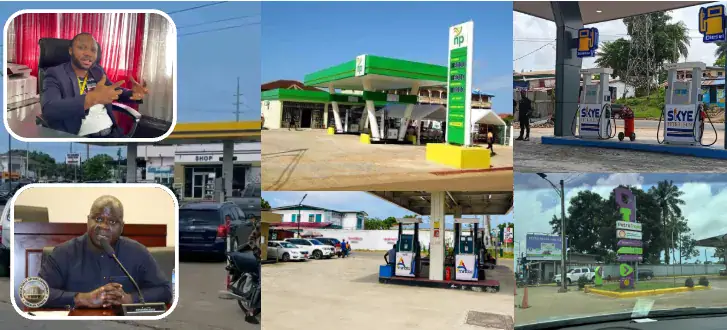
Liberia's official petrol price is one of the lowest in West Africa, but rural consumers face significantly higher prices. According to GlobalPetrolPrices, Liberia's octane-95 petrol sold for $1.269 a litre on October 12, ranking as the 13th-cheapest of 41 African countries. In contrast, neighbouring countries like Guinea and Côte d'Ivoire have higher prices, with $1.364 and $1.55 per litre, respectively.
However, the price disparity becomes apparent when moving away from the capital, Monrovia. In Gbarpolu County, a gallon of fuel sells for L$1,500, which translates to approximately $8.60 a gallon or $2.28 a litre. This price is about 70% above the official ceiling and higher than Sierra Leone's national average. Senator Amara Konneh, chair of the Senate Committee on Public Accounts and Audit, highlighted this issue, citing examples of high fuel and goods prices in rural areas.
The high fuel prices in rural areas have a ripple effect on the cost of basic goods. Konneh noted that a 25kg bag of rice costs $22 in parts of Gbarpolu, compared to $17 in Monrovia, while a bag of cement costs $15, against $8 in the capital. This represents an 87% premium on the material needed for construction. Konneh linked the rising cost of petroleum products directly to the increasing cost of basic goods, emphasizing the need for relief.
Despite the economic management team's efforts to stabilize the economy, growth is expected to exceed 5% this year, and inflation stands at 4.6%. The Liberian dollar has also strengthened, with the Central Bank reporting a sharp appreciation from L$201 to the dollar at the end of August 2025 to around L$180 a week later. However, Konneh argued that these positive economic indicators have not translated to relief for ordinary Liberians, particularly in rural areas.
Analysts point to several reasons for the disparity between official numbers and rural prices. These include the last-mile challenge, where poor roads, few filling stations, and informal resellers add large markups in the interior. Additionally, the exchange-rate pass-through and the mining economy contribute to the price differences. A Senate committee report found that the exchange rate used in the price calculation had driven pump prices, estimating that Liberians were overcharged by up to L$131 million.
The Ministry of Commerce and Industry is taking steps to address these issues, with a focus on tightening controls and monitoring imports of essential items like petroleum and rice. Acting Minister Stephen Marka Yekeson Jr. emphasized the ministry's commitment to curbing inflation and ensuring fair prices. However, the ministry's challenge lies in its reach, particularly in rural areas where the gap between the official ceiling and actual prices is most pronounced.
The situation highlights the limitations of Liberia's improved macroeconomic picture, which has not yet translated to tangible benefits for ordinary citizens. As Konneh warned, public anger rises when people do not see the gains in their own costs, and this anger is legitimate. The fuel price disparity is a visible example of this gap, with Monrovia's prices comparing well with neighbouring countries, while rural areas face among the highest prices in the region.
Key points
- Rural Liberians face significantly higher fuel prices, up to 70% above the official ceiling.
- The high fuel prices in rural areas contribute to the rising cost of basic goods, such as rice and cement.
- The government is taking steps to address the issue, including tightening controls and monitoring imports of essential items.