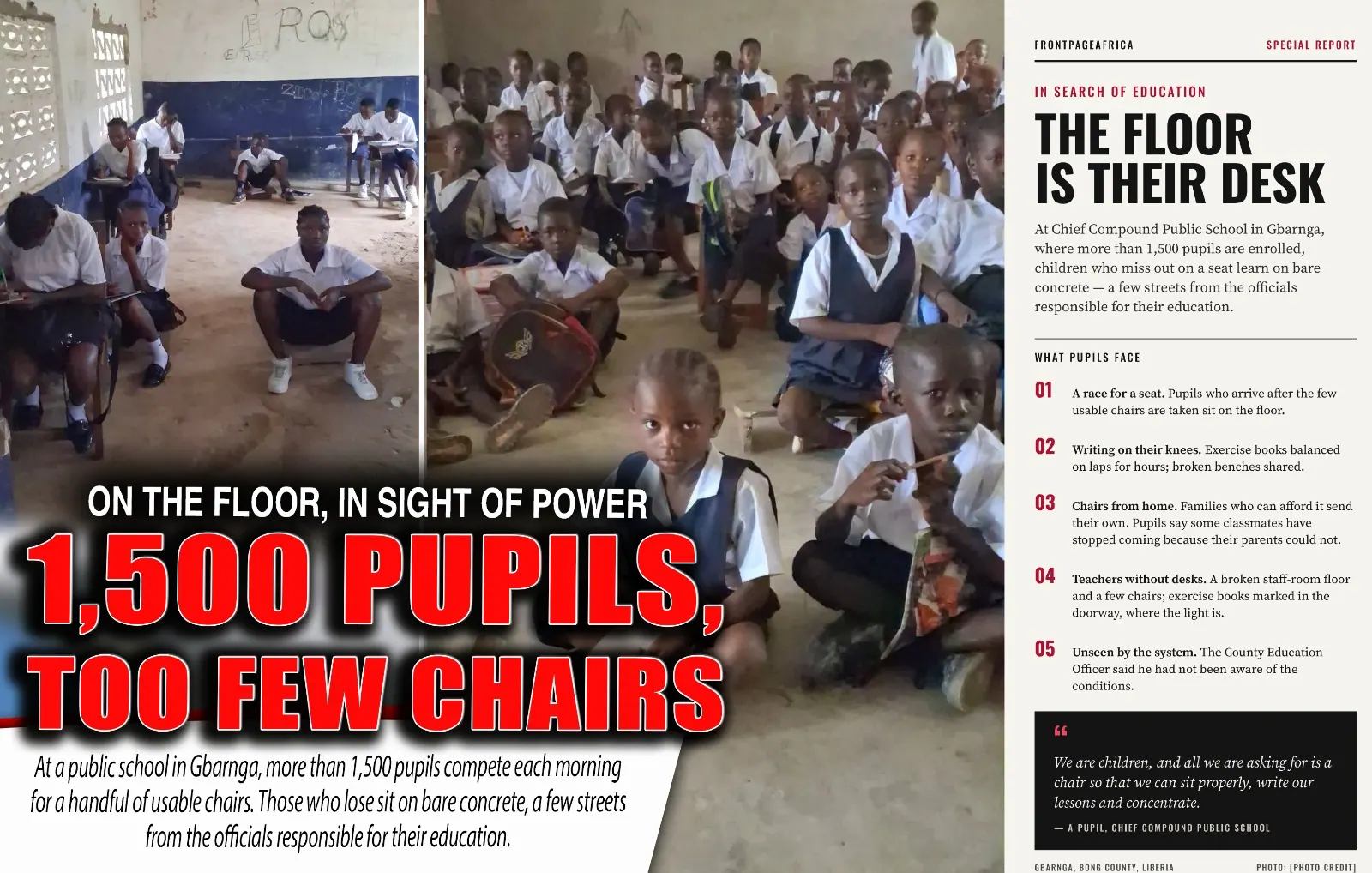
The Chief Compound Public School in Gbarnga, Bong County, Liberia, is struggling with severe overcrowding and a shortage of furniture, affecting over 1,500 pupils. Despite being located in the administrative and political capital of Bong County, the school faces significant challenges in providing a conducive learning environment. Pupils often arrive early to secure a seat, with some sitting on bare concrete or broken benches, while others bring chairs from home.
The shortage of furniture has led to a situation where pupils have to balance their exercise books on their knees as they try to follow lessons. The pupils have expressed their concerns, stating that they want to sit properly, write comfortably, and concentrate on their studies. They find it unfair that they have to sit on the floor to learn, especially given the proximity of the school to government offices and education authorities.
According to the pupils, some of their friends have stopped attending school due to the lack of furniture, with parents unable to afford to buy chairs for their children. This claim could not be verified against attendance records, but it highlights the pressure faced by many Liberian households. When income is limited, every expense competes with others, and a chair may not be considered a priority.
The staff room at the school also reflects the challenges faced by the institution, with a pitted floor and a limited number of chairs. During a visit by FrontPage Africa, a female teacher had to search for a place to set down her lesson notes and later carried pupils' exercise books to the classroom doorway, which had sufficient light to read them.
County Education Officer David Boakai has acknowledged that he was not aware of the conditions at the school and has promised to look into the situation. He has committed to assessing the learning environment and the shortage of chairs and other basic facilities. This admission offers a starting point for addressing the challenges faced by the school.
A proper assessment of the school's needs would involve counting the pupils and usable seats, inspecting classroom space, and determining what can be repaired or replaced. This would provide parents with something to hold onto and officials with something to answer for. The pupils have done their part by describing their classrooms and expressing their needs; now, it is up to others to take responsibility.
The shortage of chairs may seem like a small matter, but it carries significant meaning. A chair provides a child with a space to learn, marks out a space that belongs to them, and tells them that the school expected them and made room. The pupils at Chief Compound are asking for equal treatment, a seat beside their friends, and an end to writing on their knees. The response to their needs will be judged by a simple test: whether a child in Gbarnga walks into a classroom and finds a seat waiting.
Key points
- The school's overcrowding and furniture shortage affect over 1,500 pupils.
- Pupils have expressed concerns about the lack of furniture and its impact on their education.
- The county education officer has promised to assess the situation and address the challenges faced by the school.