The Government of Liberia, through the Ministry of Foreign Affairs, has launched the country's first foreign policy document, a significant development in the nation's history. Since gaining independence in 1847, Liberia had not had a formal foreign policy document guiding its international relations. Instead, successive presidents had issued statements that shaped the country's foreign policy. The last update to this statement was in 1971, by President William R. Tolbert, Jr.
The new foreign policy document, endorsed by the Cabinet on May 28, 2026, emphasizes economic diplomacy, national sovereignty, regional integration, peace and security, citizen protection, and international cooperation. This policy was developed through a comprehensive review of Liberia's foreign policy, led by experienced Liberian diplomats, including former foreign ministry officials, and input from current ambassadors and missions worldwide. The review aimed to align Liberia's diplomatic vision with contemporary global realities, national development priorities, and the country's growing role in international affairs.
A notable feature of this foreign policy is the adoption of Liberia's Gender-Responsive Foreign Policy (GRFP), also known as a Feminist Foreign Policy, making Liberia the first country in Africa to adopt such a framework. This policy seeks to bridge the gaps between Liberia's commitments to gender equality and the practical inclusion of women in foreign policy formulation, diplomatic leadership, and international engagement. The GRFP is anchored in five strategic pillars: Women's Rights; Women's Economic Empowerment and Inclusive Trade; Women, Peace and Security; Climate Justice and Natural Resource Governance; and Women's Political Representation and Leadership.
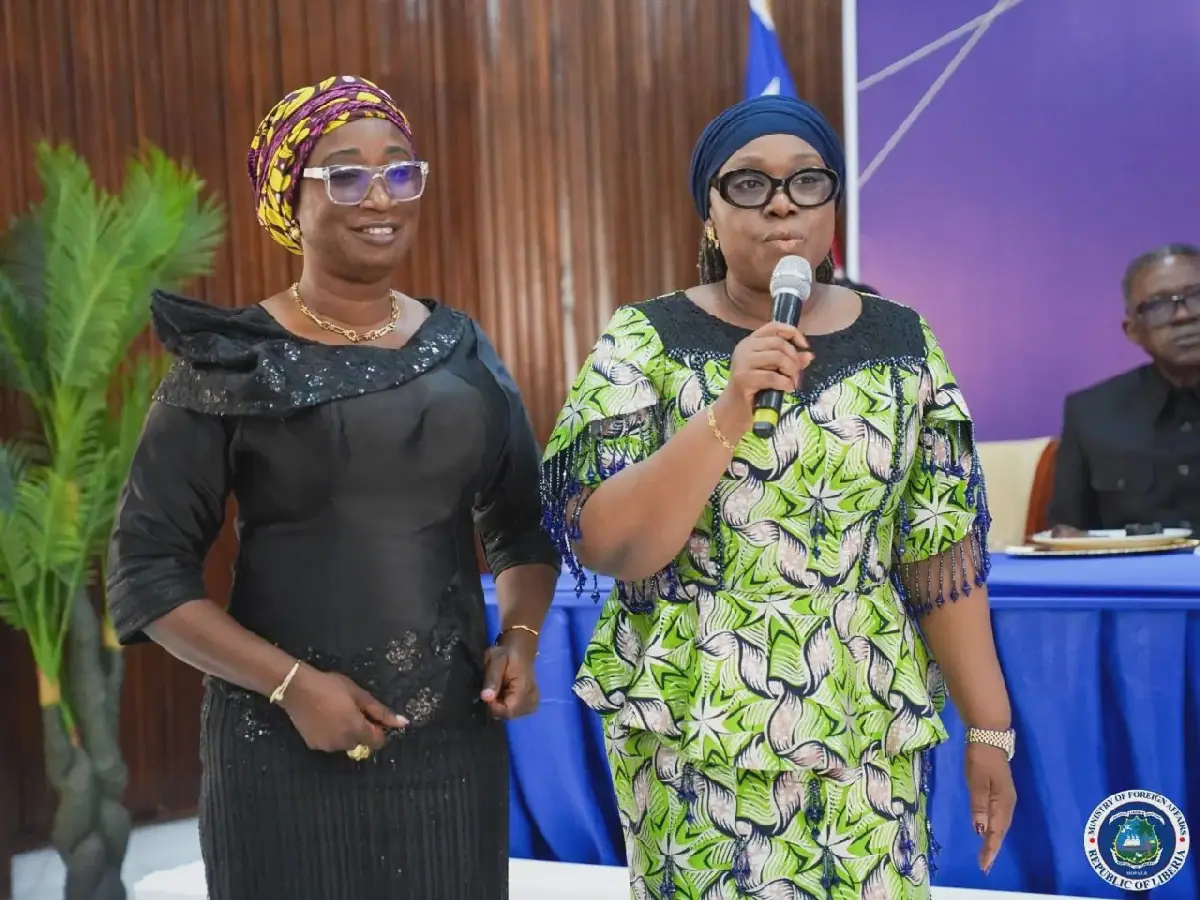
The launch of the foreign policy document was attended by senior government officials, members of the diplomatic corps, development partners, civil society organizations, and other stakeholders. The Ministry of Gender, Children and Social Protection was a key partner in this achievement, and the policy was validated by the technical team of the Ministry of Gender to ensure alignment with gender-related approaches and targets. The event was also witnessed by prominent leaders of Africa's women's movement, foreign diplomats, and Nobel Peace Laureate Leymah Gbowee.
The launch of Liberia's first foreign policy document marks a significant milestone in the country's diplomatic history, under the leadership of President Joseph Nyuma Boakai, Sr., and Minister of Foreign Affairs H.E. Mme. Sara Beysolow Nyanti. This historic initiative signals a new chapter in Liberia's diplomatic engagement, advancing a modern, inclusive, and forward-looking foreign policy that reflects the country's transformation and aspirations for global leadership.
The development of the foreign policy document was a deliberate process that involved identifying gaps between Liberia's commitments to gender equality and the practical inclusion of women in foreign policy formulation, diplomatic leadership, and international engagement. The policy emerged from this process, which aimed to place women's rights, leadership, participation, and empowerment at the center of Liberia's diplomatic priorities. The policy's adoption demonstrates Liberia's commitment to promoting gender equality and empowering women in its diplomatic efforts.
The new foreign policy document is expected to guide Liberia's diplomatic engagement and international relations, reflecting the country's growing role in global affairs. With its focus on economic diplomacy, national sovereignty, and regional integration, the policy is poised to promote Liberia's interests and contribute to the country's development. The adoption of a Gender-Responsive Foreign Policy framework also sets a precedent for other countries in Africa to follow, demonstrating Liberia's leadership in promoting gender equality and women's empowerment.
Key points
- Liberia launches its first foreign policy document, a groundbreaking gender-responsive framework.
- The policy emphasizes economic diplomacy, national sovereignty, regional integration, peace and security, citizen protection, and international cooperation.
- Liberia becomes the first country in Africa to adopt a Feminist Foreign Policy framework, promoting gender equality and women's empowerment in its diplomatic efforts.