Liberia's Foreign Affairs Minister Dee-Maxwell Saah Kemayah and his co-defendants have appealed their prison sentences to the Supreme Court. The appeal follows Criminal Court 'C's denial of their motion for a new trial and imposition of prison sentences. Kemayah and some co-defendants were sentenced to 10 years in prison, while others received five-year terms. The case involves the alleged diversion of humanitarian rice donated by Saudi Arabia.
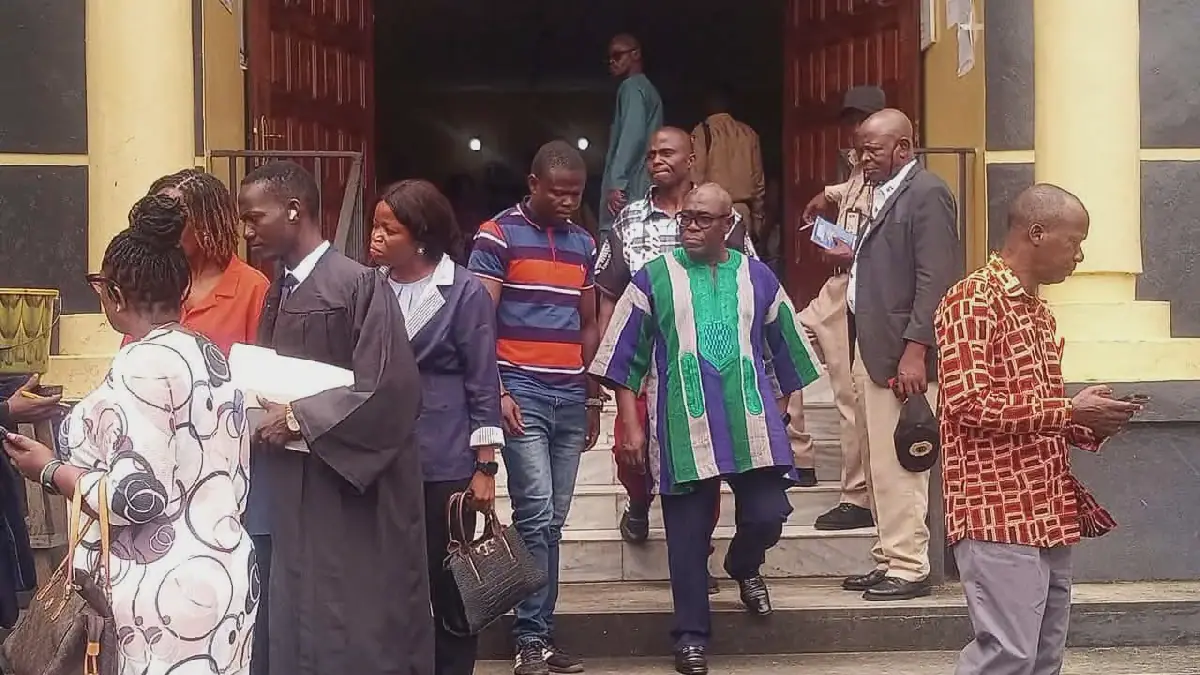
The appeal was announced on November 13, 2026, after Criminal Court 'C' denied the defense's request for a new trial. The court, presided over by Judge Ousman Feika, proceeded to sentence the convicted defendants at the Temple of Justice in Monrovia. The defense team had argued that the jury's findings were inconsistent with the evidence presented during the 40-day trial.
The case involves 13 defendants accused of various offenses connected to the alleged diversion of 29,412 bags of 25-kilogram rice donated by the King Salman Humanitarian Aid and Relief Center in April 2023. Prosecutors alleged that 25,054 bags, valued at approximately US$425,918, were diverted from their intended humanitarian purpose. The defendants faced charges including theft of property and economic sabotage.
The October 9 jury verdict found eight defendants guilty, three acquitted, and two others resulted in no unanimous verdict. Among those convicted were Kemayah, former Internal Affairs Minister Varney A. Sirleaf, and other former government officials. The convictions and sentencing represent a significant stage in the prosecution's pursuit of accountability.
The defense team will challenge the trial proceedings, the jury's findings, and the denial of the new-trial motion before the Supreme Court. The appeal will examine whether the trial court properly applied the law, whether the evidence supported the jury's findings, and whether any prejudicial procedural errors occurred.
The Supreme Court's review could become another major legal battle in the Saudi Rice prosecution. The court will be expected to examine the issues properly raised in the appeal and determine whether the proceedings complied with applicable legal standards. The appellate proceedings will provide an opportunity for the defense to formally present its objections to the convictions and sentences.
The Supreme Court's eventual determination could have implications for the defendants and the broader administration of criminal justice in Liberia. The Saudi Rice case enters a new chapter, from the jury's guilty verdicts to an impending appeal before the Supreme Court of Liberia. The defendants must pursue the appeal through the prescribed judicial process, which does not automatically invalidate the convictions or sentences.
Key points
- The appeal will examine whether the trial court properly applied the law and whether the evidence supported the jury's findings.
- The Supreme Court's review could become another major legal battle in the Saudi Rice prosecution.
- The convictions and sentencing represent a significant stage in the prosecution's pursuit of accountability.