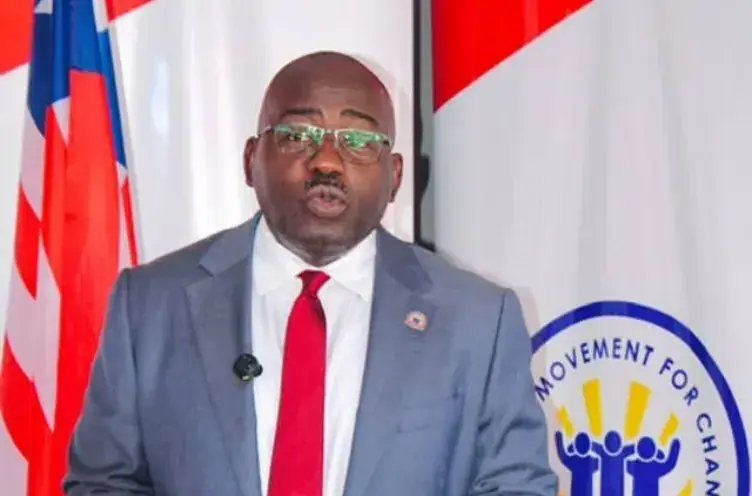
The Citizens Movement for Change (CMC) has withdrawn from opposition coalition talks led by former President George Manneh Weah. This decision was made public on September 24, following a review of the draft communiqué by the party's National Executive Committee, National Advisory Council, and Diaspora Leadership. The CMC concluded that the current arrangement does not align with its founding objectives.
The CMC's decision to pull out stems from its objection to the absence of a binding reform program in the proposed coalition. The party believes that any coalition seeking public confidence must first agree on changes to the country's system of government, institutions, laws, and political culture. This includes constitutional reform, institutional independence, and transparent leadership.
The CMC's withdrawal was not entirely unexpected, as the party's leader, Rep. Musa Hassan Bility, had previously expressed concerns about the structure of the opposition coalition talks. In an August 28 letter to CDC Chairman Atty. Janga A. Kowo, Bility questioned provisions designating a presiding leader and establishing a National Convening Secretariat under an already appointed coordinator.
The opposition coalition talks, convened by Weah, brought together various opposition leaders, including ANC Political Leader Alexander B. Cummings, MPC Political Leader Simeon Freeman, and MOVEE Political Leader D. Maxwell Kemayah. The talks aimed to promote dialogue among opposition parties and potentially form a united front ahead of future elections.
The CMC's exit has revived memories of the last major opposition alliance, the Collaborating Political Parties (CPP), which collapsed in 2021. The CPP was formed in 2019 and won six Senate seats in 2020 before its framework document triggered its collapse. The CMC itself is a relatively new party, founded by Bility in March 2025 after resigning from the Liberty Party in September 2024.
Despite its withdrawal, the CMC remains open to future political cooperation with other opposition parties. The party stressed that its decision does not close the door to opposition cooperation and is willing to work with other parties on issues such as electoral integrity, the rule of law, and public accountability.
The opposition coalition talks have exposed divisions within the opposition, with some parties expressing skepticism about the initiative. The National Patriotic Party suspended three senior partisans for allegedly using the party's official letterhead to endorse the roundtable, while the Unity Party dismissed the gathering as posing no serious threat to the ruling party or President Boakai's reelection prospects.
Key points
- The CMC's withdrawal from the opposition coalition talks highlights the challenges of forming a united opposition front in Liberia.
- The party's objections to the proposed coalition center on the need for a binding reform program and a new governing system.
- The CMC's exit has implications for the opposition's ability to present a united front ahead of future elections.