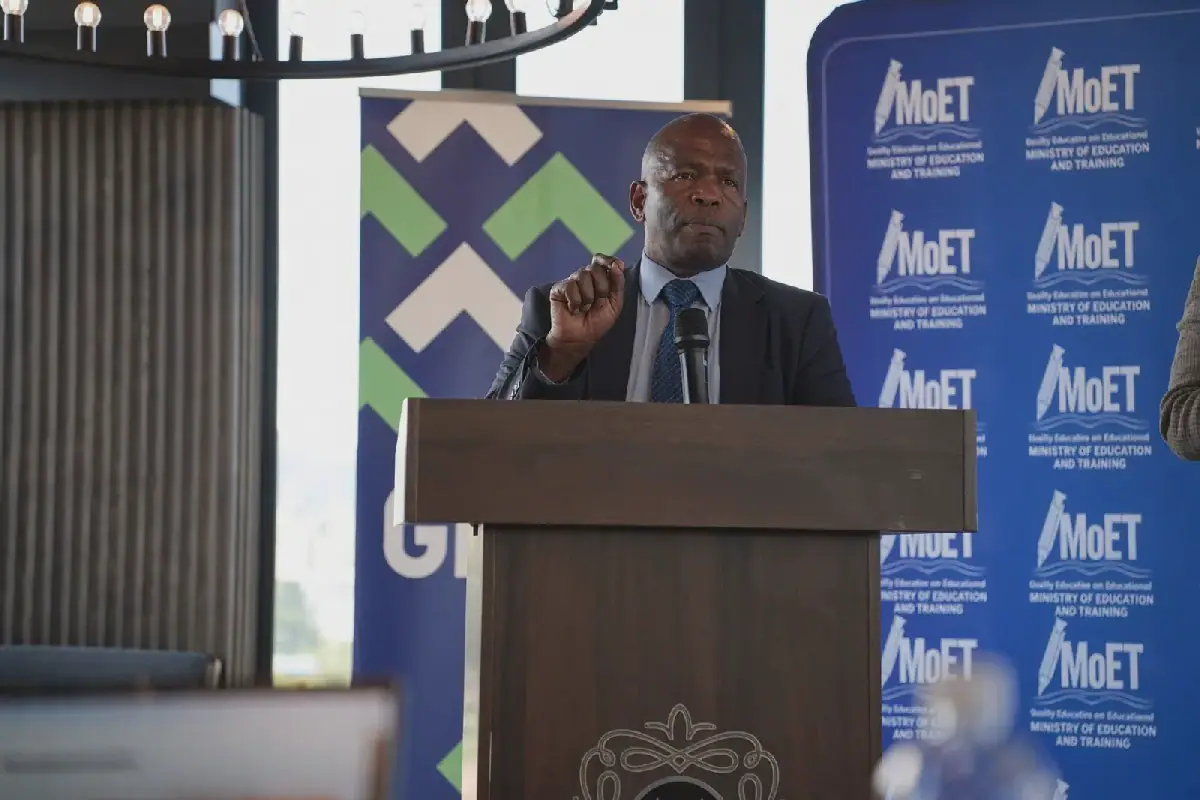
Lesotho has launched a new Education Sector Plan that puts early childhood care, primary school grades, and technical skills at the forefront. The plan, validated at a workshop in Maseru, aims to expand access to foundational learning and upgrade expertise in Technical and Vocational Education and Training (TVET). This strategic shift seeks to address the shortage of qualified manpower in the country. According to Lead Consultant Alberto Miguel, the plan draws lessons from the COVID-19 pandemic to build a resilient education system.
The new Education Sector Plan will replace the 2016-2026 plan, which is set to expire this year. The plan's development involved stakeholders from various sectors, who gathered at Mpilo Boutique Hotel in Maseru for a validation workshop. Miguel emphasized the need for a forward-looking framework that promotes lifelong learning and ensures education remains a worthwhile investment for the nation. This approach aligns with the Principal Secretary in the Ministry of Education and Training, Rats'iu Majara's, call for an education system that is responsive to emerging challenges.
A key aspect of the new plan is its focus on foundational learning, targeting early childhood care and the first grades of primary school. This emphasis is expected to lay a solid foundation for learners, enabling them to acquire essential skills and knowledge. Additionally, the plan seeks to upgrade expertise in TVET, which is critical for addressing the shortage of qualified manpower in various sectors. By investing in TVET, the government aims to equip learners with practical skills that are in demand in the job market.
The Education Sector Plan's development was informed by lessons from the COVID-19 pandemic. The pandemic highlighted the need for a resilient education system that can respond swiftly to new and emerging challenges. Miguel stressed that the plan's implementation will require a collaborative effort from all stakeholders, including government agencies, private sector players, and civil society organizations. This multi-stakeholder approach is expected to ensure that the plan is effective and sustainable in the long term.
The Principal Secretary in the Ministry of Education and Training, Rats'iu Majara, welcomed the new plan, saying it aligns with the government's vision for education. Majara emphasized the need for a forward-looking framework that promotes lifelong learning and ensures education remains a worthwhile investment for the nation. The plan's focus on foundational learning and TVET is expected to contribute to this vision by providing learners with the skills and knowledge needed to succeed in an increasingly complex and competitive world.
The new Education Sector Plan is expected to have a positive impact on the country's education system. By prioritizing foundational learning and TVET, the plan seeks to address some of the key challenges facing the sector, including the shortage of qualified manpower. The plan's implementation will require significant investment in infrastructure, teacher training, and resources. However, the expected outcomes, including improved learning outcomes and increased access to education, make the investment worthwhile.
The Lesotho Tribune understands that the plan's implementation will be closely monitored to ensure its effectiveness. The Ministry of Education and Training will work with stakeholders to track progress, identify challenges, and make adjustments as needed. The plan's success will depend on the commitment and collaboration of all stakeholders, including government agencies, private sector players, and civil society organizations. With a well-coordinated effort, Lesotho's education system can be transformed to provide learners with the skills and knowledge needed to succeed in the 21st century.
Key points
- The new Education Sector Plan prioritizes foundational learning and technical skills to address qualified manpower shortages.
Reporting sources
- Education Sector Plan puts foundational learning and TVET first · Lesotho Tribune