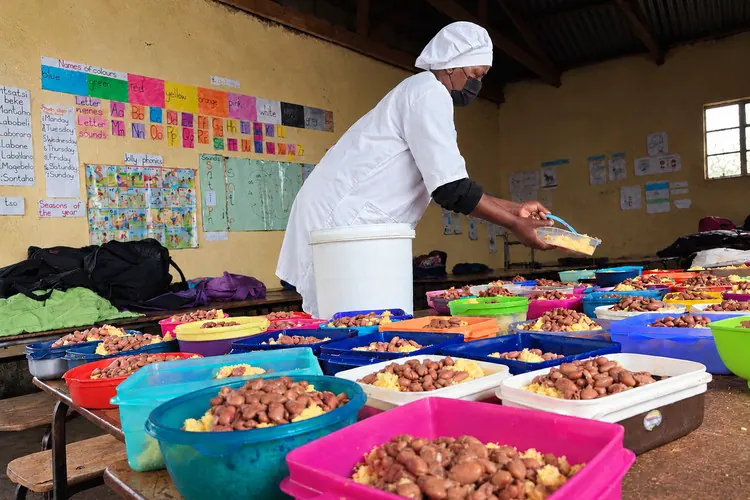
The Lesotho government has stepped in to fill the gap after the US terminated its funding for the school feeding program last year. However, an investigation by GroundUp found that pupils at two Semonkong primary schools, St Leonard Primary and Ha Samuel, are receiving smaller portions and less nutritious food. The US Department of Agriculture (USDA) used to provide 36,000 children at over 200 primary schools with daily nutritious meals.
The USDA's five-year program, which was budgeted at $28.5 million, was abruptly cut in May 2025. Lesotho's education authorities had promised to fill the gap, with Principal Secretary in the Ministry of Education, Ratšiu Majara, assuring that children would continue to receive meals. However, the government's budget for the program this year is over M300 million, which is insufficient to cover the recommended portion sizes.
According to Jubile Ntloana, the School Feeding Coordinator in the Ministry of Education, the budget is too small to cover the costs of food, transportation, and cook salaries. As a result, feeding contractors are currently receiving about M5.50 per child per day, down from the recommended M8. This has led to reduced portions, with maize meal being reduced from 120g per child per day to 80g.
The new supplier, TJ General Dealer, has been criticized for providing less nutritious food and reducing the quantity of meals. GroundUp reviewed delivery records to St Leonard Primary, which show that less food is being supplied per pupil than under the previous program. For lunch, the supplier provides 1.27kg per pupil a month, down from 2.8kg under the previous program.
Cooks at the schools have also reported earning lower wages and experiencing delayed payments. At Ha Samuel, a cook reported earning M1,900 a month, down from M3,200 under the previous program. The cook also reported being short-paid by about M300 and having to buy firewood and other supplies from her own salary.
The reduced meals have affected the quality of food, with learners at St Leonard Primary receiving pap and beans without leafy greens and eggs. The school's feeding manager reported that the leftover corn soya blend (CSB) is running out, and the new supplier no longer provides this nutritious meal. The Ministry of Education has promised to investigate the matter.
Local farmers who supplied the previous program have lost an important market, and the education ministry's response to the crisis has been criticized. The ministry's efforts to address the issue, including increasing the budget and improving payment to contractors, are ongoing. Key points: - US funding for Lesotho's school feeding program was cut in May 2025. - The Lesotho government has insufficient funds to maintain previous meal portions and quality. - Learners are receiving smaller, less nutritious meals as a result.