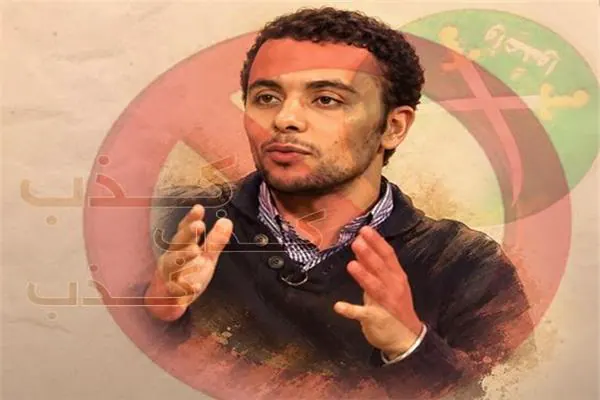
Leaked audio recordings, broadcast on the "Hakaya" program on MBC Egypt, have exposed a close relationship between Abdel Rahman Mansour, founder of the Egyptian social media page "Matsaddaksh," and several individuals linked to the Muslim Brotherhood, including Khairat El-Shater. The recordings, which were previously published in 2014, reveal a conversation between Mansour and a woman named Marwa, in which they discuss El-Shater's involvement in Mansour's affairs.
According to political analyst Abdel Rahim Ali, the Muslim Brotherhood viewed Mansour as a key element of their "soft power" and a symbol of their media presence. Ali stated that the Brotherhood saw Mansour as a crucial figure in their efforts to shape public opinion. Mansour's influence extended beyond Egypt, with a network of media platforms across several Arab countries.
The recordings, which were previously published in January 2014, reveal a conversation between Mansour and El-Shater, in which they discuss El-Shater's role in helping Mansour with various requests. The recordings also suggest that Mansour was involved in arranging interviews and conveying messages to media figures. This has sparked debate about the nature of Mansour's relationships with the media and political circles.
The Muslim Brotherhood has historically used social media and other platforms to spread misinformation and create instability. The group has sought to exploit economic tensions in the region to further their goals. The leaked recordings highlight the Brotherhood's efforts to manipulate public opinion and create divisions between citizens and state institutions.
The incident emphasizes the importance of verifying information and distinguishing between the public's right to access information and the need for credible sources. It also underscores the need for professional media outlets to prioritize fact-checking and for users to be aware of the potential for misinformation. Effective countermeasures against fake news require a multi-faceted approach, including rapid official responses and accessible, verifiable data.
The incident demonstrates that addressing misinformation requires a sustained effort, beginning with the initial appearance of false information and continuing until it is thoroughly debunked. Timely official responses, accurate data, and verifiable evidence are essential tools in mitigating the impact of misleading news. By understanding the complex dynamics of misinformation, governments, media outlets, and citizens can work together to promote a more informed public discourse.
Key points
- The leaked recordings reveal a close relationship between Abdel Rahman Mansour and Khairat El-Shater, a senior leader of the Muslim Brotherhood.
- The Muslim Brotherhood has historically used social media to spread misinformation and create instability.
- Effective countermeasures against fake news require a multi-faceted approach, including rapid official responses and accessible, verifiable data.