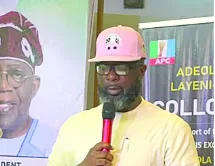
A recent colloquium in Lagos, Nigeria, has emphasized the need for a more intellectually grounded approach to political participation and governance discussions. Convened by businessman and politician Adeola Layeni-Dawodu, the event brought together academics, policy practitioners, and professionals to examine the achievements of President Tinubu's administration. The colloquium, themed "Renewed Hope, Real Progress: Highlighting the Achievements of the Tinubu Administration and Building a Stronger Tomorrow Together," aimed to encourage informed public discourse and constructive questioning of governance.
Layeni-Dawodu stated that the initiative was driven by a desire to create a platform for discussing governance beyond rallies, slogans, and political personalities. He emphasized that governance deserves a more serious interrogation, particularly given the significant reforms undertaken by President Tinubu's administration across various sectors. The colloquium sought to examine the administration's achievements, challenges, and future plans, promoting a more substantive form of political engagement.
The event featured a diverse range of speakers, including former member of the House of Representatives Ibrahim Obanikoro, Senior Lecturer Dr. Tunde Elegbede, and director Adebisi Akinyemi, among others. They addressed issues concerning internal affairs, education, agriculture, petroleum, works, and health. Layeni-Dawodu explained that the choice of speakers was based on competence, relevance, and experience, with the goal of fostering informed discussions and encouraging accountability.
Layeni-Dawodu highlighted that the colloquium was designed to demonstrate that political support can coexist with constructive questioning and accountability. He emphasized that political engagement should contribute to the intellectual development of society, and that it is possible to support a government while still asking difficult questions. The event aimed to document conversations around the first three years of the administration and promote a broader understanding of participation in a democracy.
The convener expressed his satisfaction with the quality of participation and discussions at the event, noting that there is an appetite for a more substantive form of political engagement. However, he emphasized that the colloquium should not be seen as an indication that all challenges have been resolved. Instead, it should create more questions and responsibility, driving further engagement and progress.
Layeni-Dawodu called for a broader understanding of participation in a democracy, emphasizing that political structures can be built alongside intellectual capacity. He advocated for a political culture where supporters can scrutinize and evaluate policies, and where political ambition is accompanied by adequate preparation. In the long term, he hopes to serve at a level where he can translate ideas into tangible outcomes and contribute to better governance in Lagos and Nigeria.
Looking ahead, Layeni-Dawodu's immediate focus is on building capacity and contributing to public discourse, governance, and community development. He aims to remain engaged with issues directly affecting people, particularly in areas such as housing, youth development, and economic opportunity. His aspiration is to create value wherever he finds himself, with a focus on translating ideas into tangible outcomes.
Key points
- The colloquium aimed to encourage informed public discourse and constructive questioning of governance.
- Layeni-Dawodu emphasized the need for a more intellectually grounded approach to political participation and governance discussions.
- The event brought together academics, policy practitioners, and professionals to examine the achievements of President Tinubu's administration.