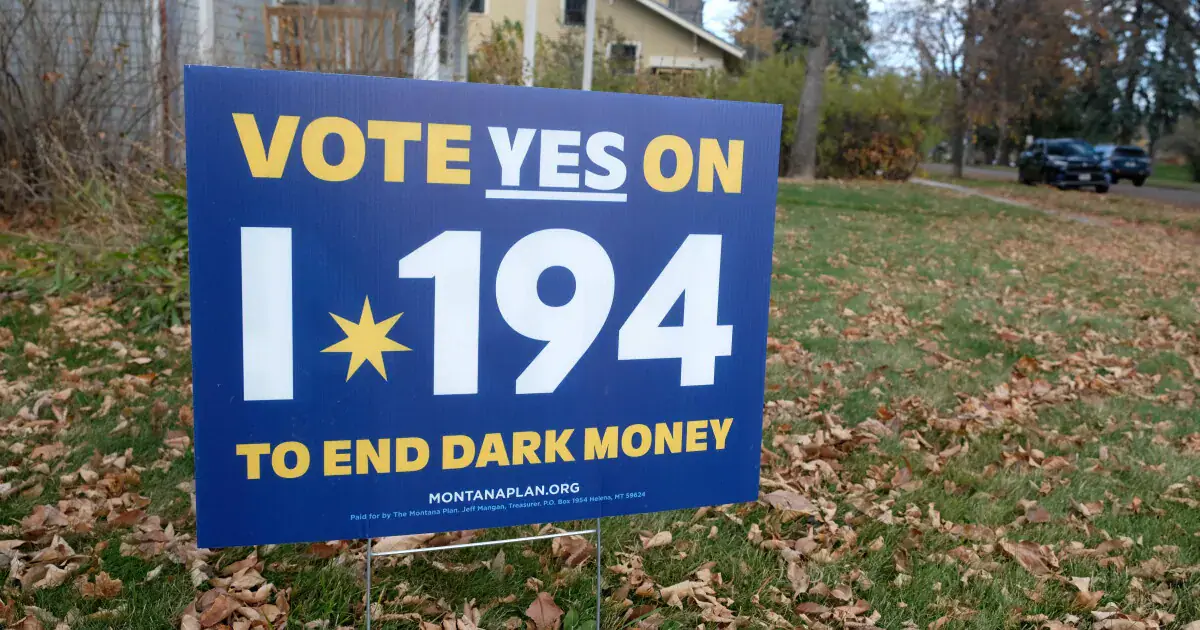
A lawsuit has been filed in federal court challenging the constitutionality of Montana's Initiative 194, also known as the "Montana Plan". The plan, which was approved by voters on Tuesday, bans corporations, trusts, and non-profits from contributing money to state and local elections, political parties, or ballot measures. The lawsuit was filed by the Frontier Institute, which argues that the plan is an unconstitutional prohibition on the First Amendment right to speech.
The Frontier Institute claims that the law's reach extends beyond political ads, and that publishing research or communicating with voters could force organizations to shut down if their communications are deemed to support or oppose candidates and ballot measures. The Montana Republican Party has also joined in the lawsuit, claiming that the law would prevent it from publishing its newsletter. The party argues that the law is overly broad and would have unintended consequences.
Campaign organizers who supported the initiative say they expected a lawsuit and are confident in the legal foundation of the plan. They describe the suit as "part of a much larger legal campaign to try to silence the will of the people". The initiative was approved by a two-to-one margin among voters and is set to become law in Montana on January 1st.
The Montana Department of Justice has been asked for comment on the lawsuit, but a spokesperson said they had yet to be served. The Secretary of State's Office has also been contacted for comment. The lawsuit is likely to spark a heated debate about the role of money in politics and the limits of campaign finance reform.
Similar plans to the "Montana Plan" have been discussed in other states. In Hawaii, a law was passed by the legislature, although legal questions remain. Lawmakers in California, New Jersey, and Pennsylvania have introduced their own measures in each of those state's legislatures. The outcome of the lawsuit in Montana could have implications for similar efforts across the country.
The "Montana Plan" is seen as a significant development in the debate over campaign finance reform. Supporters argue that it will help to reduce the influence of special interests and promote transparency in government. Opponents argue that it will restrict free speech and limit the ability of organizations to participate in the democratic process.
The lawsuit challenging the "Montana Plan" will likely be closely watched by politicians, activists, and lawyers across the country. The case will test the limits of campaign finance reform and the constitutionality of restrictions on corporate and organizational contributions to elections.
Key points
- The lawsuit challenges the constitutionality of Montana's Initiative 194, which bans corporations, trusts, and non-profits from contributing to state and local elections.
Reporting sources
- “Montana Plan” challenged in federal court · YP Radio