A long-standing land dispute in Namibia's Zambezi Region has reignited, highlighting the need for cautious and timely handling of such conflicts. The dispute involves the Jimu, Muninjahi, Ndivi, and Jojo families, with records dating back to 1927. Despite various decisions made by traditional authorities and formal courts, the dispute remains unresolved and capable of generating confrontation.
The dispute has a deep emotional and historical significance, as land is connected to identity, livelihood, family history, and dignity. In communal areas, land represents ancestral ties, social belonging, and future security. When people feel their land or heritage is under threat, emotions can run high, making it essential to handle land disputes carefully.
A meeting held on September 14 between the parties became quarrelsome, despite the presence of police and security officials. There were reports of further confrontation and alleged damage to crops and farms on the disputed land. The Masubia traditional authority recognized the danger and deliberately brought in police to prevent the situation from escalating.
The dispute has moved through traditional structures and formal courts for decades, with multiple decisions made, including rulings by traditional authorities and appeals under customary structures. However, the dispute remains unresolved, illustrating the complexity that can develop when customary and statutory processes intersect. A 1997 ruling by the Bukalo Royal Khuta was later overturned by an appellate body under Masubia customs and traditions.
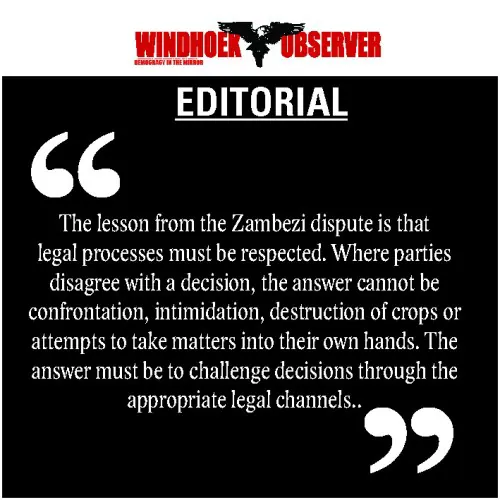
The lesson from the Zambezi dispute is that legal processes must be respected, and parties must challenge decisions through appropriate legal channels. It is essential to distinguish between a party's right to challenge a decision and a right to ignore it. Traditional authorities, government, and courts have a crucial role to play in ensuring that land disputes are handled lawfully and that parties respect the applicable legal position.
There is an urgent need for a culture of early intervention in land disputes. The longer a dispute remains unresolved, the more difficult it becomes to separate the original legal question from accumulated grievances and competing claims. Land disputes should be addressed as early as possible to prevent them from becoming entrenched and emotionally charged conflicts involving entire communities.
The Zambezi case should prompt a broader national conversation about how Namibia manages communal land disputes. There must be mechanisms for early mediation, clear records of traditional and formal decisions, accessible appeal processes, and effective communication between traditional authorities, local authorities, land boards, government departments, and courts. Most importantly, there must be no ambiguity about the rule of law.
Key points
- Land disputes in Namibia must be handled early, lawfully, and peacefully to prevent escalation and violence.
- The dispute has a deep emotional and historical significance, and its resolution requires careful handling.
- There is a need for a culture of early intervention in land disputes to prevent them from becoming entrenched and emotionally charged conflicts.