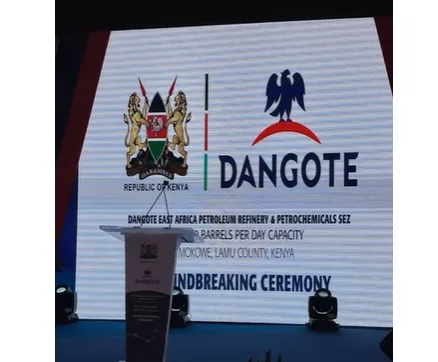
Preparations are in full swing in Lamu, Kenya, for the groundbreaking of the Sh2 trillion Dangote East Africa Oil Refinery. The ceremony, set to take place on Wednesday, marks the formal start of construction of the planned 700,000-barrel-per-day refinery and petrochemical complex. Deputy President Kithure Kindiki arrived in Lamu on Wednesday morning ahead of the event, while President William Ruto is expected to preside over the ceremony later in the day.
The refinery, backed by Nigerian industrialist Aliko Dangote and the Africa Finance Corporation, will be built within the Lamu Port-South Sudan-Ethiopia Transport (LAPSSET) corridor. The project will process crude from Kenya’s Lokichar fields in Turkana, alongside supplies from other African producers and international markets. This strategic location is expected to serve petroleum markets across East and Central Africa.
In recent days, preparations for the ceremony have gained momentum, with the Port of Lamu receiving 2,930 metric tonnes of heavy construction machinery aboard MV Da Yang on September 26. The equipment is intended for the planned refinery, which is expected to form part of a wider industrial complex in Lamu. The government estimates that the wider project could create more than 60,000 jobs.
The project is also expected to support related industries, including petrochemicals, fertiliser and packaging, as part of the planned industrial complex. This development is anticipated to have a significant impact on the regional economy. The groundbreaking ceremony will mark a major milestone in the project's implementation.
Despite a land dispute involving residents and the project site, a Kenyan court ruling will not stop Wednesday’s ceremony, although Dangote said it could affect some site activities. The dispute highlights the challenges that the project may face in the future. Dangote expects the refinery to take about three years to construct, with completion targeted around 2030.
The Dangote East Africa Oil Refinery is a significant investment in the region, with far-reaching implications for the economy and energy sector. Once completed, the refinery will play a critical role in meeting the petroleum needs of East and Central Africa. The project's progress will be closely watched by stakeholders and industry experts.
As the groundbreaking ceremony takes place, stakeholders will be looking forward to the project's implementation and its potential impact on the region. The project's success will depend on various factors, including the resolution of the land dispute and the effective management of the construction process.
Key points
- The Dangote East Africa Oil Refinery is expected to create more than 60,000 jobs and serve petroleum markets across East and Central Africa.
- The project will process crude from Kenya’s Lokichar fields in Turkana, alongside supplies from other African producers and international markets.
- The refinery is anticipated to take about three years to construct, with completion targeted around 2030.