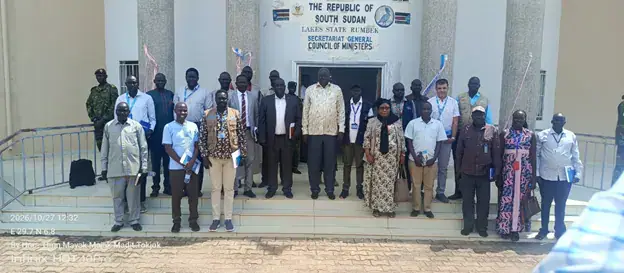
The government of Lakes State, led by Caretaker Governor Gen. Rin Tueny Mabor, has declared a natural disaster due to prolonged dry spells affecting agricultural production, food security, and livelihoods. Caretaker Minister of Information, Communication and Telecommunication William Koji Kirjok made the announcement, citing a humanitarian assessment conducted between September 5 and 10. The assessment confirmed severe drought conditions affecting communities across Lakes State.
The drought has caused widespread crop failure, placing thousands of households at risk of hunger. Kirjok attributed the crisis to a prolonged lack of rainfall since April, with some areas, including Rumbek North and Greater Yirol, facing extreme food shortages. Some communities reportedly have no food left to eat. The government has decided to inform the public about the seriousness of the situation to encourage communities to mobilize available food resources while awaiting assistance.
Crop losses are estimated at between 75 and 90 per cent, with many households facing complete harvest failure during the coming harvest season. The drought has affected long-term crop varieties and other staple crops planted across the state. Household food stocks have been depleted, forcing families to rely increasingly on markets despite their limited purchasing power and minimal humanitarian assistance.
The prolonged dry spell has also severely affected livestock, with animals facing inadequate pasture, water shortages, disease outbreaks, and declining productivity. Kirjok said the movement of livestock to areas with sufficient water and pasture must be coordinated with the Lakes State government to prevent potential conflicts with neighboring communities.
The government will oversee the movement of livestock and monitor where herds are settled to promote peaceful coexistence and prevent disputes between communities. Kirjok warned cattle keepers to comply with state laws and follow the required procedures when moving their herds into neighboring states, cautioning that unregulated migration could trigger inter-state and communal clashes, cattle theft, revenge killings, and sexual violence.
The declaration comes amid growing concerns over the impact of prolonged dry conditions on food availability, agricultural livelihoods, and livestock survival across Lakes State. The government is seeking to address the crisis, which is not man-made, unlike communal clashes that sometimes prevent communities from cultivating their farms.
The Lakes State government is working to mitigate the effects of the drought, and the situation is being closely monitored. The security situation in Lakes State is currently calm, according to Kirjok. The government is encouraging communities to mobilize available food resources while awaiting assistance from humanitarian organizations.
Key points
- The drought has affected long-term crop varieties and other staple crops planted across Lakes State.
- The movement of livestock to areas with sufficient water and pasture must be coordinated with the Lakes State government.
- The government estimates crop losses at between 75 and 90 per cent, with many households facing complete harvest failure.