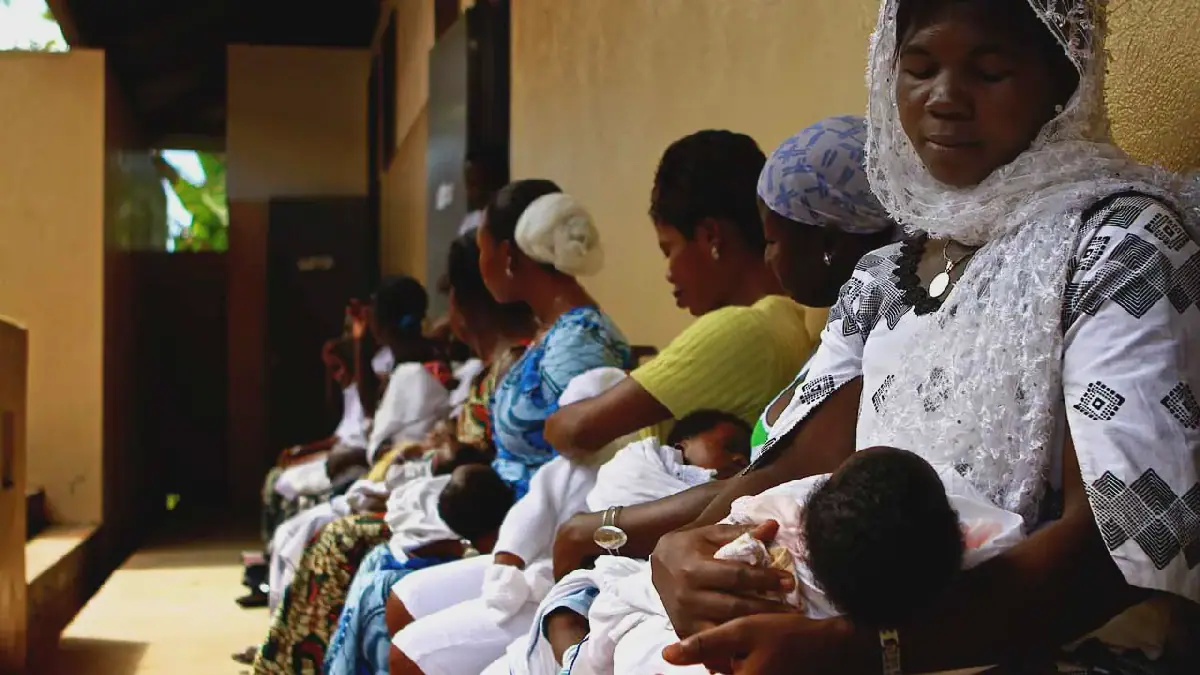
Maternal and newborn health policies in Lagos State, Nigeria, are facing significant challenges in implementation and access to care. Health professionals and advocates have identified gaps in funding, service delivery, and policy provisions that could prevent women from receiving timely care. These concerns were raised at a Birth Justice Advocacy programme organized by Lead Foundation and International Center for Environmental Health and Development (ICEHD). The programme aimed to strengthen maternal and newborn health through advocacy, policy, and practice.
The stakeholders discussed how the existence of healthcare policies and facilities does not necessarily guarantee access to services, particularly when financial, transport, and environmental barriers remain. ICEHD programme officer, Victor Adewoye, stated that the engagement intends to identify policy gaps, establish advocacy priorities, and develop recommendations to guide subsequent action. This initiative is a starting point for discussions that would bring participants' experiences together to inform decisions and strengthen partnerships.
ICEHD reviewed two policy documents obtained from the Lagos State Primary Health Care Board and the state Ministry of Health, identifying gaps relating to maternal and neonatal health, disability, and access to care. The documents reviewed were the revised National Strategic Health Development Plan 2023–2025, Lagos State, and the National Birth Defects Surveillance Guideline, Lagos State. Project Director, ICEHD, Dr Ndudi Bowei, noted that emergency obstetric care is framed largely around the availability of facilities, although women could still be unable to use the services due to costs, distance, transport, opening hours, and informal fees.
Advocacy recommendations have been developed to address the barriers identified in the review, and ICEHD intends to continue engaging the ministry and the primary healthcare board on their findings. Dr Bowei also noted that environmental health, climate-related risks, and disability were not adequately addressed in the two documents examined. This gap is significant, as environmental conditions can disrupt maternal and newborn healthcare.
Other stakeholders highlighted various factors affecting maternal healthcare delivery, including financing, staffing, transport, referral arrangements, and accountability. Dr Francis Balogun, Head of the Department of Community Health at Lead City University's Faculty of Basic Medical and Applied Sciences, emphasized the need to address these factors to improve maternal healthcare. Climate Desk Officer at Lagos State Ministry of Health, Dr. Muritala Sunkanmi, identified funding, manpower, and coordination as major implementation challenges.
Environmental pressures, such as flooding, rain-related power interruptions, extreme heat, and air pollution, can also disrupt maternal and newborn healthcare. Dr Sunkanmi explained that these conditions can prevent women from reaching health facilities and health workers from getting to work. Director of Nursing Service, district III, Lagos State Primary Health Care Board, Olasumbo Adeboboye, raised concerns about the effects of rising heat on pregnant women and nursing mothers.
The discussions pointed to several connected priorities, including making maternal and newborn services financially and physically accessible, strengthening referral systems and emergency readiness, ensuring adequate staffing and funding, and accounting for environmental risks that can interrupt care. Project Manager for Safe Motherhood Project, Dr Kelvin Otumunye, highlighted the importance of using reliable evidence to guide policy decisions and urged stakeholders to use Lagos-specific data when discussing the state.
Key points
- Stakeholders criticize Lagos maternal health policies for gaps in funding, service delivery, and policy provisions.
- Environmental pressures, such as flooding and extreme heat, can disrupt maternal and newborn healthcare.
- Advocacy recommendations have been developed to address barriers to maternal healthcare, including financial, transport, and environmental barriers.