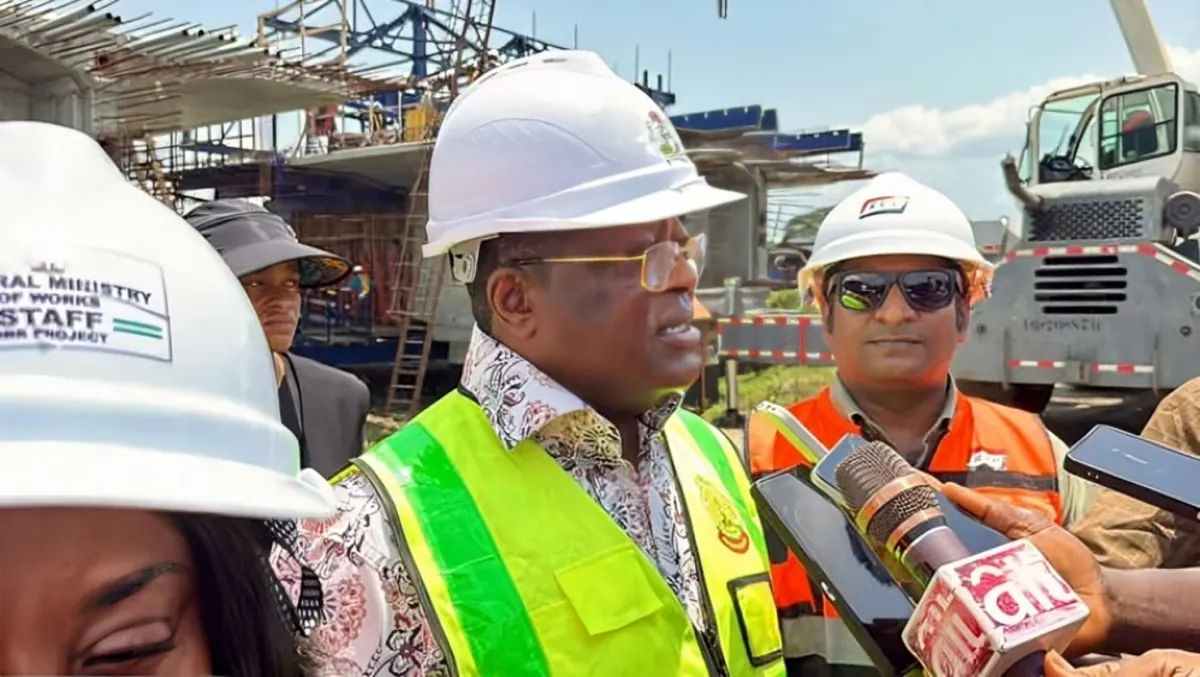
The Lagos-Calabar Coastal Highway project is being funded through an Engineering, Procurement, Construction and Financing (EPC+F) model. Under this arrangement, the Federal Government is contributing 30% of the funding, while external lenders are expected to provide the remaining 70%. This disclosure was made by Minister of Works, Senator Dave Umahi, amidst criticism of the project's cost and financing structure.
According to Senator Umahi, the financing institutions are conducting due diligence on the project before committing funds. The lenders are examining the project's environmental impact assessment, resettlement programme, procurement process, and unit costs, among other requirements. Deutsche Bank has provided financing for the first section of the coastal highway, which was oversubscribed by $100 million.
The Minister of Works defended the project's cost, stating that it cannot be judged simply by dividing the total expenditure by the number of kilometres constructed. He attributed this to the complex terrain along the route, which varies every 50 metres. Some portions of the route involve excavation of up to 10 metres, soil consolidation, and extensive filling, while provision is also made for a rail corridor.
Senator Umahi maintained that the project was subjected to the necessary procurement and financing processes, rejecting allegations of financial impropriety. The first section of the highway, measuring 47.47 kilometres, has been completed, while construction continues on other sections of the highway.
The Federal Ministry of Finance had previously confirmed a $747 million syndicated loan led by Deutsche Bank for Phase One, Section One of the project. This loan was utilised to fund the initial phase of the project, which involves the construction of a critical section of the highway.
The Lagos-Calabar Coastal Highway is one of the administration's most controversial infrastructure projects. Despite criticism, the Federal Government remains committed to completing the project, which is expected to boost economic growth and improve transportation infrastructure in the region.
The project is expected to have a significant impact on the region's economy and transportation infrastructure. Upon completion, the highway will facilitate the movement of goods and services, thereby enhancing economic activity and development in the region.
Key points
- The Federal Government is funding 30% of the Lagos-Calabar Coastal Highway, with external lenders providing the remaining 70%.
- Deutsche Bank provided financing for the first section of the coastal highway, which was oversubscribed by $100 million.
- The project was subjected to the necessary procurement and financing processes, with the Minister of Works rejecting allegations of financial impropriety.