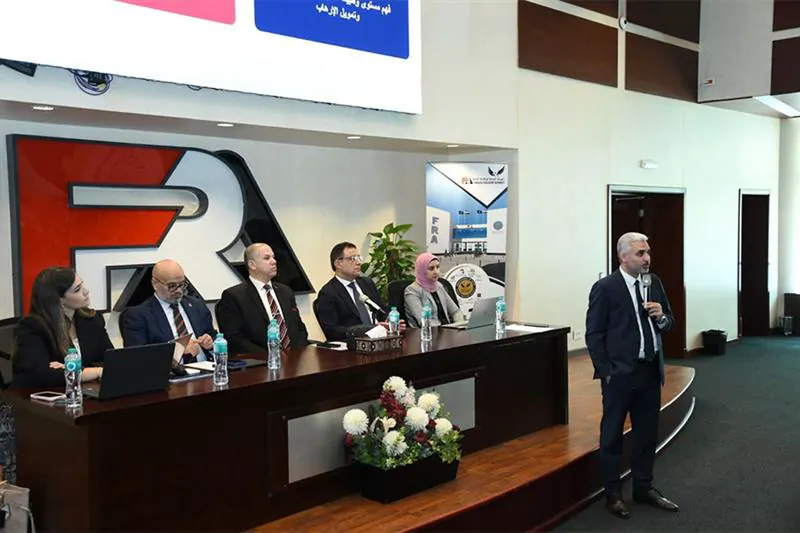
Egypt's Financial Regulatory Authority (FRA) has urged non-banking financial companies to implement updated Customer Due Diligence (CDD) procedures to enhance their internal systems and combat money laundering. FRA Chairman Islam Azzam made the remarks during a meeting with the Egyptian Money Laundering and Terrorist Financing Combating Unit (EMLCU) and non-banking financial companies. The meeting aimed to strengthen efforts to combat money laundering risks and enhance early detection capabilities.
The EMLCU operates under the Central Bank of Egypt (CBE) and works to protect Egypt's financial stability and national security by acting as a clearinghouse for alerts on suspicious financial transactions. The unit provides training and knowledge transfer to state entities and public awareness initiatives. The FRA collaborates with the EMLCU to enforce legislative and regulatory frameworks for combating money laundering and terrorist financing across various economic sectors.
The updated CDD procedures include identifying and reporting suspicious transactions associated with high-risk cases, record-keeping, and integration with credit bureaus to improve risk assessment and credit decisions. These procedures fall under the Anti-Money Laundering and Counter-Terrorism Financing (AML/CFT) framework. The FRA has issued a comprehensive guidebook detailing the rules and regulations governing consumer finance companies to raise awareness among industry players of their legal and operational obligations.
The FRA's efforts aim to enhance regulations for client-identification systems to verify customer data and develop Egypt's non-banking financial sector. Consumer finance transactions grew by 53.2 percent year-on-year to EGP 8.493 billion in the first half of 2026, up from EGP 5.5 billion in January 2025. This growth is significant amid declining purchasing power due to high inflation.
The FRA has also mandated companies to implement a one-time password (OTP) verification system and provide behavioural analysis scores when assessing customers' creditworthiness. Preparations are underway to fully integrate the databases of consumer finance companies with the FRA's database to promote early detection of trends and risks such as fraud and money laundering.
The meeting also covered the importance of implementing targeted financial sanctions, such as asset freezes and prohibitions designed to prevent funds or assets from being made available to specific individuals or entities. The EMLCU's representatives emphasized the necessity of continuously reviewing these rules and updating oversight, governance, and risk-management frameworks to ensure the effectiveness of internal systems and business growth.
The FRA's updated regulations align with its efforts to enhance client-identification systems and develop Egypt's non-banking financial sector, an important source of financing for households, consumers, and private-sector investment outside the traditional banking system. The authority aims to promote a secure and stable financial environment by collaborating with relevant units and entities.
Key points
- The FRA has mandated non-banking financial companies to implement updated Customer Due Diligence procedures to combat money laundering and terrorist financing.
- The updated procedures include identifying and reporting suspicious transactions, record-keeping, and integration with credit bureaus.
- The FRA aims to enhance regulations for client-identification systems to verify customer data and develop Egypt's non-banking financial sector.