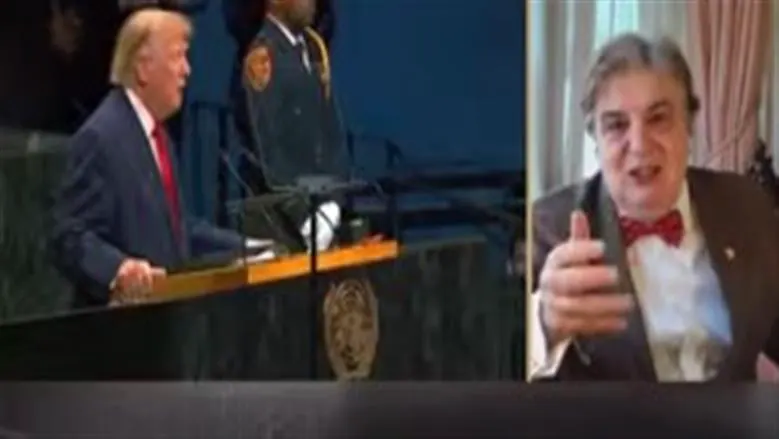
Political analyst Babak Amadian has stated that the primary issue hindering negotiations between Iran and the United States is the lack of trust between the two nations. According to Amadian, the Iranian system is eager for a swift resolution and desires to achieve peace and secure a deal with the US. However, the main problem lies in the fact that the US administration does not trust the Iranian system, citing concerns about its commitment to previous agreements.
Amadian made these remarks during an interview with Cairo News Channel, discussing the recent meetings held at the United Nations General Assembly. He emphasized that the Iranian system's internal divisions and lack of a unified stance further complicate its position during negotiations. These divisions, coupled with Iran's economic struggles, have led to a sense of desperation in the country.
The Iranian system is facing significant internal challenges, which impact its negotiating position. Amadian noted that Iran's economy is suffering, and the country is seeking to secure more funds. These circumstances, he argued, put the US in a position of strength. The analyst's comments come as the international community closely watches developments in Iran-US relations.
The United Nations General Assembly has provided a platform for world leaders to engage in discussions and negotiations. However, the Iranian system's eagerness for a rapid resolution has been met with caution from the US side. Amadian's insights offer a nuanced understanding of the complexities surrounding Iran-US negotiations.
Amadian's comments highlight the deep-seated issues that need to be addressed for meaningful negotiations to take place. The Iranian system's commitment to previous agreements has been a point of contention, with the US expressing concerns about the country's reliability. This lack of trust has significant implications for the prospects of a new deal.
The analyst's remarks also underscore the impact of Iran's internal divisions on its negotiating position. The country's economic struggles and desire for more funds have created a sense of urgency, which the US is seeking to capitalize on. As Iran-US relations continue to evolve, Amadian's insights provide valuable context for understanding the complexities at play.
The situation remains fluid, with both sides engaged in delicate negotiations. Amadian's comments serve as a reminder of the significant challenges that need to be overcome for a meaningful agreement to be reached. The international community will be closely watching developments in Iran-US relations, as the two nations navigate their complex relationship.
Key points
- The lack of trust between Iran and the US is a major obstacle to negotiations.
- Iran's internal divisions and economic struggles are impacting its negotiating position.
- The US is seeking to capitalize on Iran's desperation to secure a better deal.