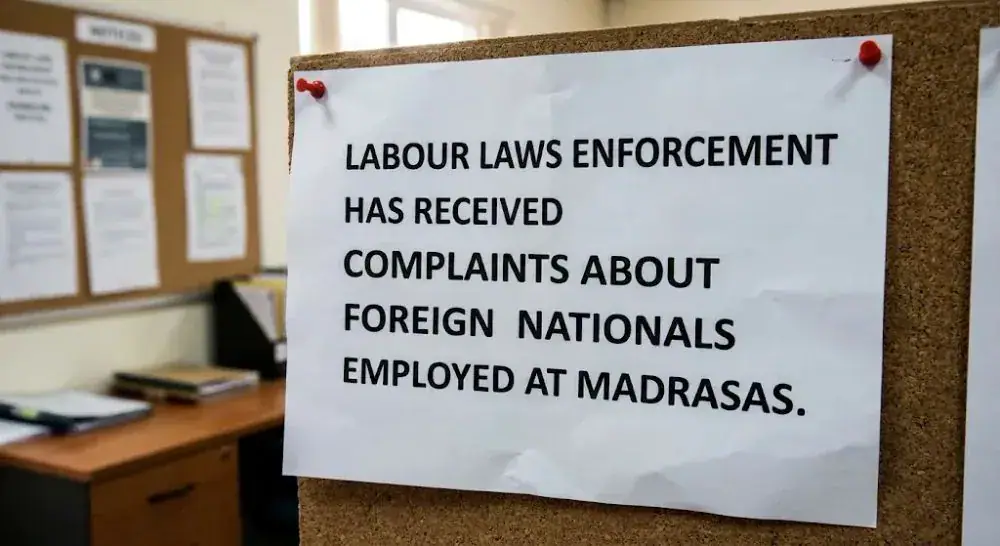
The Labour Laws Enforcement (LLE) in South Africa has announced plans to conduct inspections at Islamic schools, or madrasas, following complaints about the employment of foreign national sheikhs and moulanas. The LLE received numerous complaints from schools across the province regarding the employment of foreign nationals, underpayment of teachers, and non-contribution to the Unemployment Insurance Fund (UIF).
Agape Xulu, provincial chairperson of the LLE, stated that some madrasas are hiring foreign nationals as sheikhs and moulanas while qualified South Africans remain unemployed. The LLE is urging madrasas to prioritize the employment of South African sheikhs and moulanas and pay them a fair salary equal to that of a basic teacher.
According to Xulu, any madrasa employing a foreign national must prove that it made a genuine effort to recruit a South African first and that such efforts were unsuccessful. The LLE is calling on all Islamic madrasas to comply with South African labour laws, employ South Africans, and treat them with dignity and fair remuneration.
Mthobisi Shinga, spokesperson for LLE, emphasized that they are committed to fighting injustice in every community. The LLE will conduct further investigations into the employment practices of Islamic schools. Shinga noted that extensive research has found that Islamic schools employ a majority of foreign nationals within the teaching space, leaving out South Africans.
Yusuf Patel, secretary general of the United Ulama Council of South Africa, supports the development and employment of local South African scholars but also emphasizes that individuals with valid documentation and legally permitted to work in South Africa should not be discriminated against. Patel argues that excluding qualified, legally documented individuals solely based on nationality runs counter to the principles of fairness and constitutional dignity.
Dr Faisal Suliman, chairperson of the South African Muslim Network (SAMNET), disagrees with the LLE's approach, stating that it is "untenable" and a "slippery road to chaos." Suliman argues that only authorized state officials may conduct labour inspections and that non-state actors should not take the law into their own hands.
Suliman also warns that the LLE's approach could lead to bribery and corruption. He emphasizes that compliance with labour laws and other regulations must be conducted through proper channels, and that entities must comply with South African laws.
Key points
- The Labour Laws Enforcement will conduct inspections at Islamic schools to address complaints about the employment of foreign national sheikhs and moulanas.
- The LLE is urging madrasas to prioritize the employment of South African sheikhs and moulanas and pay them a fair salary.
- The approach of the LLE has been criticized by some as "untenable" and a potential threat to chaos and corruption.