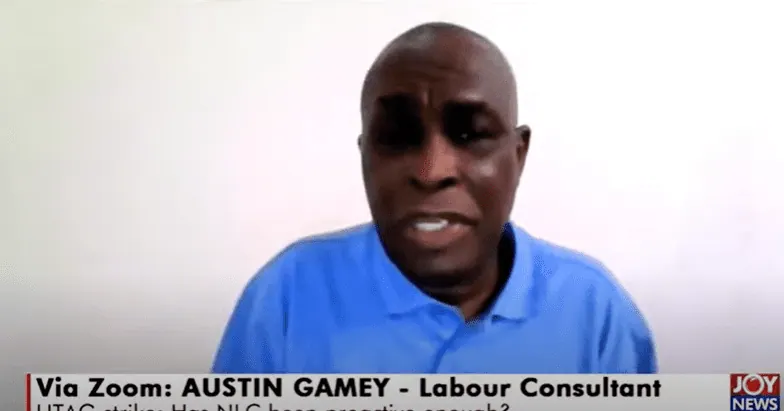
Labour consultant Austin Gamey has expressed concerns over the decision by pre-tertiary teacher unions to maintain their nationwide strike while negotiations with the government are underway. Speaking on JoyNews' The Pulse, Mr. Gamey argued that the continued strike during negotiations could undermine the relationship between the parties. He likened the situation to holding the other party in handcuffs while demanding further action.
Mr. Gamey acknowledged that the government's initial approach to the teachers' concerns may not have been proactive enough, and he did not blame the unions for taking industrial action initially. However, he noted that the ongoing validation of promotion claims by the government showed that steps were now being taken to address the concerns. He urged the parties to recognize the efforts being made to resolve the outstanding issues and avoid actions that could further strain their relationship.
The labour consultant emphasized that negotiations and strikes are mutually exclusive. "When you are negotiating, you are not supposed to be on strike," he said, adding that this principle applies globally. Mr. Gamey encouraged the teacher unions and the government to work together to prevent similar disputes from recurring, noting that many Ghana Education Service officials are themselves members of the teacher unions.
Mr. Gamey's comments come as the teacher unions, the Fair Wages and Salaries Commission, and the Ghana Education Service engage in renewed negotiations over the concerns that triggered the nationwide strike by pre-tertiary teachers. The negotiations aim to find a resolution to the issues, including the payment of promotion arrears and the validation of promotion claims.
The Ghana Education Service has been working to address the concerns, with the Education Minister setting up a committee to validate teachers eligible for the 20% deprived-area allowance. Additionally, the GES has set an October 5 deadline to resolve the teachers' payment dispute and has been working around the clock to get teachers back to class.
Other stakeholders, including the National Association of Graduate Teachers (NAGRAT), have emphasized the need for concrete solutions before teachers return to the classroom. The Minority Leader, Haruna Iddrisu, has outlined a roadmap on the teachers' strike, setting timelines for the payment of allowances and promotion arrears.
The ongoing strike has caused concern among parents, with some expressing worry about the impact on their children's education. The situation presents an opportunity for both sides to strengthen their relationship and develop mechanisms that can prevent future disagreements from escalating into industrial action.
Key points
- The teacher unions should suspend their industrial action while negotiations with the government are ongoing.
- The government's validation of promotion claims shows that steps are being taken to address the teachers' concerns.
- The parties must work together to prevent similar disputes from recurring and strengthen their relationship.