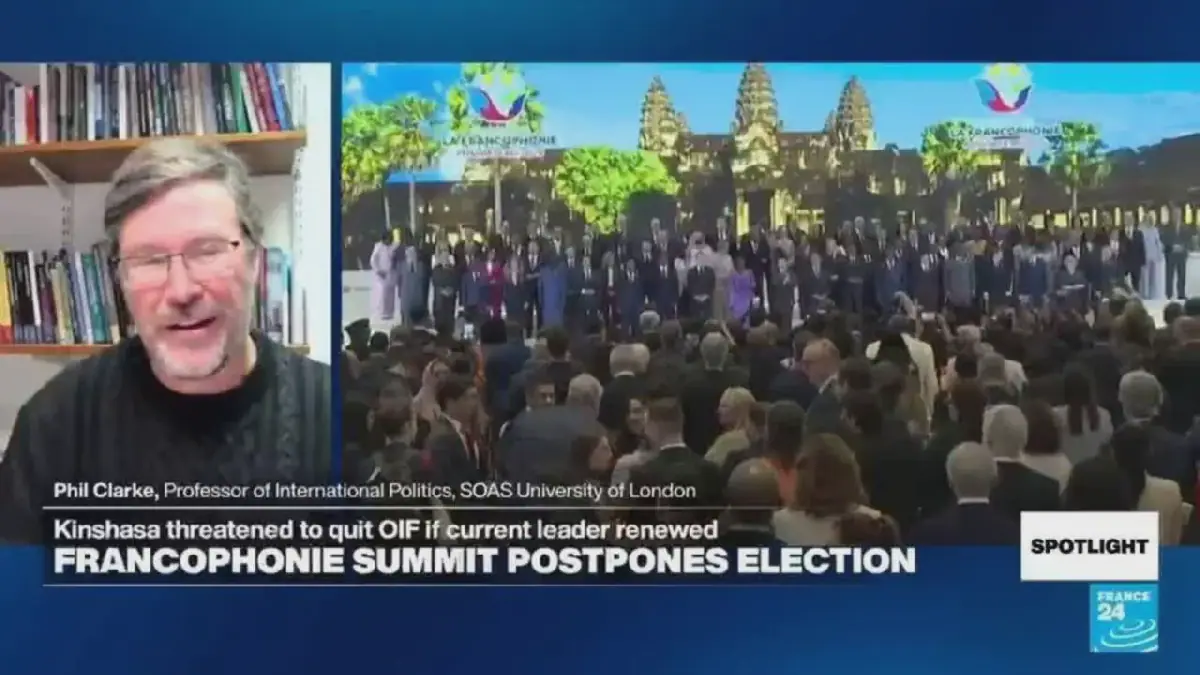
The recent Francophonie summit in Phnom Penh exposed a diplomatic crisis between Rwanda and the Democratic Republic of Congo, revealing a shift in their relations. Professor Phil Clark of SOAS University of London attributed the unexpected turn of events to President Macron's request that Paul Kagame withdraw Louise Mushikiwabo's candidacy for a third term. This move has led to growing international pressure on Rwanda over its backing for M23 in eastern Congo.
Clark argued that Congo is now "winning the diplomatic battle," citing increased international pressure on Rwanda. He also questioned the effectiveness of the Washington and Doha peace processes, stating that neither has made substantial progress. Clark suggested that future mediation is likely to be led by the African Union, indicating a potential shift in the role of organizations like La Francophonie.
The dispute between Rwanda and the Democratic Republic of Congo has raised concerns about the influence of La Francophonie and similar linguistic institutions. Clark believes that these organizations are "waning in their global influence," becoming less important in international diplomacy. This trend may have significant implications for global politics and cooperation.
The Francophonie summit's postponement of a new leader vote amid the DR Congo-Rwanda dispute highlights the challenges facing these linguistic institutions. As diplomatic crises unfold, the role of organizations like La Francophonie is being reevaluated. The effectiveness of these institutions in promoting cooperation and resolving conflicts is being questioned.
The shift in diplomatic dynamics between Rwanda and the Democratic Republic of Congo has significant implications for regional politics. The African Union's potential leadership in future mediation efforts marks a change in the diplomatic landscape. This development may lead to a more nuanced understanding of the complex relationships between nations in the region.
The waning influence of La Francophonie and similar institutions raises questions about their relevance in modern diplomacy. As global politics evolve, the role of linguistic institutions in promoting cooperation and resolving conflicts is being reassessed. This reevaluation may lead to a more effective and efficient international diplomatic framework.
The diplomatic crisis between Rwanda and the Democratic Republic of Congo serves as a catalyst for reexamining the influence of La Francophonie and similar institutions. As the international community adapts to changing global dynamics, the role of these institutions will continue to evolve. The future of linguistic institutions in international diplomacy remains uncertain.
Key points
- La Francophonie's global influence is waning, says expert Phil Clark.
- The diplomatic crisis between Rwanda and the Democratic Republic of Congo has exposed a shift in their relations.
- The African Union may lead future mediation efforts in the region.