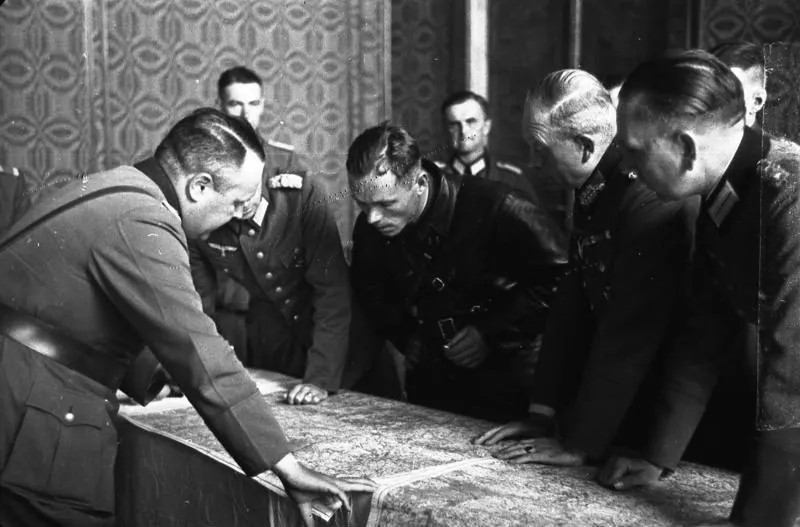
On September 17, 1939, the Soviet Union, bound by the Molotov-Ribbentrop Pact with Nazi Germany, invaded Poland, further exacerbating the country's dire situation. This development prompted Léon Blum, the French socialist leader, to express his outrage in an article published in Le Populaire. Blum's article was a call to action, urging French socialists and communists to dissociate themselves from Stalin's regime. The Soviet invasion of Poland was a pivotal moment in the early stages of World War II.
The Soviet Union's decision to invade Poland was motivated by a desire to expand its territory and spread its influence. The pact with Nazi Germany had created a temporary alliance between two ideologically opposing nations. The invasion caught Poland off guard, as its military was already engaged in a conflict with Germany. The Polish army struggled to defend itself against the simultaneous attacks from both the German and Soviet forces. Despite their bravery, the Polish military was vastly outnumbered and outgunned.
The consequences of the Soviet invasion were severe. Poland was effectively partitioned between Germany and the Soviet Union, with the two powers establishing a demarcation line in Brest-Litovsk. The Soviet Union claimed that its actions were justified by the need to protect the rights of Ukrainians and Belarusians living in Poland. However, this pretext was widely seen as a thinly veiled excuse for Soviet expansionism. The invasion marked the beginning of a period of brutal repression in Poland.
The Soviet occupation of Poland was characterized by widespread violence and repression. One of the most notorious incidents was the massacre of 22,000 Polish intellectuals, officers, and politicians in the Katyń forest. This atrocity was carried out in secret, with the aim of eliminating the Polish elite and facilitating the Soviet occupation. The international community was shocked by the scale of the violence, and many condemned the Soviet Union's actions.
Léon Blum's article in Le Populaire was a passionate condemnation of the Soviet invasion. He expressed his dismay and disappointment at the Soviet Union's actions, which he saw as a betrayal of socialist principles. Blum urged French socialists and communists to reject Stalin's regime and to reaffirm their commitment to the values of liberty, justice, and peace. His article sparked a heated debate within the French left-wing community.
Blum's call to action was not universally well-received. Some socialists and communists were reluctant to break with the Soviet Union, which they saw as a champion of progressive causes. However, Blum argued that it was essential to take a stand against Stalin's regime, which he saw as a threat to the very principles of socialism. He emphasized that French socialists and communists could no longer maintain a relationship with a regime that had committed such atrocities.
The impact of Blum's article was significant, contributing to a wider re-evaluation of the Soviet Union's role in international affairs. As the world grappled with the implications of the Soviet invasion, Blum's words resonated with many who were disillusioned with Stalin's regime. The article marked a turning point in the history of the French left-wing, as many began to question their allegiance to the Soviet Union.
Key points
- Léon Blum denounced the Soviet invasion of Poland in an article published in Le Populaire on September 1939.
- The Soviet invasion of Poland was a pivotal moment in the early stages of World War II, marking the beginning of a period of brutal repression in Poland.
- Blum urged French socialists and communists to reject Stalin's regime and reaffirm their commitment to the values of liberty, justice, and peace.