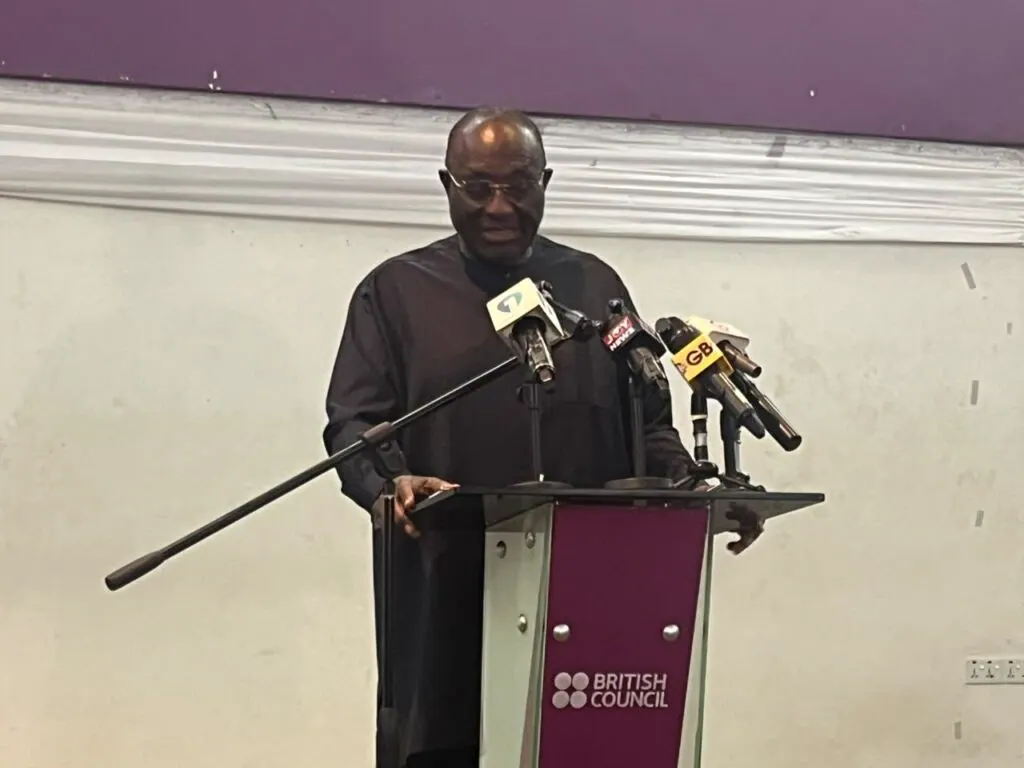
Former Trade and Industry Minister, Alan Kyerematen, has questioned the government's decision to spend $4 billion in public funds on the Accra-Kumasi Expressway. He argues that the road, which could generate enough revenue to cover its costs, should be financed by private investors instead. Speaking at a public lecture at the British Council in Accra, Kyerematen posed a pointed question about the government's approach to financing the project.
According to Kyerematen, the expressway is a commercially viable asset that can pay for itself through toll revenue. He suggests that freeing up the money currently earmarked for the expressway could allow the state to address other pressing infrastructure needs, including roads within local communities across Ghana. Kyerematen's proposal is based on the principle that where private investors can recover their money through toll collections, government should not need to put up the initial capital.
The government, however, has a different plan for funding the 175.6-kilometre road. President John Dramani Mahama announced on 14 September that $2 billion had already been secured for the project and deposited in a dedicated Bank of Ghana account. The money is sourced from taxpayers rather than borrowed funds, according to the President. Finance Minister Dr Cassiel Ato Forson had earlier said $1.7 billion was in hand, with the full amount expected by the end of 2026 without recourse to loans.
Once built, the expressway itself is meant to become a revenue-generating asset. Accra-Kumasi Expressway Limited, the special-purpose company government set up to oversee its development and maintenance, has said the road will operate commercially so that taxpayers' investment can be recovered. The company's chief executive, Francis Ahlidza, indicated that economic analysis anticipates recovery over a 50-year concession period, alongside extra revenue for future road expansion.
Kyerematen's point of departure is timing: rather than the state fronting construction costs and recouping them later through tolls, he wants private capital to fund construction from the start. This approach would allow investors to recover their stake directly through toll revenue over an agreed period. Kyerematen's proposal is part of a wider push to challenge how government spends public money and to encourage private sector participation in infrastructure development.
This is not Kyerematen's first challenge to how government spends public money. He has previously called for "golden handshakes" to shrink the size of central government, a proposal aimed at cutting public sector costs. The expressway comments also follow broader debate over how Ghana's biggest infrastructure projects are structured, including earlier calls for local firms to get a real share of major government contracts.
For ordinary Ghanaians, the debate touches directly on how scarce public resources are allocated. If Kyerematen's model were adopted, taxpayer funds currently set aside for the expressway could, in theory, be redirected to other infrastructure priorities, including local roads. No timeline has been given for when, or whether, government might reconsider its financing structure. Construction of the expressway is expected to begin once the road's right-of-way has been cleared.
Key points
- Former Trade Minister Alan Kyerematen suggests private investors should fund the $4 billion Accra-Kumasi Expressway instead of taxpayers.
- The government has secured $2 billion for the project and plans to fund it through public money.
- Kyerematen's proposal could allow the state to redirect taxpayer funds to other infrastructure priorities if adopted.