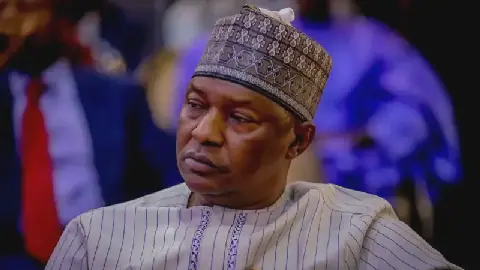
Former Kano State Governor and Nigeria Democratic Congress (NDC) vice-presidential candidate Rabiu Musa Kwankwaso has stated that state governors in Nigeria no longer wield the level of power they had when the country returned to democratic rule in 1999. In an exclusive interview, Kwankwaso reflected on the evolution of state governance, noting that the influence of governors had decreased over the years. He argued that governors today have less authority than their counterparts in 1999.
Kwankwaso attributed the reduced power of governors to their attitude after assuming office. He said winning an election can make some governors believe they no longer need to listen to others. According to him, some governors arrive at the Government House with the mindset that they have "defeated everybody", making them less receptive to advice. This mindset, Kwankwaso implied, can limit their ability to effectively govern.
The NDC vice-presidential candidate also addressed the political disagreement between Benue State Governor Hyacinth Alia and Secretary to the Government of the Federation (SGF), George Akume. Kwankwaso described the dispute between the two Benue politicians as "unfortunate and unnecessary". He accused Alia of acting out of desperation in the disagreement, although he did not provide further details.
Kwankwaso's comments come amid ongoing debates over the distribution of powers between the Federal Government, states, and local governments. Issues such as security and local government autonomy have repeatedly highlighted the limits of governors' authority under Nigeria's federal structure. The discussion on power distribution has significant implications for governance and development in the country.
The diminishing power of governors has raised concerns about the effectiveness of state governments in addressing local challenges. With reduced autonomy, governors may struggle to implement policies and programs that address the specific needs of their states. This, in turn, can affect the delivery of essential services and the overall well-being of citizens.
Kwankwaso's remarks have sparked a renewed discussion on the role of governors in Nigeria's federal system. As the country continues to grapple with issues of governance and development, the conversation on power distribution and the limits of governors' authority is likely to continue. The NDC vice-presidential candidate's comments have added to the growing debate on the need for constitutional reforms and greater autonomy for states.
The issues raised by Kwankwaso are significant, given the critical role that governors play in addressing local challenges and delivering essential services. As Nigeria continues to navigate its complex federal structure, the conversation on power distribution and the role of governors will remain a pressing concern. The country's ability to address these challenges will have a lasting impact on its development trajectory.
Key points
- Former Kano State Governor Rabiu Musa Kwankwaso says Nigerian governors have lost power since 1999.
- Kwankwaso attributes the reduced power of governors to their attitude after assuming office.
- The NDC vice-presidential candidate's comments have sparked a renewed discussion on the role of governors in Nigeria's federal system.