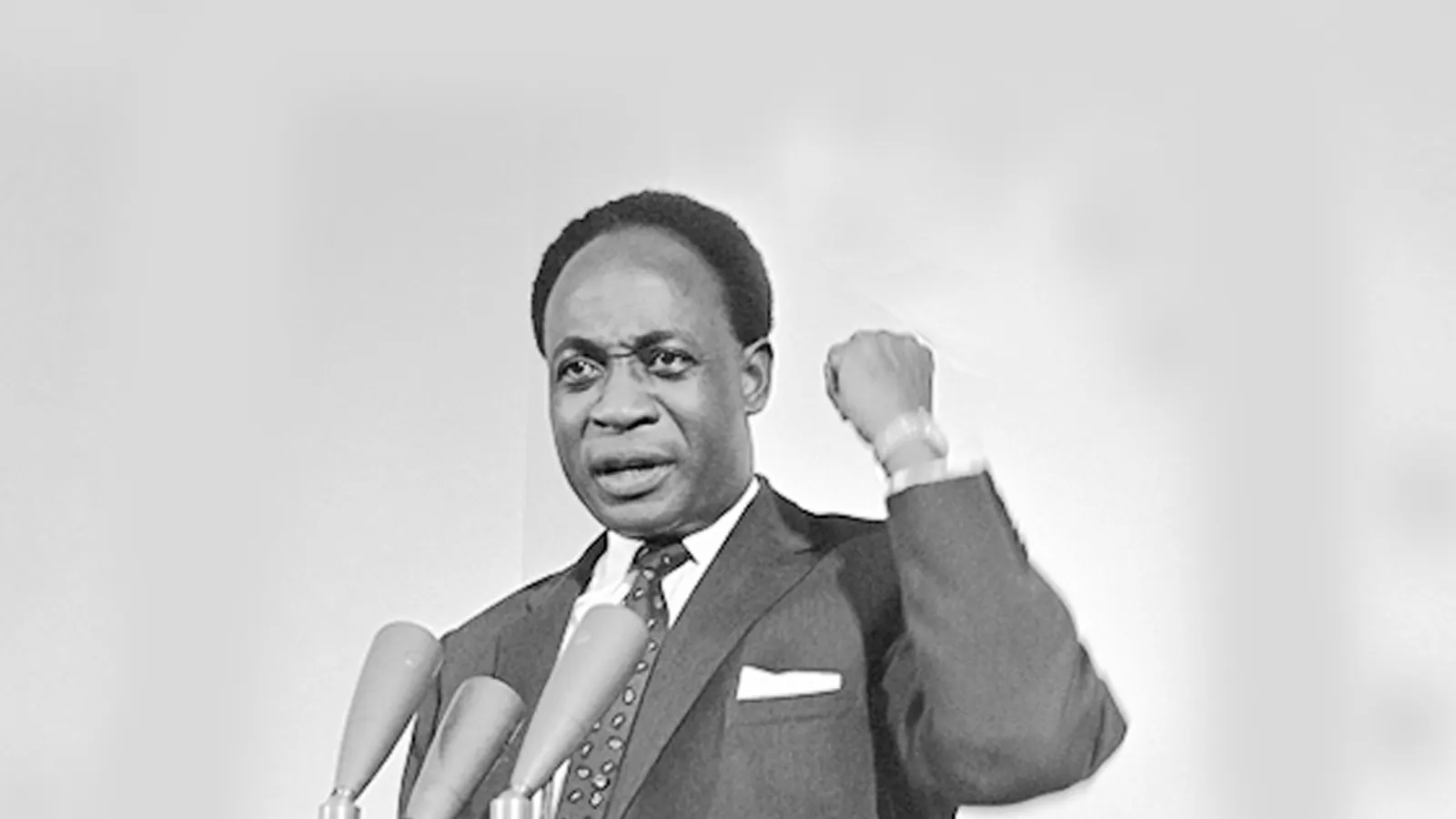
Ghana today observes the 117th birthday of Kwame Nkrumah, a national public holiday celebrated as Kwame Nkrumah Memorial Day. The occasion invites reflection on the ideas that shaped his political vision and the extent to which those ideas continue to influence Ghana and Africa. Nkrumah's legacy remains complex, with supporters regarding his development initiatives as evidence of his determination to lay the foundations for a modern Ghana, while critics point to the financial costs of some of his policies.
Nkrumah was born on September 21, 1909, at Nkroful in the Western Region of Ghana. He rose from relatively modest beginnings to become one of Africa's most influential political leaders after studying abroad and engaging with Pan-Africanist thinkers. His political activism culminated in Ghana's independence from British colonial rule on March 6, 1957, when the Gold Coast became the first sub-Saharan African country to gain independence from colonial rule.
For Nkrumah, Ghana's independence was not an end in itself, but a means to achieve the total liberation of Africa. He believed that the independence of African countries was interconnected and that political freedom without economic independence would leave African states vulnerable to external control. His advocacy for African unity went beyond symbolism, envisioning a united Africa capable of coordinating its political, economic, and security interests.
Nkrumah's ideas on economic development were equally ambitious, with his government investing heavily in roads, schools, health facilities, industrial projects, and other major development initiatives. The Akosombo Dam, Tema Harbour, and the industrialisation programme of the early post-independence period became important symbols of that vision. However, critics have pointed to the financial costs of some of his policies and the expansion of state control over the economy.
Nkrumah's legacy continues to be relevant today, with successive generations revisiting his ideas and ideals, particularly during periods when questions about Ghana's economic sovereignty, industrialisation, and national development become prominent. For young Ghanaians who did not experience independence, Nkrumah exists largely through history books, monuments, speeches, photographs, and the stories passed down by older generations.
The questions Nkrumah confronted remain familiar, including how to create sustainable economic opportunities, reduce dependence on external financing and imported goods, and transform Africa's abundant natural resources into broad-based prosperity. These questions make Nkrumah's birthday more than a historical observance, but also a moment of national reflection on the unfinished aspirations of the independence generation.
As Ghana marks Nkrumah's 117th birthday, the challenge is not simply to remember him, but to understand the questions his life and ideas continue to pose. His legacy extends beyond Ghana, influencing political movements across the continent and contributing to wider debates about colonialism, imperialism, economic independence, and African unity.
Key points
- Nkrumah's legacy remains complex, with both supporters and critics offering different perspectives on his development initiatives and policies.
- The questions Nkrumah confronted remain relevant today, including how to create sustainable economic opportunities and reduce dependence on external financing.
- Nkrumah's birthday serves as a moment of national reflection on the unfinished aspirations of the independence generation.