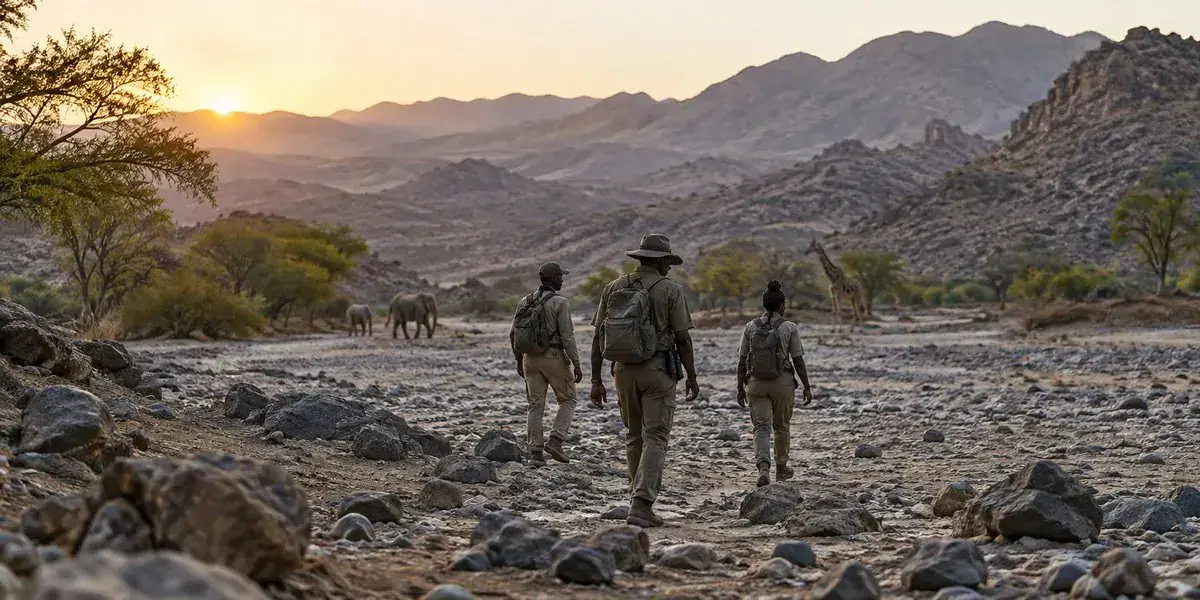
Namibia's Kunene Region, spanning 144,000 square kilometres of rocky desert in the north-west, is experiencing a revival driven by improved rainfall. This development is attracting fresh investor interest in conservation-led tourism and sustainable business models. The region is home to a diverse range of wildlife, including springbok, gemsbok, kudu, giraffe, elephant, rhino, and desert-adapted lion. Recent rainfall has revived grazing and steadied wildlife populations, creating a stronger platform for specialist travel.
The ecological cycle in the Kunene Region directly shapes tourism revenue. Antelope can breed within weeks of good rains, while elephants, rhinos, and giraffes take longer to rebuild. Predator numbers follow prey recovery, extending the season for wildlife-focused visitors. As grassland shifts from green to yellow, the region enters a productive window for specialist travel. This presents opportunities for investors to support conservation efforts and sustainable tourism practices.
The Kunene Region revival has significant implications for local communities. Pastoralist households in Kunene have absorbed livestock losses during recent dry years, making tourism income a primary revenue source for many families. Visitors have continued to arrive in the region, drawn by its stark scenery and rare wildlife encounters. Community participation is crucial to the investment case, with responsible operators channeling income to guides, camp staff, transport providers, and local enterprises.
The Kunene Region offers a unique opportunity for tourism investors, with its vast scale, isolation, and direct access to desert ecosystems. Much of the region lies outside national-park boundaries, providing visitors with a more unrestricted experience. However, operational risks are higher, with remote roads exposing self-drive travellers to breakdowns and limited assistance. Mobile coverage remains patchy, and dry riverbeds can be hazardous at night.
To mitigate these risks, operators with local knowledge are essential. They can provide visitors with better cultural access and reduce the risk of wildlife-management interventions. Off-road driving, for example, can damage fragile plants, kill small animals, and scar terrain. It can also lead vehicles into areas where recovery teams struggle to reach them. By partnering with local operators, investors can support sustainable tourism practices and minimize environmental impacts.
The reopening of Wilderness Serra Cafema, a premium safari camp on the perennial Kunene River, is a significant indicator of investor confidence in the region. Scheduled to reopen on 1 December 2026, following rebuilding work after a fire earlier that year, the camp illustrates the capital requirements of operating in isolated environments. The revival of the Kunene Region has also sparked wider institutional interest in Namibia, with investors recognizing the potential for conservation-led tourism.
However, infrastructure constraints remain a challenge. Opuwo's water purification plant produces 140 cubic metres per hour against an estimated demand of 250 cubic metres per hour. Addressing these constraints will be crucial to unlocking the full potential of the Kunene Region and supporting sustainable tourism practices. By investing in local communities and conservation efforts, investors can help ensure the long-term viability of tourism in the region.
Key points
- The Kunene Region revival presents opportunities for investors to support conservation-led tourism and sustainable business models.
- Community participation is crucial to the investment case, with responsible operators channeling income to local communities.
- Infrastructure constraints, including water supply gaps, remain a challenge to unlocking the full potential of the Kunene Region.
Reporting sources
- Kunene Region revival lifts Namibia tourism investment · FurtherAfrica