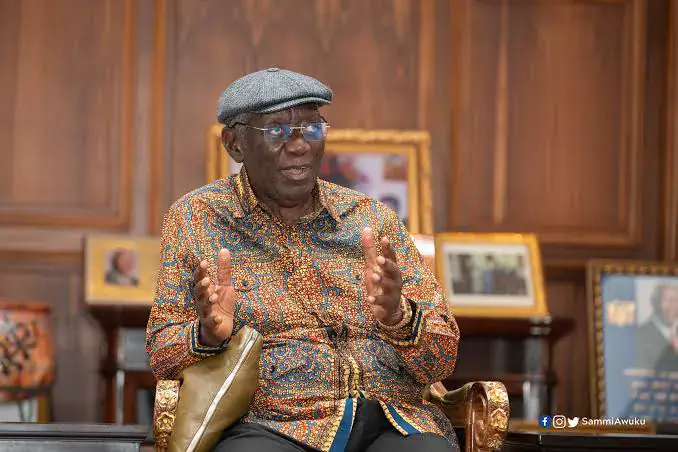
Former President John Agyekum Kufuor has defended his administration's 2001 decision to place Ghana under the Heavily Indebted Poor Countries (HIPC) initiative. He cited the country's severe financial difficulties as the reason for this move. Kufuor's government faced concerns that the decision would portray Ghana as financially weak. In an interview with Joy News' Evans Mensah, Kufuor explained that his administration chose to confront the country's economic realities.
Kufuor recalled that Ghana was struggling under a heavy debt burden and had difficulty securing credit to meet essential national needs. The country's economic situation was dire, with creditors unwilling to provide loans. Even Nigeria, Ghana's neighbor, stopped supplying crude oil for refining. This situation led Kufuor's government to consider alternative solutions. The HIPC initiative presented an opportunity for Ghana to address its debt challenges.
The decision to opt for the HIPC initiative was not unanimous, with some members of Kufuor's government opposing it. They considered it humiliating for Ghana to admit its economic difficulties before the international community. However, Kufuor believed that acknowledging the true state of the economy was essential to developing a path towards recovery. He thought that telling the factual truth about Ghana's state of affairs would make relations with creditors workable.
Kufuor's administration intended to use the relief and support associated with the HIPC programme to attract investment and fund priority sectors. These sectors included education, healthcare, and infrastructure, with a focus on creating employment opportunities for young people. The goal was to improve the living conditions of Ghanaian citizens. Kufuor maintained that protecting national pride should not take precedence over decisions aimed at improving citizens' lives.
Kufuor emphasized that his government had to make pragmatic decisions to better the lot of the nation. He prioritized the welfare of Ghanaian citizens over concerns about national pride. According to Kufuor, being "proud and poor" was not a viable policy option. His government chose to "swallow its pride and go pragmatic" to change the country's circumstances.
The HIPC initiative allowed Ghana to mobilize resources for national development. Kufuor's government used the programme to address the country's debt challenges. He believed that this decision was necessary, despite the potential backlash. Kufuor's administration was willing to take unpopular decisions to improve the lives of Ghanaian citizens.
Kufuor's decision to opt for the HIPC initiative has been vindicated by his explanation that it was a necessary step to address Ghana's economic challenges. His government's pragmatic approach has been recognized as a key factor in Ghana's economic recovery. The country's experience with the HIPC initiative serves as a lesson for other nations facing similar economic challenges.
Key points
- Kufuor's government opted for the HIPC initiative to address Ghana's severe financial difficulties.
- The decision was not unanimous, with some members of Kufuor's government opposing it due to concerns about national pride.
- Kufuor prioritized the welfare of Ghanaian citizens over concerns about national pride.