South Korean President Lee Jae-myung recently welcomed Egyptian President Abdel Fattah el-Sisi to Seoul, marking the first visit in 10 years. Lee Jae-myung expressed his delight in hosting President el-Sisi, emphasizing the significance of their meeting. He mentioned the 'Miracle on the Han River,' which refers to South Korea's rapid economic growth and transformation into a global industrial and economic powerhouse.
The 'Miracle on the Han River' describes South Korea's remarkable economic development since the 1960s. Following the Korean War, the country faced significant challenges, including widespread poverty and a devastated infrastructure. However, under the leadership of President Park Chung-hee, South Korea adopted a development-oriented model, prioritizing economic growth through export-oriented industrialization and infrastructure development.
President Park Chung-hee's leadership played a crucial role in South Korea's economic transformation. His government implemented five-year economic development plans, focusing on key sectors and investing heavily in education and technology. This approach enabled South Korea to develop a skilled workforce and achieve an average annual GDP growth rate of over 7% for several decades.
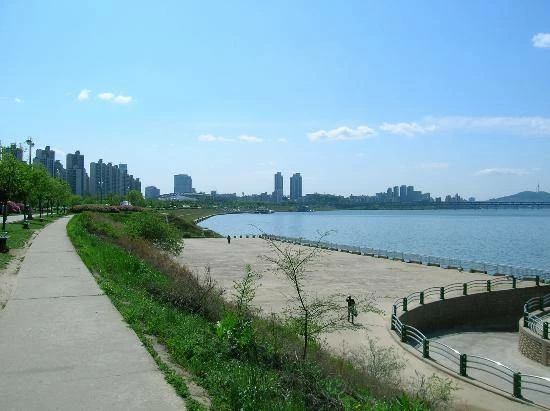
The Han River, which runs through the heart of Seoul, has played a vital role in South Korea's economic development. Stretching approximately 514 kilometers, it has served as an important transportation route since ancient times. The river's basin is home to diverse crops, and its surrounding area features numerous parks and gardens.
South Korea's economic growth accelerated in the 1970s, with the country shifting its focus towards heavy industries and capital goods production. Despite initial skepticism from foreign experts, South Korea successfully developed its industrial sector, with notable growth in steel production and shipbuilding.
In the 1980s and 1990s, South Korea's economy continued to evolve, with a greater emphasis on high-tech industries such as electronics and semiconductors. The country transitioned towards democracy in 1987, leading to increased labor rights and wages. This period also saw South Korea join the Organization for Economic Cooperation and Development (OECD) in 1996.
President Lee Jae-myung's meeting with President el-Sisi highlighted the potential for cooperation between South Korea and Egypt. Lee Jae-myung expressed his hope that the 'Miracle on the Han River' and the 'Miracle on the Nile River' could combine to enhance mutual prosperity.
Key points
- South Korea's economic growth and transformation into a global industrial and economic powerhouse, known as the 'Miracle on the Han River,' has been cited as an example of successful development.