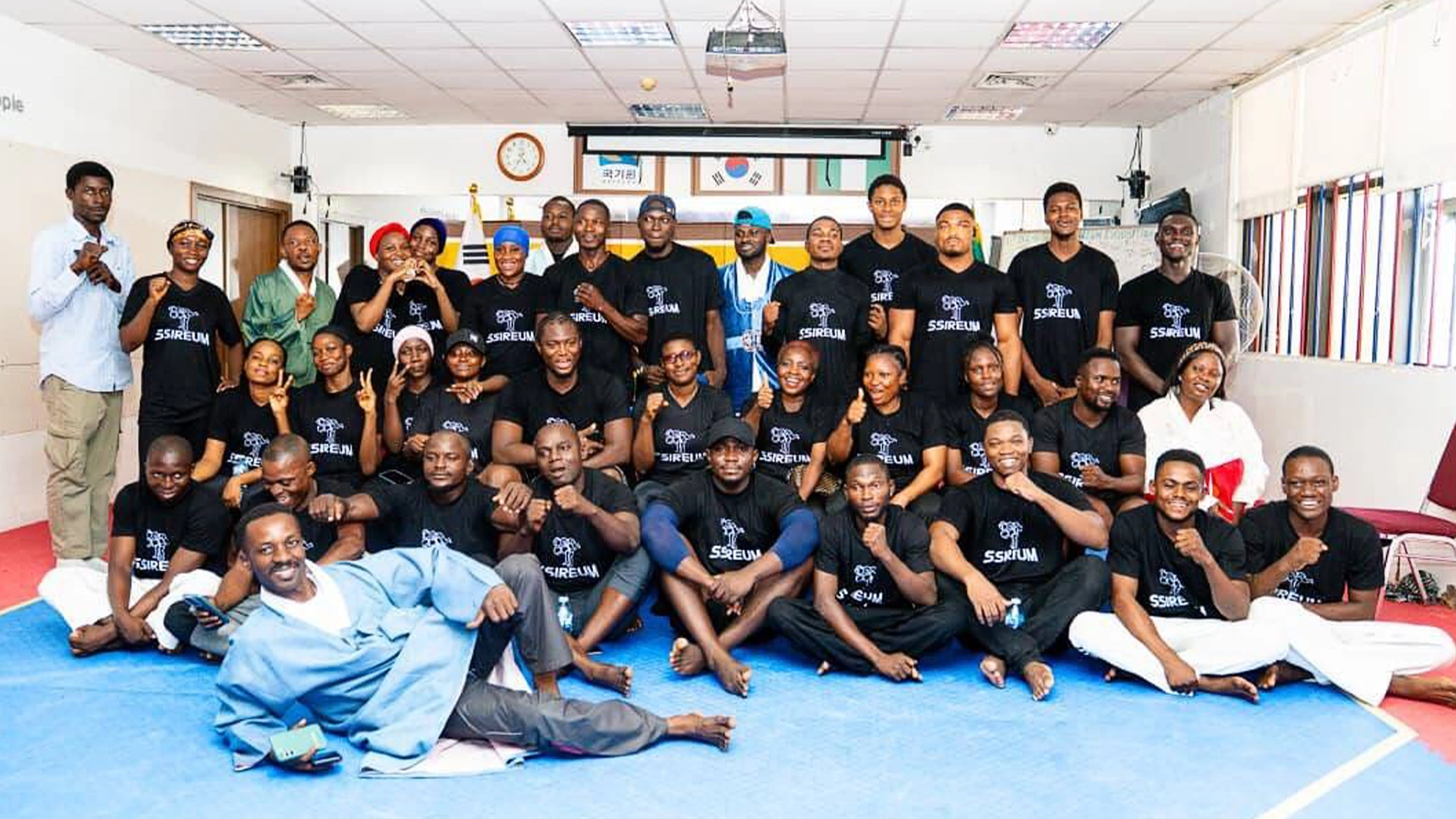
The Korean Cultural Centre Nigeria, located in Abuja, recently hosted the sixth edition of its Chuseok celebration, an event that brought together coaches, athletes, and first-time participants to experience Ssireum, Korea's traditional form of wrestling. This event was part of the centre's efforts to promote cultural exchange and people-to-people relations between Nigeria and South Korea. The celebration offered a unique opportunity for Nigerians to engage with Korean culture through a traditional sport.
According to Gwangmin Lee, Public Relations Officer of the Korean Cultural Centre Nigeria, the celebration was more than just a festival. He stated that the centre's cultural programs were designed to enable Nigerians to encounter Korean traditions beyond what they might see through media or entertainment. Lee described sport as one of the easiest ways for people to experience another culture, allowing them to feel and share in it together.
The event attracted participants from various backgrounds, including Nigeria's sporting and security communities. James Nwobodo, a Nigerian Police Force coach and wrestler, attended the event and noted the similarities between Ssireum and Nigeria's traditional wrestling. He identified similarities in techniques, including takedowns, but noted that the Korean sport has distinctive rules, particularly the use of the rope and the scoring system.
Gbolahan Ogunmuyiwa, Head Coach at the Korean Cultural Centre Nigeria, highlighted the similarities between Ssireum and Nigeria's traditional wrestling, making it easier for participants to connect with the Korean sport. He explained that while both sports involve grappling, Ssireum traditionally involves competitors using a belt or sash around the waist and thigh, with contests often taking place on sand.
For participant Alex Samson, the experience offered a rare opportunity to encounter Korean culture through physical activity. He expressed his excitement to be participating in Ssireum, noting its close similarity with Nigeria's local sport, but with more rules. Samson thanked the Korean Cultural Centre for the initiative, saying the program provided participants with an opportunity to learn through direct experience.
The exchange event also featured first-time participants who tested their strength and technique on the wrestling mat. The centre's use of a mat for the event, rather than the traditional sand, did not hinder the participants' ability to engage with the sport. Ogunmuyiwa noted that the similarities between Ssireum and Nigeria's traditional wrestling allowed participants to blend in easily.
The Korean Cultural Centre's initiative to promote cultural exchange through Ssireum has been well-received by participants. The event demonstrated the potential for cultural exchange to extend beyond music, food, and festivals to include sports. Key points from the event include:
Key points
- The Korean Cultural Centre Nigeria hosted the sixth edition of its Chuseok celebration, featuring Ssireum to promote cultural exchange.
- Ssireum, Korea's traditional form of wrestling, shares similarities with Nigeria's traditional wrestling, making it easier for participants to connect with the sport.
- The event provided a unique opportunity for Nigerians to engage with Korean culture through physical activity, promoting people-to-people relations between the two countries.