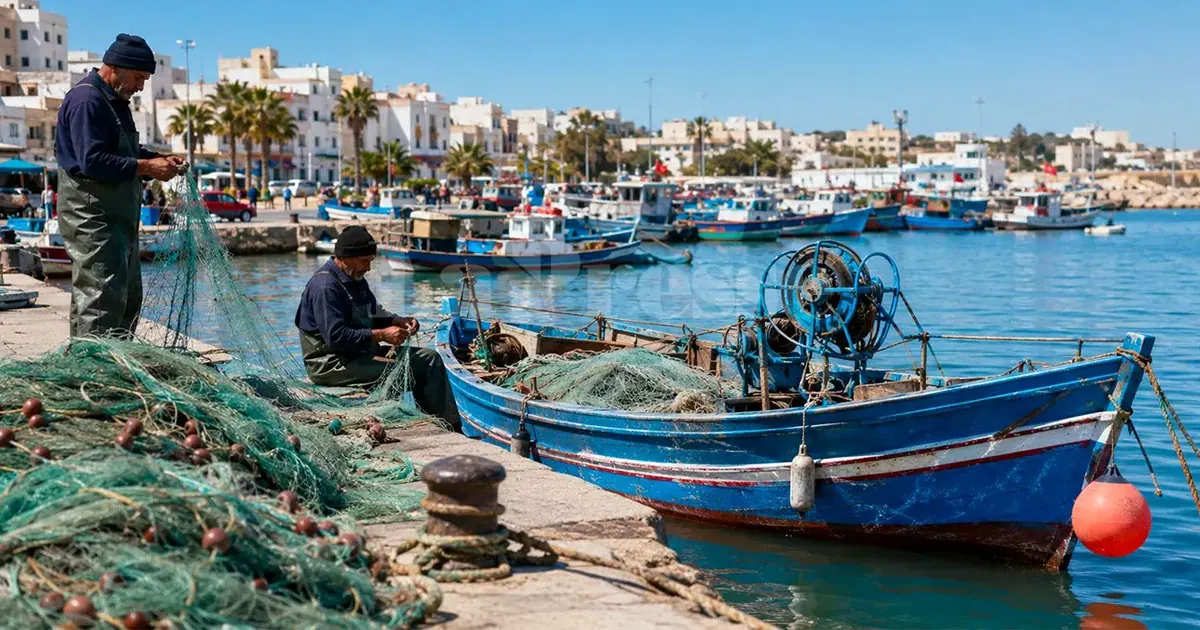
Tunisia's fishing resources have been declining steadily, according to Salah Charfeddine, president of the Mahdia Regional Union of Agriculture and Fisheries. He cited three main reasons for this decline. The first reason is the proliferation of trawling, a fishing technique that involves dragging a large net behind one or more boats. Charfeddine believes that the authorities have not done enough to combat this practice. As a result, the industry is facing significant challenges.
The second reason for the decline is the poor weather conditions and frequent power outages, which have reduced the number of working days for fishermen. Previously, fishermen could work for up to 180 days, but now they barely reach 100 days. This reduction in working days has had a significant impact on the industry's productivity and profitability. The fishing sector is a significant contributor to Tunisia's economy, with an annual production of around 150,000 tons.
The third reason for the decline is the increase in fuel prices and the cost of fishing equipment, which has risen by 100%. These factors, combined with the lack of support from the authorities, have put a strain on the fishermen's activities. The industry is struggling to cope with these challenges, and it is affecting the livelihoods of many people who depend on it. The sector's production is valued at over 1.5 billion dinars.
Despite the challenges facing the traditional fishing sector, the aquaculture industry has shown significant growth. Production has increased from around 11,700 tons in the mid-2010s to over 23,000 tons in 2024. The government has set a target of 35,000 tons by 2030. Aquaculture now accounts for 17% of the country's total fish production. This growth is seen as a way to compensate for the decline in wild fish resources.
The fishing sector in Tunisia has experienced a mixed evolution between 2010 and 2026. While traditional fishing in the sea has stagnated, aquaculture has made significant progress. The authorities are looking to support the aquaculture industry to increase production and meet the country's needs. The sector's growth is also seen as a way to create jobs and stimulate economic growth.
The decline of the fishing industry in Tunisia has significant implications for the country's food security and economy. The sector provides a livelihood for many people, and its decline could lead to social and economic problems. The authorities need to address the challenges facing the industry and find ways to support fishermen and promote sustainable fishing practices.
The government and other stakeholders need to work together to find solutions to the challenges facing the fishing industry in Tunisia. This includes addressing the issues of overfishing, poor weather conditions, and rising costs. The growth of the aquaculture industry is seen as a positive development, but more needs to be done to support the sector and ensure its long-term sustainability.
Key points
- The three main reasons for the decline of Tunisia's fishing resources are the proliferation of trawling, poor weather conditions, and rising costs.
- The aquaculture industry in Tunisia has shown significant growth, with production increasing from 11,700 tons to over 23,000 tons between 2010 and 2024.
- The government has set a target of 35,000 tons of aquaculture production by 2030, which would account for a significant proportion of the country's total fish production.