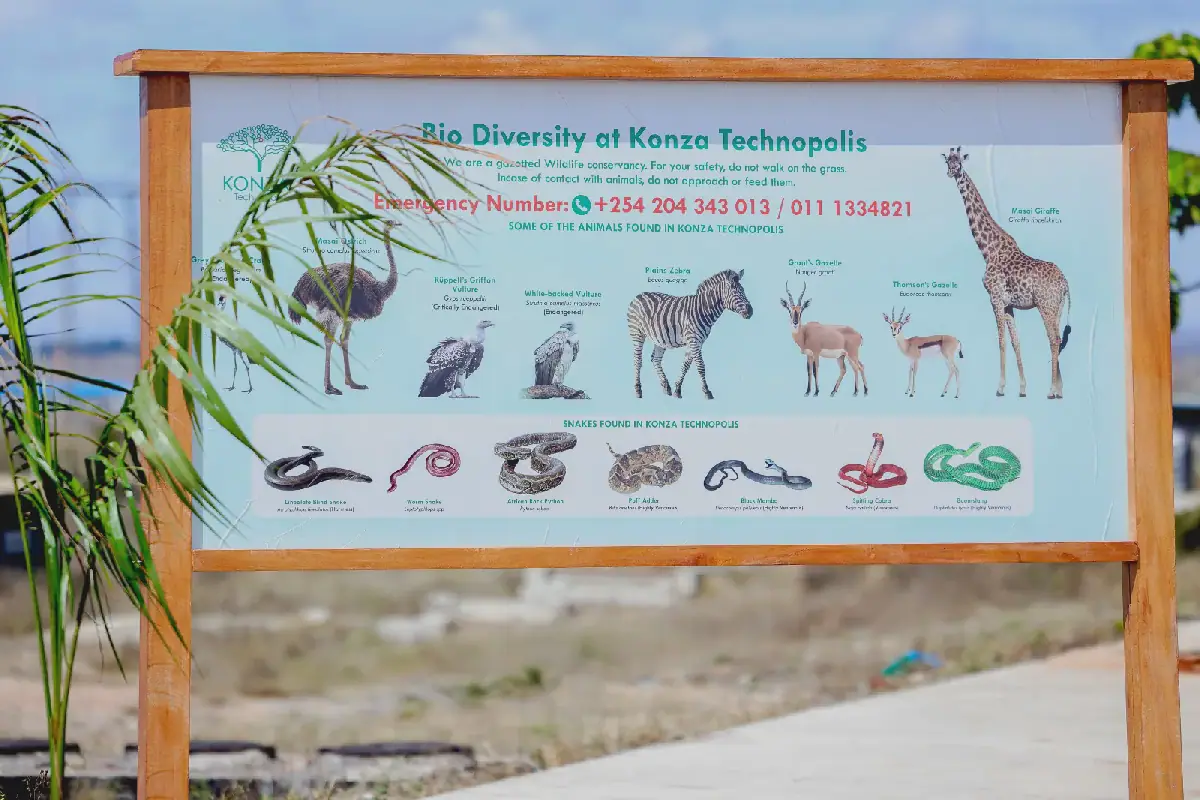
As infrastructure expands at Konza Technopolis, a 5,000-acre development in Kenya, 1,000 acres have been designated as a wildlife corridor. This move aims to create a designated space for animals to move through the area undergoing development. The corridor is part of the master plan for the Technopolis, which includes roads, residential developments, educational institutions, and other facilities. This approach reflects the need to accommodate wildlife while preparing the area for urban and commercial activity.
According to Brian Chage Mwaura, a quantity surveyor at the Technopolis Development Authority, the decision to set aside land for wildlife was informed by the area's history and the presence of wildlife before development began. The land was once a reserve, but after deliberations with the National Wildlife Service and the Kenyan National Government, it was allocated for development. Mwaura emphasized that it was not feasible to forcefully evict the animals from their natural habitat.
The wildlife corridor has been designated towards the far end of the Technopolis, in the direction of Mombasa, allowing animals to move without interference from activities in the developed sections. Mwaura explained that this corridor enables wildlife to freely move around and ensures they can continue their regular activities without interference. This approach demonstrates a commitment to coexisting with wildlife.
The provision of a wildlife corridor is part of a wider development that already has a road network spanning more than 40 kilometres. The roads connect different sections of the Technopolis, including areas designated for commercial, residential, educational, technological, and industrial use. The scale of the infrastructure makes the allocation of space for wildlife a significant element of the city's planning.
John Paul Okwiri, chief executive officer of the Technopolis Development Authority, highlighted that the corridor was incorporated into the city's biodiversity and environmental conservation plans. The 1,000 acres of wildlife corridor provide for conservation of the environment and ensure that wildlife is taken care of within the biodiversity plan. This approach underscores the importance of balancing development with environmental considerations.
Konza's approach to environmental planning includes guidelines that require investors to retain space for landscaping and greenery within their plots. Under these guidelines, only 60 per cent of a parcel may be developed with buildings, while the remaining space is reserved for landscaping, trees, and greenery. These provisions establish environmental considerations alongside the infrastructure needed to support a growing urban centre.
The development of Konza Technopolis into a smart city involves balancing urban growth with environmental conservation. The inclusion of a wildlife corridor and guidelines for landscaping and greenery demonstrate a commitment to sustainable development. As the city continues to grow, its approach to environmental planning will be crucial in ensuring that development and conservation coexist.
Key points
- Konza Technopolis sets aside 1,000 acres as a wildlife corridor to balance urban growth with environmental conservation.
- The wildlife corridor is part of a wider development that includes a road network spanning over 40 kilometres.
- Development guidelines require investors to retain space for landscaping and greenery within their plots.