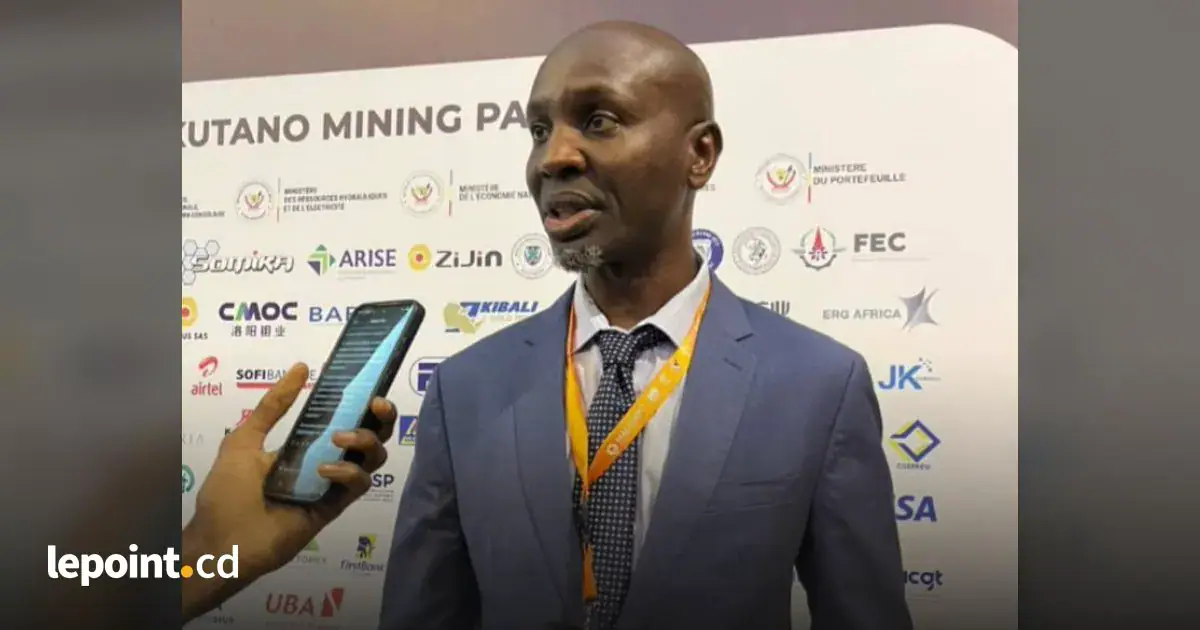
KoBold Metals, a mining exploration company, has announced that it holds approximately 20 research permits covering around 4,000 mining squares in the Democratic Republic of Congo. According to Benjamin Katabuka, the company's general director for the country, this extensive exploration campaign is a significant step towards discovering new mining opportunities. The company's claims exceed the total of 3,558 mining squares recorded by the Cadastre minier as of September 30.
The Cadastre minier's records show that KoBold has 14 active research permits, covering 3,558 mining squares in the Tanganyika, Haut-Lomami, and Haut-Katanga regions. The majority of these permits are located in Manono and Malemba-Nkulu, which account for 1,929 mining squares, primarily for lithium exploration. Additionally, six permits in Sakania, Haut-Katanga, are focused on copper exploration. The discrepancy between KoBold's claims and the Cadastre's records may be due to new permits granted after September.
KoBold's exploration efforts in the DRC are part of an agreement signed with the state on July 18, 2025. However, Australian company AVZ Minerals has contested KoBold's rights to the Manono block before an international arbitration tribunal, according to Reuters. Despite this, KoBold has announced a significant exploration program worth over $50 million around Manono, scheduled to continue until early 2027.
The exploration program includes airborne surveys over 30,000 square kilometers, drilling, and large-scale geochemical sampling. KoBold has also reportedly paid over $20 million to the Congolese Treasury. In September, the company's teams were collecting an average of 2,000 soil samples per week, according to AFP. This extensive exploration effort is crucial for the company's future mining operations.
At the Makutano Mining 2026 conference in Kinshasa, Benjamin Katabuka emphasized the importance of exploration for future mining production. He stated that exploration is a prerequisite for opening new mines, warning that without sufficient investment in exploration, the country will not have new mines to exploit in 15 or 20 years. Katabuka shared the panel with Popol Mabolia, general director of the Cadastre minier, and Hervé Otschudi, executive director of Trafigura for the DRC.
KoBold's exploration efforts in the DRC have been ongoing, with the company expressing regret in September that American investments had not yet materialized, nearly a year after the agreement. The company's progress in the country will likely be closely watched by industry stakeholders and government officials. The DRC is a significant player in the global mining industry, and KoBold's investments could have a substantial impact on the country's economy.
As KoBold continues its exploration program, the company is likely to face challenges and opportunities in the DRC's complex mining sector. With its significant investments and extensive exploration efforts, KoBold is well-positioned to make a substantial contribution to the country's mining industry. The outcome of its exploration program and potential future mining operations will be closely watched by industry stakeholders and government officials.
Key points
- KoBold Metals claims 4,000 mining squares in DRC, exceeding Cadastre minier's records of 3,558.
- The company's exploration program around Manono is worth over $50 million and scheduled to continue until early 2027.
- KoBold has paid over $20 million to the Congolese Treasury and is collecting an average of 2,000 soil samples per week.